



Your skin feels tight again after cleansing, and by midday it already looks dull. You reach for a moisturizer, but it sits on top of the skin instead of changing how it feels underneath. That's where a hydrating face serum for dry skin earns its place, because it's built to add water-loving ingredients first, then let your cream hold that comfort in place. If you've ever searched for a routine that feels lighter than a heavy cream but more effective than a splash of lotion, this guide gives you the logic behind it, plus a practical way to use it with radiant skin in Maidenhead as a reminder that smart hydration choices matter beyond one product. For a deeper brand perspective on aloe-based hydration, see how aloe vera supports skin hydration.
The Secret to Quenching Thirsty Skin
A hydrating serum is a lightweight step that delivers water-binding ingredients into skin faster than a richer cream usually can. For dry skin, that matters because comfort often depends on giving the skin water first, then keeping it from slipping away too quickly. Think of it as the part of the routine that refills the glass.
Why serum changes the feel of skin
Creams are important, but they mostly help seal what's already there. A serum's job is different, it adds humectants and other support ingredients in a more concentrated, fast-absorbing format. That's why many people notice that a serum feels almost immediate, while a moisturizer tends to create the “held in” feeling afterward.
If your skin still feels strained after moisturizing, the issue may be timing or layering, not just the formula itself. A hydrating serum works best when it's paired with the right follow-up step, which is why the routine matters as much as the ingredient list.
Practical rule: if your face still feels tight after moisturizing, your routine may need more water-first hydration, not just a richer cream.
Dry-skin shoppers often get stuck choosing between “deep hydration” and “gentle ingredients.” You don't have to choose one or the other. A well-made serum can do both, especially when it uses plant-based humectants and barrier-supportive ingredients that feel comfortable on skin that's already stressed.
Key Ingredients for Lasting Hydration

A hydrating serum works best when it does more than add a pleasant feel for a few minutes. The ingredient mix should pull water into the skin, help it stay there, and make the surface feel less fragile afterward. A simple way to judge the formula is to ask whether it has both water-binding ingredients and ingredients that help that water stay put.
The ingredients that do the heavy lifting
Hyaluronic acid is one of the clearest examples. In one clinical evaluation, topical hyaluronic acid serum produced an immediate 134% increase in skin hydration after application, with a still-significant 55% increase at week 6, and the same evaluation described excellent tolerability across Fitzpatrick skin types (clinical evaluation of topical hyaluronic acid serum). HA works as a biologic humectant, so it helps skin hold water, and it performs best when a moisturizer follows to slow water loss.
Glycerin belongs in the same group of ingredients. It is another classic humectant, and it helps a formula feel more cushioning without turning greasy. Many people notice the softer texture before they can name the ingredient behind it.
A stronger product choice usually pairs humectants with barrier-supportive ingredients. A two-week clinical study of a facial hydrating serum containing vitamin B5 analogs, high- and low-molecular-weight hyaluronic acid, a glycine derivative, xylitol-based sugars, and an MMP inhibitor significantly reduced facial dryness and increased skin softness versus moisturizer alone, with improvements reaching statistical significance (P<0.02) and no adverse events reported (two-week hydrating serum study). That matters because it shows a serum can improve both comfort and the look of dry skin, not just the feel right after application.
Why aloe deserves extra attention
Aloe vera sits in a useful middle ground. It is light, water-friendly, and easy to layer, which is why many people with dry but easily overwhelmed skin reach for it first. For shoppers comparing ingredients, aloe-based hydration fits well when they want a serum that feels lighter than a rich cream yet still adds meaningful moisture support.
Dry skin and dehydrated skin also need different ingredient priorities. Dry skin lacks oil and natural lipids, while dehydrated skin lacks water, so the same serum will not solve both concerns in the same way. A practical guide to ingredient guidance on dry vs. dehydrated skin explains why water-attracting humectants such as aloe can help dehydrated skin feel more comfortable, while richer emollients do more for dry skin that needs help holding onto that comfort.
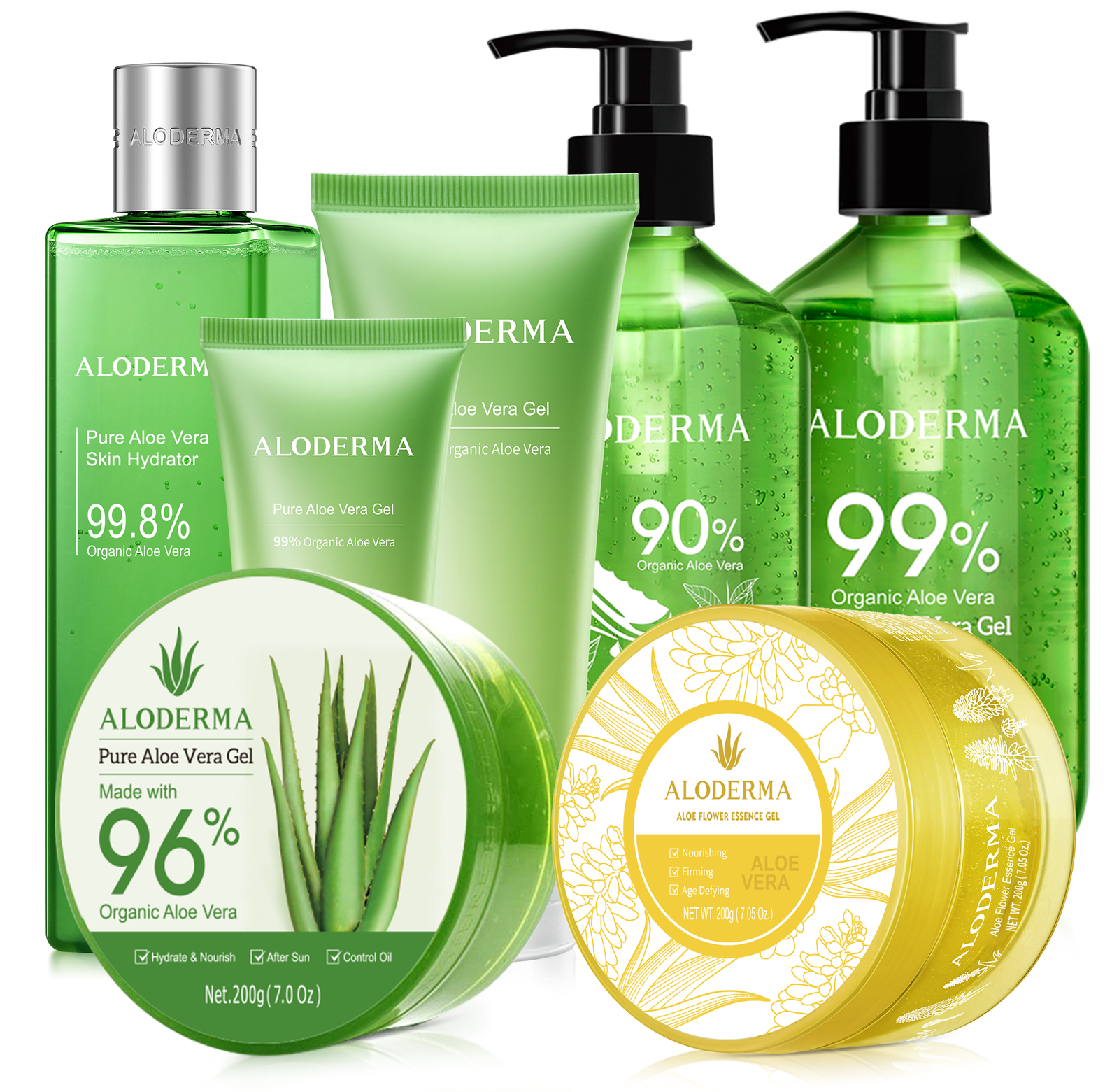
That difference is where farm-to-face freshness becomes meaningful. Aloderma says it grows its own organic aloe vera, processes it on-site, and manufactures within 12 hours of harvest so the primary ingredient stays as bioactive as possible. Its aloe preparation guide also explains how the leaf is handled, including draining the yellow latex, filleting to the clear gel, and letting it stand upright for about 10 to 20 minutes so the yellow liquid drains out, plus a weak vinegar solution at a 1:10 ratio for about 10 minutes to help remove lingering surface bacteria (aloe preparation guide). Fresh processing gives aloe a practical role in hydration formulas rather than making it a minor supporting extract.
For a product example built around that idea, see Aloderma's Pure Hyaluronic Acid guidance and the Aloe Firming & Rejuvenating Serum, which reflect the brand's aloe-first formulation style.
Choosing a Serum for Your Unique Skin

A person can buy a serum that sounds hydrating and still feel disappointed if the skin's real need is different. Dry skin and dehydrated skin often feel alike, but they are not asking for the same fix. Dry skin lacks oil and natural lipids, while dehydrated skin lacks water, so the right serum depends on which problem is showing up.
Dry skin versus dehydrated skin
If your skin feels tight, flakes easily, and stays uncomfortable through different seasons, dry skin is often the better fit for that pattern. In that case, emollients and barrier support matter more than a water-heavy serum alone. If your skin looks dull, feels parched, and can still become shiny in certain areas, dehydration is more likely.
The practical difference matters because a serum should answer the skin's first complaint. Water-attracting humectants like aloe vera can help dehydrated skin feel more comfortable, while richer emollients help dry skin hold onto that comfort for longer, as shown in this dry vs. dehydrated skin guidance.
Sensitive or blemish-prone skin often does better with a lightweight aloe-based serum first. It adds hydration without the heavy feel that can make a routine seem crowded. If flaking or roughness still shows up after that, the issue may reach beyond “just add more serum,” and the routine usually needs more barrier support.
How to pick the right texture
Start with the lightest formula that still feels soothing after it goes on. Aloderma's Hydrating Serum for Combination Skin is a useful example of how a lightweight aloe-focused serum can fit into a routine without leaving a greasy finish. That kind of texture makes sense for skin that wants water, not a heavy coat.
For very dry skin, a serum alone usually is not the finish line. It works as the first hydration step, then a moisturizer or cream helps keep that water in place.
If your skin reacts badly to rich textures, keep the formula short and the routine steady. A simple serum can do a great deal when the rest of the routine does not compete with it.
How to Properly Apply Your Hydrating Serum

Application changes everything. A great serum used the wrong way can feel sticky, underwhelming, or just plain wasted. The simplest rule is to apply it when skin is slightly damp, then seal it in with the next step so the hydration doesn't evaporate too quickly.
The sequence that works
Start with a gentle cleanser so skin isn't stripped before the serum even goes on. If you like toner, use a hydrating one, then press a few drops of serum into damp skin instead of rubbing hard. That light pressing motion helps the formula sit evenly without creating drag.
Finish with moisturizer right away. This is the step that keeps humectants doing their job instead of leaving skin to lose water back into a dry room. The same logic applies in the evening, where a serum can become the hydration base under a cream or overnight mask.
The brand guidance for an overnight mask gives a clear order, cleanse gently, apply a hydrating toner or serum first, then apply the mask as the final step (overnight mask routine). That sequence shows the role of serum clearly, it prepares the skin, then the next layer locks everything in.
Morning and evening routines that stay simple
Morning routine:
- Cleanse lightly: Use a gentle face wash that doesn't leave skin squeaky.
- Apply serum to damp skin: Two or three drops is enough for most routines.
- Seal with moisturizer: Choose a cream or lotion that feels comfortable, not heavy.
- Finish with SPF: Hydrated skin still needs daily sun protection.
Evening routine:
- Cleanse thoroughly: Remove the day without over-washing.
- Use toner if you like one: Keep it hydrating, not harsh.
- Press in serum: Focus on the cheeks, around the mouth, and anywhere that feels tight.
- Follow with cream or mask: Let the final layer hold the hydration overnight.
For a complete aloe-based routine, Aloderma's lineup can be used in sequence, including its Aloe Hydrating Cleanser, toner, serum, and cream or lotion. That kind of layered routine works because each step supports the next, not because any single product tries to do everything.
The Aloderma Difference Farm-to-Face Hydration
A hydrating face serum works best when the ingredient still feels fresh in the formula. Aloderma says it is a fully vertically integrated aloe vera company, grows its own organic aloe vera, and processes and manufactures onsite within 12 hours of harvest so the primary ingredient in every product stays as bioactive and effective as possible. For aloe-based hydration, that matters because skin does not respond to marketing language, it responds to how well the formula helps water stay available where dryness shows up first.
Why the formula philosophy matters
Aloderma also keeps a specific no-list. Its products do not use SD alcohol, aloe powders, parabens, phthalates, or sodium lauryl sulfate. That can matter for dry-skin shoppers who want a formula that feels straightforward and avoids extras that may make a routine feel harsher than it needs to be.
The brand also states that anywhere from 65% to 99.8% of ingredients in its products are organic on its Pure Aloe Vera Gel page. That points to a formulation approach built around a high-aloe, clean-feeling profile rather than a long list of filler ingredients.
Fresh aloe serum is useful because the skin can get a lighter layer of hydration without unnecessary extras getting in the way. Dry skin often needs that balance, water support on the surface, then a moisturizer to hold it there. Farm-to-face skincare works in practical terms because the ingredient starts fresh, the formula stays simple, and the skin gets hydration it can use.
Common Questions About Hydrating Serums
A common question is whether a hydrating serum can replace moisturizer. The answer is usually no. A serum adds water-binding ingredients, while a moisturizer helps keep that water in place, so the two work better together for dry skin.
Another question is how fast results show up. A two-week study found that a hydrating serum reduced facial dryness and increased skin softness more than moisturizer alone, with improvements reaching statistical significance and no adverse events reported. That gives you a practical clue about what well-made hydration can do, especially when the formula is designed to help water stay where skin needs it most.
People also ask whether sticky skin means the serum is failing. It usually does not. A little tackiness can happen with humectant-rich formulas, and it often makes more sense once moisturizer goes on top. If the stickiness lingers, the fix is often to use less product or apply it to damp skin, not to give up on the serum.
Some readers want to know if they should use a serum morning, night, or both. Dry skin often does well with consistent use because it loses water more easily, while dehydrated skin may only need a focused hydration step during drier seasons or after cleansing. The better answer depends on how your skin feels after you seal the serum in.
You can also pair hydrating serums with other ingredients, as long as the routine stays gentle. The main job of the serum is to add comfort, not compete with every other step. Aloe-based formulas can be a good fit here, especially when the aloe is farm-fresh and processed soon after harvest, because the ingredient starts close to its natural state.
If your skin still feels rough, looks persistently flaky, or stays uncomfortable no matter how carefully you layer hydration, simplify the routine and reconsider the base formula before adding more products. Start with a hydrating cleanser, a water-friendly serum, and a moisturizer that matches your skin's needs, then adjust slowly until your skin feels calm and supported.