



The most popular advice for oily skin is often the least helpful: skip hydration so your face produces less oil. That confuses two different materials. Sebum is oil. Hydration is water. Your skin can look shiny while feeling tight, rough, or uncomfortable, and adding a lightweight, water-based serum won't automatically make that combination worse.
A well-chosen hydrating serum for oily skin supports water content without the dense feel of a rich cream. The formula, the freshness of its botanical ingredients, and the way you apply it all matter. Once you understand the difference between oil production and dehydration, your routine becomes much easier to build.
Why Oily Skin Still Craves Hydration
Oily skin doesn't mean well-hydrated skin. Sebum comes from sebaceous glands, while hydration refers to the amount of water held in the outer layers of skin. One is oil production. The other is water balance. They can change independently, which is why someone may notice a glossy forehead by lunchtime but still feel tight around the cheeks after cleansing.
That tight-yet-shiny sensation is a useful clue. A harsh cleanser may remove surface oil so aggressively that skin feels stripped immediately, while the underlying tendency toward sebum production remains. Some people then wash again, use astringent products, or avoid moisturizer altogether. The result can be a routine that feels clean for a moment but leaves the skin less comfortable and harder to balance.
Practical rule: Shine is not proof that your skin has enough water.
A water-based serum offers a more strategic response than adding another oil-control step. Humectants such as glycerin and hyaluronic acid attract water, so they can improve the feel of dehydration without giving the skin the rich, coated finish associated with heavy creams. Product guidance for oily skin also favors oil-free and non-comedogenic formulas as a way to keep hydration lightweight. Skincare.com's guidance on serums for oily skin makes that distinction practical when you're comparing labels.
What changes when you stop stripping the skin
A gentler routine gives you a better chance to judge your actual skin type. Cleanse without leaving a squeaky finish, apply a hydrating serum while skin is slightly damp, and follow with a light moisturizer if you need more comfort. You may still produce visible sebum, but the skin can feel less tight and look more even in texture.
The aim isn't to eliminate every trace of oil. Sebum is part of the skin's natural surface environment. The aim is to add water without adding unnecessary weight, then use separate products if you need targeted control for shine or visible blemishes. For a closer look at the moisturizer question, read whether oily skin needs moisturizer.
Understanding Sebum Production Versus Skin Dehydration
Think of sebum as a leaky faucet and dehydration as a dry sponge. The faucet describes how much oil reaches the surface. The sponge describes how much water the outer skin layers can hold. Turning down the faucet doesn't automatically refill the sponge, and soaking the sponge doesn't necessarily stop the faucet.
Researchers use measurable thresholds rather than appearance alone. An independent review defines an oily skin phenotype as sebum secretion above 1.5 mg/cm² per 3 hours, while mixed skin accounts for about 50% of cases in the review's summary of skin types. The same source reports that approximately 25% of adults have an oily skin phenotype. The review of skin sebum and skin-type classification also explains why measurement can tell a different story from a person's own assessment.

Why your mirror can mislead you
Many people judge skin type by looking at shine, but oiliness can vary across the face and throughout the day. Someone may call their skin normal because the cheeks feel comfortable, even though the nose and forehead behave more like combination or oily areas. Historical research summarized in the review also indicates that subjective self-assessment can underestimate facial sebum output.
A clinical review gives an adult baseline of about 1 mg of sebum per 10 cm² every 3 hours, while oily-skinned participants have measured casual sebum levels and sebum excretion rates 1.6 to 2.1 times higher than dry-skinned participants. The clinical review of hyaluronic acid and skin hydration helps explain why product design often separates oil management from water-based hydration.
| Skin signal | What it may indicate | More useful response |
|---|---|---|
| Surface shine | Sebum reaching the surface | A light texture and, if needed, a separate oil-control active |
| Tightness after cleansing | Reduced comfort or water loss | Gentler cleansing and humectant hydration |
| Shine with rough texture | Oil and dehydration occurring together | Damp-skin serum application plus light barrier support |
A hydrating serum doesn't need to behave like an oil-control strip. It can address the dry-sponge side of the problem while leaving sebum management to ingredients designed for that purpose.
Best Non-Comedogenic Ingredients for Lightweight Hydration
Start with the texture you want, then read the ingredient list. For oily skin, the most useful formula usually feels fluid, spreads quickly, and leaves little residue. That experience often comes from a combination of humectants, a barrier-supportive active, and, when appropriate, a very light emollient.
Humectants that add water without a greasy finish
Hyaluronic acid binds water and is available in different molecular weights. Larger molecules tend to remain closer to the surface and retain water effectively, while smaller molecules can move somewhat deeper but may be more irritating for some sensitive skin. A serum doesn't become better because its hyaluronic acid is described as low molecular weight.
A multicenter evaluation found an immediate 134% increase in skin hydration after applying a topical hyaluronic acid serum, with a 55% increase still present at week 6. A separate study of twice-daily use over 12 weeks reported improvements in visible texture and tone. The clinical review of hyaluronic acid in skin care places those findings in the context of lightweight hydration.
Glycerin is another dependable humectant. Controlled testing found that glycerol and urea increased stratum corneum hydration even when formulation water activity was reduced, supporting the idea that a light serum can add water without depending on a heavy occlusive system. The controlled study of humectants and skin hydration provides the formulation context.
Supportive actives and light finishers
Niacinamide helps make a hydrating serum more than a simple water-binding product. Clinical studies found that topical 2% niacinamide reduced sebum excretion after 2 and 4 weeks in Japanese participants and reduced cheek sebum loss after 6 weeks in Caucasian participants. Broader reviews report effective sebum reduction across 2% to 5% concentrations in Asian and Caucasian populations. The niacinamide sebum study is particularly useful when you're evaluating a formula intended for oily skin.
Fresh aloe vera can provide a water-rich base with a different sensory character from a generic humectant blend. Its plant compounds include polysaccharides and amino acids, but the quality of aloe depends on cultivation and handling. Squalane, used appropriately, is a lightweight emollient that can reduce a dry after-feel without making a serum feel like a facial oil.
When you sell or recommend skincare online, clear ingredient education matters as much as the formula itself. Resources designed to convert skincare browsers into buyers can help brands present ingredient benefits without turning a shopper's confusion into a hard sell. For a focused look at one familiar humectant, explore ALODERMA's Pure Hyaluronic Acid Serum.

Ingredients to Avoid in Serums for Oily Skin
Oily skin doesn't require avoiding every ingredient with a rich reputation. It does require paying attention to the total formula, the amount applied, and how the product behaves on your face. A serum that feels greasy, sits on the surface, or leaves a persistent film may be a poor match even if its label says “hydrating.”
Compare the finish, not just the marketing
Heavy occlusives can reduce water evaporation, but they may feel excessive when your skin already becomes shiny quickly. Rich plant oils can also create a finish that feels too dense for an oily routine. Coconut oil is a common example shoppers choose for its familiar name, yet it may not suit everyone who is prone to a congested-feeling surface.
“Oil-free” isn't a complete guarantee of a weightless experience. An oil-free formula can still contain rich esters, dense texture agents, or fatty alcohols that feel heavy for a particular person. Read the whole list and consider whether the product is designed as a watery serum, gel, lotion, or cream.

A simple label comparison
| If the formula leans toward | Look for instead |
|---|---|
| Heavy occlusives that leave a coated finish | Glycerin, hyaluronic acid, or aloe-based hydration |
| Rich oils that feel slick on the T-zone | A water-based serum with a light emollient profile |
| Multiple dense layers in one routine | One hydrating serum followed by a thin moisturizer |
| Strong fragrance or numerous extras | A shorter ingredient list that matches your tolerance |
This isn't about declaring an ingredient universally bad. Mineral oil, coconut oil, and silicones can be useful in the right product and for the right skin experience. The practical question is whether the formula delivers water comfortably or adds another layer that your oily areas don't need.
Why Fresh Aloe Vera Outperforms Generic Humectants
Aloe vera isn't just a decorative plant name on a label. It is a delicate botanical raw material whose composition depends on how the plant is cultivated, harvested, handled, and incorporated into a formula. Peer-reviewed research comparing aloe from different cultivation practices found measurable differences in metabolite composition, and another study reported that organic fertilization altered the plant's metabolomic output. The cultivation research on Aloe vera metabolites shows why the source and farming method matter.
Post-harvest handling matters just as much. One study describing aloe sample preparation separated the gel from the leaf, froze it, and then processed it for analysis, illustrating that the inner pulp is a delicate material rather than a permanently stable, shelf-ready ingredient. The Aloe vera sample-handling report makes the freshness question tangible.
What vertical integration changes
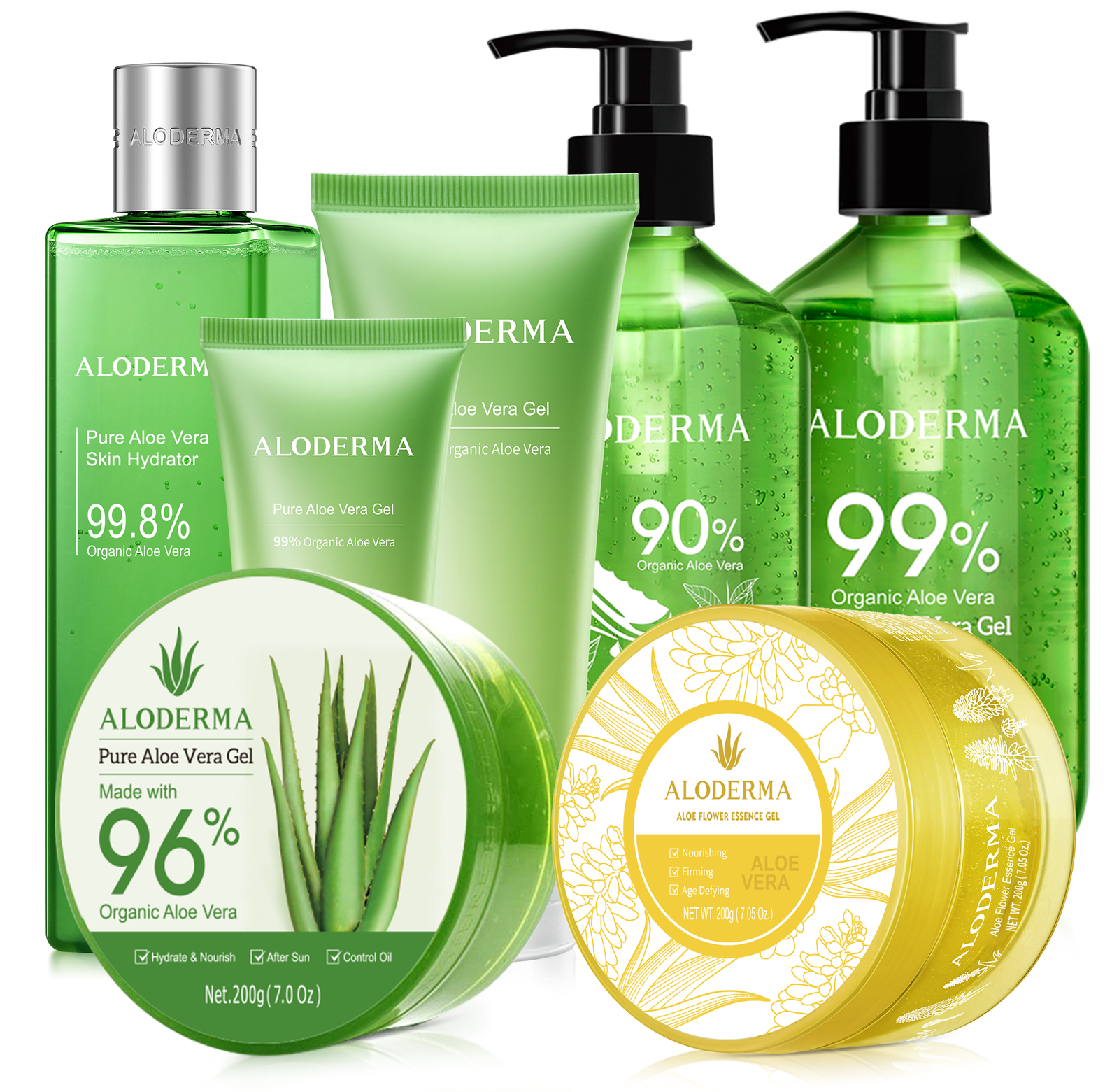
ALODERMA is a fully vertically integrated aloe vera company. The brand grows all of its own organic aloe vera, processes the aloe vera, and manufactures onsite within 12 hours of harvest so the primary ingredient in every product retains as much of its bioactive and effective potential as possible.
That farm-to-skin model changes the supply chain between leaf and bottle. Instead of treating aloe as an anonymous bulk material that passes through multiple storage and transport stages, the company controls cultivation, processing, and manufacturing in one connected operation. For a shopper choosing a hydrating serum for oily skin, that detail helps explain why “fresh aloe” should refer to handling practices, not just front-label language.
The result is a different formulation philosophy. Humectants still matter, but fresh aloe can serve as a meaningful botanical foundation for a serum that feels water-rich and comfortable. Learn more about aloe vera for oily skin before deciding whether an aloe-centered formula fits your routine.
How to Layer a Hydrating Serum in Your Oily Skin Routine
Application can determine whether a serum feels refreshing or sticky. Humectants work best when applied after cleansing, while skin is still slightly damp, because they can bind to residual moisture rather than meeting a completely dry surface. Wirecutter's guide to hydrating serums explains why many product labels recommend applying serum soon after cleansing.
A practical morning and evening order
- Cleanse gently. Remove surface residue without leaving skin tight or squeaky.
- Tone only if it helps. A hydrating mist or toner is optional. It shouldn't add unnecessary layers.
- Apply the serum. Use a modest amount on slightly damp skin, then spread rather than repeatedly rubbing.
- Moisturize lightly. Choose a gel or thin lotion if the serum alone doesn't keep your skin comfortable.
- Finish with SPF in the morning. Sunscreen is the final daytime skincare layer.
If you use a niacinamide treatment, check whether your serum already contains it before adding another concentrated product. Too many overlapping layers can create pilling and make it difficult to identify what your skin likes. In the evening, a hydrating serum can also sit before a drying active treatment, helping the routine feel more comfortable, but follow the directions for each product.

Adjust the routine to the room you're in
Hot, humid weather may call for a single serum and a very light moisturizer. In a dry, air-conditioned environment, you may prefer a second thin layer of moisturizer over the serum to help hold onto the water it attracts. If a product feels sticky, reduce the amount first, allow it to settle, and avoid applying several damp layers at once.
A short visual guide can reinforce the order when you're building a routine from scratch.
Troubleshooting Common Hydration Mistakes for Oily Skin
Your face feels tight after cleansing but looks shiny later. That pattern usually points to a mismatch between surface oil and water comfort, not proof that you should remove more oil. Try a gentler cleanser, apply your serum to damp skin, and reduce the amount of exfoliating or drying products used in the same routine.
Your serum seems to sit on top. First, check quantity. A thin film is often caused by applying too much, layering it over dry skin, or following it immediately with several products. Use less, press it onto slightly damp skin, and give each layer time to settle.
Hyaluronic acid also needs realistic expectations. It isn't a direct acne treatment, and it doesn't have proven sebum-regulating or antibacterial activity. Typology's explanation of hyaluronic acid and acne describes it as a hydration-support ingredient, while noting its usefulness alongside drying treatments because better hydration can improve comfort and tolerance.
If breakouts or persistent discomfort continue, review the entire routine rather than blaming the serum automatically. Another ingredient, cleansing frequency, climate, or the way products are layered may be responsible. Change one variable at a time so you can tell what improves the feel of your skin.
ALODERMA offers fresh organic aloe-based options, including hydrating serums and lightweight everyday products designed for comfortable moisture without a heavy finish. Explore ALODERMA to compare the Aloe Hydrating Serum with complementary cleansers, toners, gels, and moisturizers, then choose the combination that fits your oily-skin routine.