



You want the glow. You don't want the aftermath.
A lot of people with oily, sensitive, or blemish-prone skin know this cycle too well. You try a self-tanner before a trip, a wedding, or just because your skin looks tired and flat. The color looks promising on day one. Then day two brings clogged-looking pores, rough texture, and the sinking feeling that every shortcut to radiance comes with a price.
That fear is understandable. Many tanning products are packed with rich carrier ingredients that sit heavily on the skin. So when people search for a non comedogenic self tanner, they aren't just looking for a beauty product. They're looking for a way to stop choosing between clear skin and a healthy-looking glow.
The Dream of a Golden Glow Without the Setback
The most relatable self-tanning story isn't about a flawless bronze. It's about hesitation.
You stand in front of the mirror with a bottle in your hand, remembering the last time a tanning lotion looked fine on your legs but turned your face into a congested mess. Maybe your cheeks felt greasy by noon. Maybe the color settled oddly around active blemishes. Maybe you swore off self-tanner completely, even though you still wanted that rested, even-toned look.
That tension is real. Clear skin takes work. When you've spent months building a routine that finally feels stable, the idea of putting a questionable product all over your face can feel reckless.
A good non comedogenic self tanner changes that conversation. It starts with a different priority. Instead of asking, "How dark will this make me?" it asks, "How will this behave on skin that clogs easily?"
Your tan shouldn't ask your skin to tolerate a heavy, suffocating formula just to get a little color.
That's why formula matters so much. The best options don't rely on thick, greasy bases that linger on the surface. They aim for a lighter feel, cleaner ingredient choices, and a finish that looks like skin, not product.
For many readers, that's the breakthrough idea. You don't have to give up on self-tanning. You just need a formula built with skin behavior in mind.
What Does Non Comedogenic Mean for Self Tanners
Non-comedogenic means a product is formulated to avoid clogging pores.
That sounds simple, but it's a common point of confusion for many with self-tanners. They assume the tanning active itself is what causes breakouts. In most cases, that isn't the part to fear most.

The ingredient people blame first
Most self-tanners use DHA, short for dihydroxyacetone, as the active ingredient that creates color. Dermatologist Nikhil Dhingra says, "DHA itself is a non-clogging ingredient," and Dr. Hadley King notes that oil-free, non-comedogenic formulas are the better choice for preventing clogged pores. That distinction matters for the up to 50 million Americans affected by acne annually, because it shifts the focus from the tanning active to the rest of the formula's base, as explained in this dermatologist-referenced discussion of self-tanner for acne-prone skin.
Consider this: If a healthy meal makes you feel sick, the issue may not be the grilled chicken. It may be the heavy creamy sauce poured over it. With self-tanners, DHA is often the grilled chicken. The trouble is more likely to come from the rich oils, thick creams, and other pore-trapping extras around it.
The real troublemakers
When a self-tanner feels rich, buttery, or slick for hours, that texture may be a warning sign for breakout-prone skin.
Look more critically at formulas that lean heavily on:
- Heavy oils that leave a coated feeling
- Thick cream bases that don't seem to dry down
- Occlusive textures that trap sweat and oil
- Strongly perfumed formulas that already make sensitive skin uneasy
That doesn't mean every creamy product will break you out. It means the base deserves just as much attention as the tanning result.
What a better formula feels like
A well-made non comedogenic self tanner usually feels lighter on the skin. It tends to spread thinly, dry more cleanly, and sit more like skincare than body butter.
Here’s the practical shift:
| Old assumption | Better question |
|---|---|
| "Self-tanner breaks me out" | "Which part of this formula is too heavy for my skin?" |
| "I need to avoid DHA" | "I need to avoid pore-clogging carrier ingredients" |
| "More moisture must be better" | "Will this hydration come from a lightweight base?" |
That change in thinking gives you more control. Instead of avoiding all tanning products, you can choose them more intelligently.
Your Guide to Tanning Ingredients for Clear Skin
Once you stop blaming the wrong ingredient, label reading gets much easier.
The goal isn't to memorize a chemistry textbook. It's to know what tends to feel breathable on breakout-prone skin and what often feels like too much.
Ingredients that often create problems
If your skin is reactive, shiny by midday, or easily congested, start with caution around richer tanning formulas.
A few common red flags include:
- Heavy oils and butters that leave a dense film on the skin
- Very thick lotion textures that feel slow to absorb
- Strong fragrance if your skin tends to get uncomfortable fast
- Ingredient lists that read like a body cream first and a tanner second
Sometimes people choose a product because it sounds nourishing, then wonder why it feels like it never fully settles. That lingering, coated feel is exactly what many acne-prone users want to avoid.
If you're trying to get better at spotting clog-prone ingredients across all skincare, this guide to ingredients that clog pores helps build that habit.
Ingredients that support a cleaner result
A non comedogenic self tanner works best when the active is paired with ingredients that hydrate without crowding the pores.
One standout is aloe vera. According to Curology's overview of breakout-conscious sunless tanning, DHA reacts only with the outermost dead layer of skin, and the best formulas often pair it with humectants such as aloe vera. That source notes aloe can make up over 50% of a formula by weight, its polysaccharides help support hydration, it can reduce transepidermal water loss by up to 30%, and it scores 0 to 1 on the comedogenicity scale.
That matters because dryness is one of the quiet reasons tanning goes wrong. Dry, uneven skin grabs color irregularly. Then people over-apply, over-rub, or add richer products to compensate. A lightweight hydrator can help break that cycle.
Practical rule: If your skin clogs easily, look for hydration that feels watery, fresh, and fast-absorbing instead of greasy and padded.
Why aloe makes so much sense in tanning routines
Aloe is one of those ingredients that does a lot without announcing itself loudly.
It helps because it feels light. It layers well under or with tanning drops. It doesn't force the skin to sit under a heavy coat of emollients. For someone who wants glow without that stuffed-pore feeling, that's a major advantage.
A simple example helps. Say you use facial tanning drops. Mixing them into a rich night cream may create too much residue for oily skin. Mixing them into a lightweight aloe gel can give you more slip, easier blending, and less heaviness.
A simple ingredient lens for shopping
When you're reading a label, ask four questions:
-
What is the texture likely to be
If the formula reads like a dense body cream, it may not be ideal for your face. -
Is there lightweight hydration
Aloe and other humectant-style ingredients often make more sense than rich occlusive blends. -
Will this sit cleanly under the rest of my routine
If you already use serum, moisturizer, and sunscreen, the tanner shouldn't feel like a fifth heavy layer. -
Can I apply this thinly
Good self-tanning formulas don't need to be slathered on to work.
That last point is important. With breakout-prone skin, thinner and more controlled usually wins.
The Breakout Proof Self Tanning Application Method
Even a good formula can turn messy with bad prep.
Application is where many people sabotage themselves. They use too much product, apply it over leftover skincare, or rub aggressively around areas that are already stressed.

Prep your skin the day before
Don't exfoliate aggressively right before tanning.
A better approach is to gently smooth the skin ahead of time, then let it settle. You want the surface to be even, not freshly rubbed raw. If your skin is dehydrated in spots, use a light, oil-free hydrator on those areas so the tan doesn't grab unevenly.
Good prep usually looks like this:
- Clean skin first with no leftover makeup, sunscreen, or sweat
- Gentle smoothing rather than harsh scrubbing
- Light hydration on flaky areas, especially around the nose, chin, and brows
- Patience so your skincare fully absorbs before any tanner goes on
Apply less than you think you need
A common mistake is overcorrecting for fear of streaks. People pile on extra product, then end up with buildup around pores, hairlines, and dry patches.
Use a small amount first. Blend outward. Add more only where needed.
For the face, many people do better with:
- Drops mixed into a lightweight base
- A thin serum-like tanner
- A mist or water texture instead of a dense lotion
That softer approach tends to look more believable and feel safer on reactive skin.
Keep the face routine separate from the body routine
Your body might tolerate a formula your face won't.
That's why a dedicated facial tanner often makes more sense than using the same mousse from head to toe. Your face already deals with cleanser, serum, moisturizer, sunscreen, and often makeup. It doesn't need an especially rich body formula on top of all that.
Ask less of your facial skin. It already works harder than the rest of your body.
A useful way to see application technique in motion is this video guide:
The hybrid tanning method for airbrush fans
Professional spray tans create a different challenge. You may love the body result but still feel uneasy about what goes on your face.
That concern is valid. This guidance on acne-safe self-tanner for acne-prone skin highlights a smart workaround. Ask the technician not to spray your face, then apply a separate acne-safe facial self-tanner at home. That gives you more control over what touches the most sensitive skin on your body while still helping your face and body match.
This works especially well if:
- Your face breaks out more easily than your body
- You don't know the full spray solution formula
- You prefer a lighter facial finish
- You want to build color slowly around blemish-prone areas
Aftercare matters too
Once the tan develops, leave it alone.
Don't scrub at tiny imperfections. Don't keep layering more tanner every day because one area looks slightly lighter. And don't panic-fix patchiness with a rich balm that your skin already hates.
A calm aftercare routine usually works best. Gentle cleansing. Lightweight hydration. Minimal friction.
Your Non Comedogenic Self Tanner Shopping Checklist
Shopping gets easier when you know exactly what to scan for.
A lot of marketing language sounds skin-friendly. That doesn't mean the formula will behave well on your face. A short checklist helps you cut through that noise fast.
Words worth looking for
Start with the clearest signals on the label.
Look for phrases such as:
- Non-comedogenic if the brand explicitly formulates for pore-conscious use
- Oil-free when your skin gets clogged by richer products
- Alcohol-free if your skin gets dry and tight easily
- Fragrance-free if scent often makes a product feel harsher than it needs to
Not every good product will include every one of these terms. But they help narrow the field.
Texture can tell you a lot
When two formulas promise similar color, choose the one that sounds lighter.
This quick comparison helps:
| Usually better for breakout-prone skin | More caution needed |
|---|---|
| Waters | Thick creams |
| Serums | Rich body butters |
| Face drops | Dense lotions |
| Lightweight mists | Heavy balms |
Texture isn't everything, but it often predicts how the product will sit on the skin.
Ingredient list clues
You don't need to decode every ingredient. You do need a few shopping instincts.
Look for:
- Shorter, easier-to-understand formulas
- Hydrating support from lighter ingredients
- A base that sounds breathable rather than rich
Examples of where the market is heading
Cleaner self-tanners are easier to find than they used to be. In 2026, SkinSort data listed Garnier Ambre Solaire Natural Bronzer Self-Tan Face Drops as a top-rated non-comedogenic, alcohol-free option, and many brands now use naturally derived DHA from sources like sugar beets, as noted in this overview of natural and organic self-tanner trends.
That kind of shift matters because it gives shoppers more options. You no longer have to choose between "natural" and "works for acne-prone skin." More brands are trying to deliver both.
Why Fresh Farm Grown Aloe is the Ultimate Base for Your Glow
When people say aloe is soothing, they often stop there. But for breakout-prone skin, the more important question is why the quality of aloe matters.
Aloe isn't just a nice extra in a formula. In the right product, it can shape the entire feel of the routine. It can determine whether your skin feels fresh and balanced or coated and overwhelmed.
Why freshness changes the experience
Not all aloe is handled the same way.
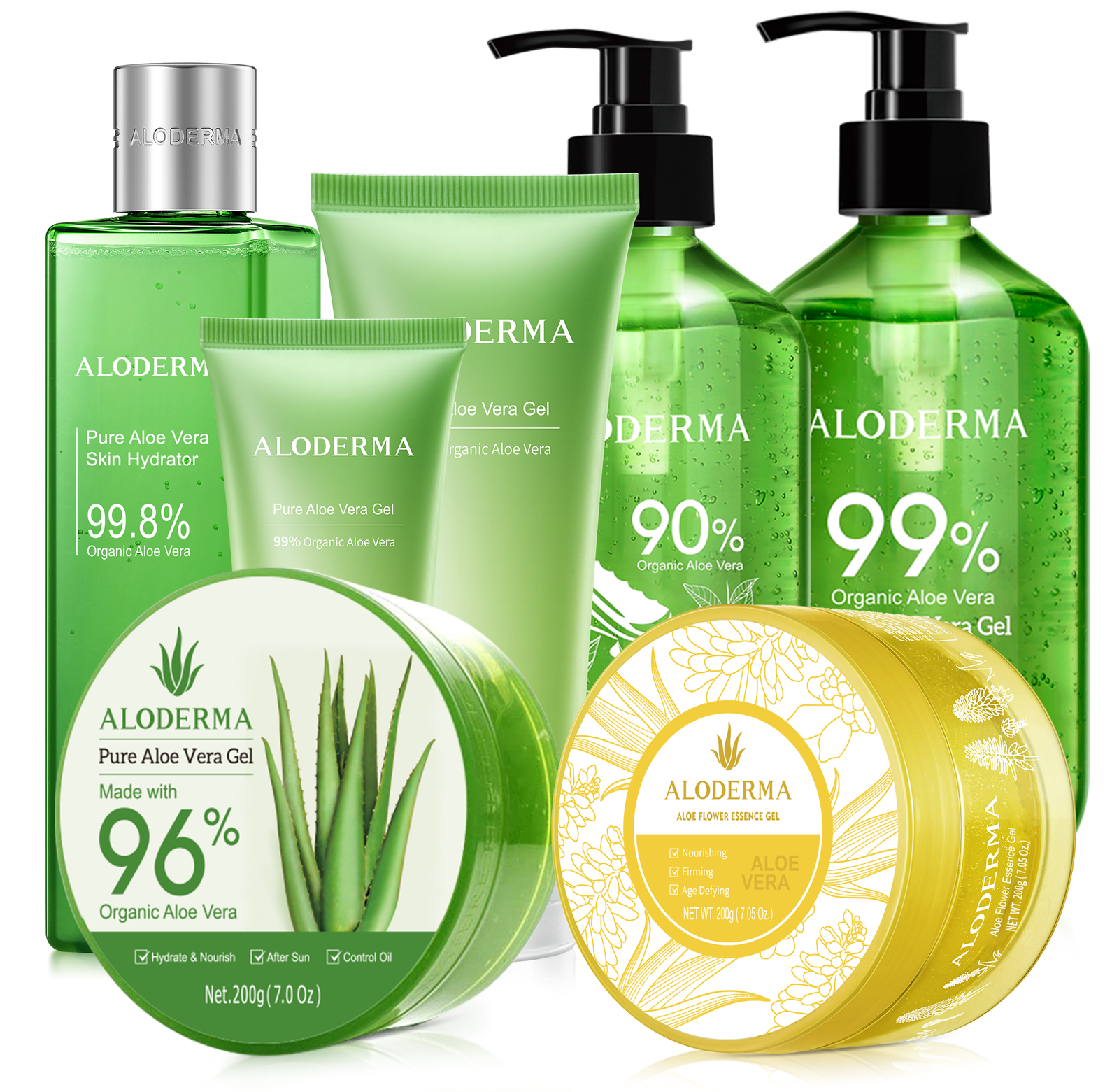
ALODERMA is a fully vertically integrated aloe vera company. It grows its own organic aloe vera, processes that aloe onsite, and manufactures within 12 hours of harvest so the primary ingredient in every product is as bioactive and effective as possible. For someone with skin that reacts badly to overloaded formulas, that farm-to-skin control matters because it supports a simpler, more direct ingredient story.
The benefit isn't abstract. Freshly handled aloe tends to feel clean, light, and easy to layer. That's exactly the kind of support a self-tanning routine needs.
Why this matters for blemish-prone skin
Blemish-prone skin usually does best when routines feel stable.
That means fewer heavy textures. Less guesswork. More ingredients that hydrate without leaving a waxy film behind. Fresh aloe fits that profile well because it gives slip and moisture without pushing the skin into that greasy, overfed feeling many richer products create.
A practical routine might look like this:
- Cleanse gently with a light face wash
- Hydrate with aloe-based care so the skin isn't dry or tight
- Apply facial tanning drops in a controlled amount
- Maintain with breathable skincare instead of piling on heavy creams
A full routine works better than one hero product
People often expect one tanning product to do everything. In reality, the surrounding routine often decides whether the result looks smooth and calm.
That’s where aloe-based support products make sense. A gentle cleanser helps you start with a clean surface. A lightweight cream or gel helps maintain comfort so the tan fades more evenly. A simple, well-chosen routine often outperforms a dramatic tanning product used on stressed skin.
For a broader look at how aloe fits into daily skin support, this guide on how to use aloe vera for skin is a helpful reference.
Your Self Tanning Questions Answered
Will self-tanner make current blemishes look darker
It can make uneven texture and dry spots stand out if you apply too much product directly over them.
The safest approach is to use a thin layer and blend evenly across the surrounding skin instead of trying to "cover" individual spots with extra tanner. If a blemish is open, irritated, or freshly picked, skip that area until the skin settles.
Less product usually looks better on uneven areas.
Can I use a non comedogenic self tanner while using blemish treatments
Usually, yes. But you need to account for how those treatments affect the skin surface.
Prescription routines and strong actives can leave the skin drier, flakier, or more reactive. That doesn't automatically rule out self-tanner. It just means you should choose a gentler formula, apply it sparingly, and avoid tanning on nights when your skin already feels stressed.
A careful routine works better than a rushed one. If your skin is peeling, wait. If it feels stable, patch test first and build slowly.
How do I remove a patchy tan without harsh scrubbing
Start with patience and moisture, not force.
Harsh scrubs often make the skin look worse. They can rough up the surface, create more visible dry patches, and leave breakout-prone areas feeling unsettled. Gentle cleansing, light hydration, and time usually remove uneven color more gracefully than aggressive exfoliation.
If one small area grabbed too much color, soften the edges gradually rather than trying to erase everything at once.
How often can I reapply without clogging pores
That depends less on a fixed schedule and more on how your skin is behaving.
Reapply when the color is fading evenly and your skin still feels comfortable. If you're noticing buildup around pores, roughness, or a coated feeling, pause and let your skin reset before adding more. Many people do better with gradual maintenance than frequent full reapplications.
What if I love professional tanning for my body
You don't have to give it up.
The face-skip method described earlier is often the smartest compromise. Keep the body service if it works for you, then take control of the facial step at home with a product you trust. That gives you better oversight where your skin is most reactive.
Does self-tanner protect my skin from the sun
No. A sunless tan is color, not protection.
You still need daily sun protection, especially if you're using exfoliants, acne treatments, or any routine that can make skin more vulnerable. If laser treatments are also part of your routine, it's worth understanding tanning and laser hair removal interactions before you plan either service.
What if every self-tanner seems to break me out
Then it's time to zoom out.
The issue may be the formula texture, the way you're layering it over skincare, or the fact that you're using a body product on the face. Strip the process back. Try one lightweight facial formula. Apply it over clean skin or a simple breathable hydrator. Keep the rest of your routine steady.
If your skin still objects, take that seriously. A glow should never cost you weeks of skin recovery.
If you want a glow routine built around fresh, lightweight aloe support, explore ALODERMA. As a fully vertically integrated aloe vera company, ALODERMA grows its own organic aloe, processes it onsite, and manufactures within 12 hours of harvest so each formula starts with highly bioactive aloe vera. That fresh farm-to-skin approach makes it a smart place to look for gentle cleansers, hydrators, gels, and moisturizers that help breakout-prone skin stay comfortable while you build a clear-skinned glow.