

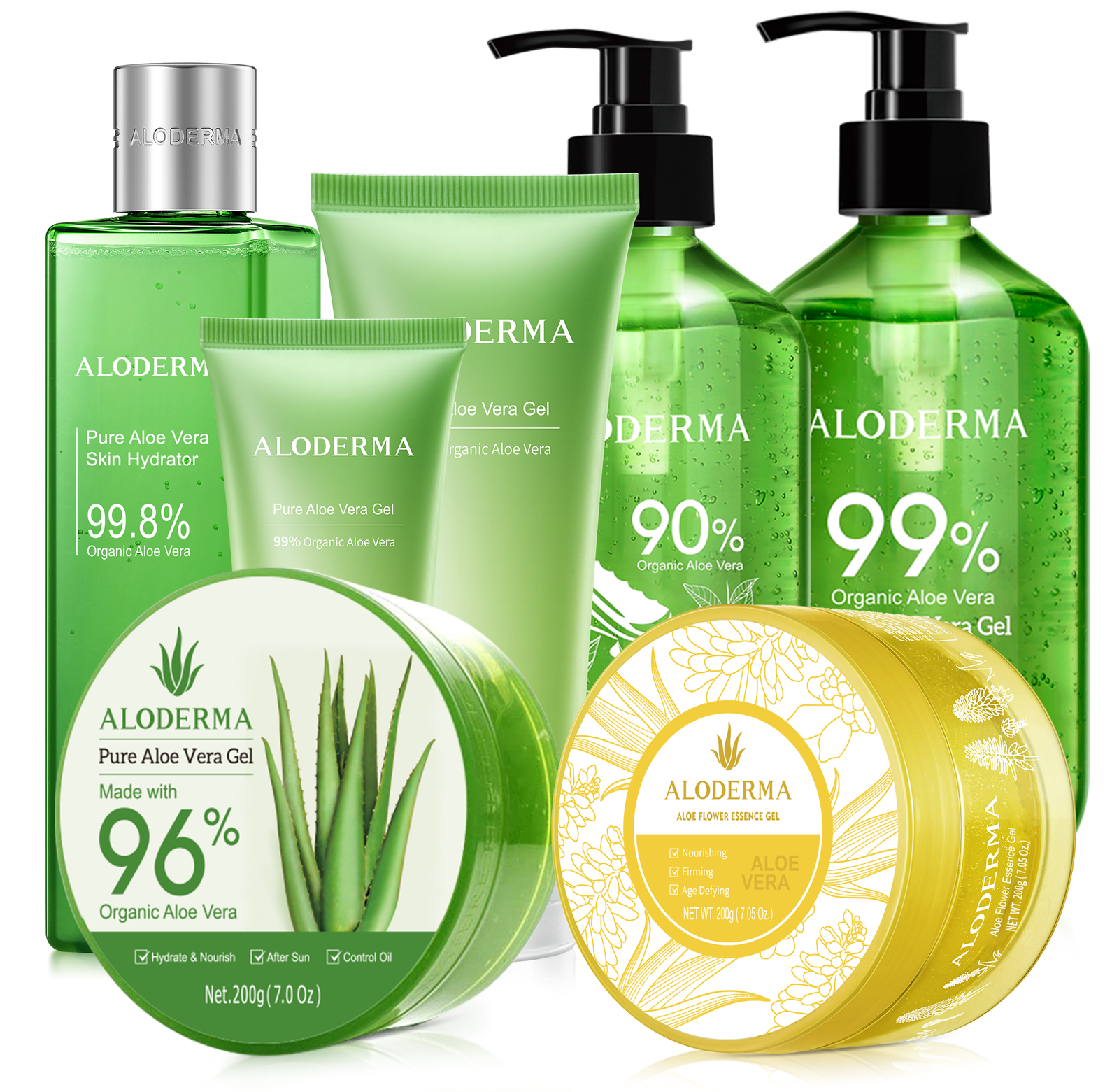


You're standing in the skincare aisle with one hand on a bottle covered in green leaves and the word organic, and the other hand on the ingredient list trying to make sense of it. The front of the package says aloe, but the back reads like a chemistry class built around water, thickeners, and preservatives. That disconnect is the whole problem with organic aloe vera extract, and it's why a pretty label doesn't always mean a fresher, more active, or more useful formula.
The good news is that aloe can be one of the simplest, most comforting ingredients in skincare when it's handled well. The tricky part is learning to separate plant truth from marketing shorthand, because the part of the leaf used, the speed of processing, and the way the extract is certified all change what ends up on your skin. If you want a quick at-home starting point for working with the plant itself, the Leaves & Soul aloe guide is a practical companion, and for a deeper brand-side look at purity, Aloderma's own explainer on 100% pure aloe vera gel is useful context.
Why Your Aloe Vera Product Might Not Be What You Think
A shopper lifts a bottle, reads the front label, then pauses at the ingredient list. The package says organic aloe, but water leads the formula and aloe appears far down the panel, more like a supporting note than the main event. That gap between promise and structure is where many aloe products lose their edge.
“Made with aloe vera” can sound generous while still allowing only a small amount of plant material in a formula built mostly on fillers. The label may borrow aloe's calming image and leaf-from-the-garden feel, while the extract itself has been diluted, reprocessed, or rebuilt from powder.
What gets lost along the way
Fresh aloe gel is fragile. Once the leaf is cut, the material begins changing, and that matters for both texture and skin feel. A bottle can carry the correct botanical name and still behave very differently from fresh inner-leaf gel.
Inner-leaf gel extract is the clear core of the leaf, and it is the part many people picture when they want a light, soothing aloe product. What “organic” certifies is limited to cultivation, not the whole story. The source leaf may be grown carefully, yet the final ingredient can still vary based on which part was used and how quickly it was processed. If you want a plain-language reference for the plant side of the equation, the Leaves & Soul aloe guide is useful background, and for a closer look at purity questions, ALODERMA's own explainer on 100% pure aloe vera gel offers helpful context.
That is why the ingredient list matters more than the front label. A well-marketed aloe lotion can still be mostly water, emulsifiers, preservatives, and fragrance, which may be perfectly fine for a certain texture or user preference. If aloe sits below those ingredients, the bottle leans on aloe as a story rather than building its structure around it.
Practical rule: if aloe is meant to lead the formula, it should show up early and shape how the product feels on skin.
For a quick label literacy check, I like pairing ingredient list reading with the Cactus Outlet aloe care guide, because it helps connect the living plant with the finished product in the bottle.
What Organic Aloe Vera Extract Really Means

You pick up a bottle that says organic aloe, expecting a simple, fresh-feeling formula. Then the ingredient list starts with water, followed by thickeners, preservatives, and only later aloe. That label is not lying, but it does show how little the word “organic” tells you on its own.
Three forms that look similar on a label
Inner-leaf gel extract comes from the clear core of the leaf, much like the juice inside an orange before anything else is added. This is the form many people picture when they want aloe that feels light and soothing on skin. It is also the part most associated with a polysaccharide-rich profile, including compounds such as acemannan.
Whole-leaf extract uses more of the plant, which can sound appealing until you remember the outer leaf contains latex-associated compounds that may be less welcome in a face formula if the material is not carefully filtered.
Reconstituted powder starts as dehydrated aloe, then gets mixed back with water for use in a formula. That can work in manufacturing, but it behaves differently from a fresh gel-based ingredient, both in texture and in how it feels on skin.
What “organic” actually certifies
Organic tells you something about cultivation, not the full product story. It means the aloe was grown under organic rules and certified by a recognized body. It does not tell you which part of the leaf was used or how the extract was made, and those details matter just as much for the final ingredient.
A label can look clean while the formula itself is built very differently. If the front says aloe but the ingredient list places it behind water and supporting ingredients, the bottle is relying on aloe as part of the story rather than centering it in the formula.
Good formula literacy starts with two questions, not one, “What part of the plant is this?” and “How was it processed?”
For a consumer-facing example of how brands describe aloe formats, The Cactus Outlet aloe care pairs well with ALODERMA's guide on how to use aloe vera for skin.
The Farm-to-Skin Journey and Why Speed Matters
A brand may grow organic aloe on its own farm, advertise a clean label, and still lose a lot of the plant's freshness before it reaches the bottle. If the leaves sit too long after harvest, the extract starts moving away from the bright, fresh profile people expect from aloe. That is the hidden gap shoppers often miss when they focus only on the word organic.
Independent research on aloe processing notes that freshly removed leaves are often refrigerated within 6 hours or sent directly to a processing plant, and that filleting should be completed within 36 hours of harvest to avoid loss of biological activity (PMC processing review). For a skin-care formulator, that timeline matters because aloe is sensitive to delay, much like produce that starts softening once it leaves the field. Brands that grow, harvest, and process on one site have less room for that freshness gap to open.
Fresh basil shows the pattern clearly
Fresh aloe behaves a lot like fresh basil after harvest. Basil cut for dinner keeps its lively character when it is used right away, then starts to lose that brightness as time passes. Aloe is not a kitchen herb, but the same principle applies to the plant material that will become a cosmetic ingredient.
A harvest-to-bottle timeline gives a clearer quality signal than packaging language alone. When a company can show a short, controlled route from leaf to ingredient, it gives you a better read on how much of the plant's original character may still be present.
What vertically integrated brands can control
When a company grows its own aloe, processes it onsite, and keeps the chain tight, it can protect the material before it becomes a finished formula. That kind of setup gives the brand direct control over freshness, which is exactly the point many shoppers miss when they focus only on the word organic.
Aloderma is a fully vertically integrated aloe vera company, and it grows its own organic aloe vera, then processes and manufactures onsite within 12 hours of harvest. For anyone trying to compare aloe products, that kind of harvest-to-process control is easier to evaluate than a broad marketing claim, and it lines up with the practical advice in the aloe skin-use guide.
A short harvest-to-process window gives a brand more control over quality.
How Aloe Vera Bioactives Work on Your Skin
Aloe's reputation often gets reduced to one word, soothing. Soothing captures part of aloe's role, but the ingredient offers more than that single benefit. It behaves like a small botanical toolkit, with different compounds shaping the feel, glide, and moisture profile of the final formula.

The role of acemannan
The best-known aloe polysaccharide is acemannan, a mannose-rich chain that gives aloe its characteristic slip and film-forming feel. It works like a light moisture net on skin, offering structure without the heavy finish of a richer cream.
That structure matters because the molecular size and acetylation state of aloe polysaccharides influence viscosity, film formation, and possible bioactivity. Processing can change those traits materially, as shown in the ACS compositional study. For formulators, a fresher, better-preserved extract is a functional choice, not just a marketing line.
Why skin types often respond differently
For sensitive skin, aloe's lightweight water phase can feel comforting without heaviness. For oily skin, it can add hydration without a greasy finish. For blemish-prone skin, the appeal is usually the clean, quick-absorbing feel that fits into simpler routines.
The key is that aloe is not a one-note ingredient. A well-made extract can support the sensory profile of a formula, while a poorly handled one may feel more like diluted plant water than a meaningful botanical base.
The formulation lens
One comparative in vitro study reported aloe vera gel increasing ketoprofen flux to 20.464 μg/cm²·h versus 8.020 μg/cm²·h in the control, showing that aloe's gel matrix can affect skin permeation behavior (NWU study). That does not mean every aloe product behaves the same way on skin, but it does show that aloe is more than a passive soothing backdrop.
Formulator's takeaway: preserve the native polysaccharide network, and you preserve more of the ingredient's texture story.
Decoding Organic Certifications and Purity Standards
Certification matters because it turns a vague claim into something you can verify. A label that says organic is not the same as a label that proves the whole formula meets a defined organic threshold, and shoppers who know the difference avoid a lot of disappointment.
| Certification Body | Minimum Organic Content | Allowed Processing Aids | Key Limitation for Aloe Products |
|---|---|---|---|
| COSMOS | 95% of physically processed agro-ingredients must be organic, and organic beauty products must reach 20% organic ingredients in the total formula, or 10% for rinse-off products | Allowed aids depend on COSMOS rules and formulation category | Aloe can be genuine and still appear in a formula that contains other non-organic ingredients if the overall threshold is met |
| Ecocert benchmark | Certified cosmetic products average 99% ingredients of natural origin | Natural-origin benchmark does not mean every ingredient is organic | Natural origin is not the same thing as high aloe concentration |
The useful habit is simple. Read the certifier logo, check the organic percentage, and look at where Aloe Barbadensis Leaf Juice appears in the INCI list. A leaf graphic on the front of the bottle is not the same as a formula that centers aloe.
Certified organic versus made with organic ingredients
Those phrases are not interchangeable. One tells you the product clears a stricter threshold, while the other signals a looser standard that can leave more room for non-organic content. That difference matters in aloe skincare, where a formula can still feel pleasant while offering less of the plant material shoppers think they're buying.
If you want a brand-side explanation of how a seal gets interpreted in practice, Aloderma's article on what USDA Organic means is a handy companion.
Choosing the Right Aloe Product for Your Skin Type
Start with the ingredient list, not the buzzword. If Aloe Barbadensis Leaf Juice or Aloe Vera Gel appears near the top, you're more likely to be looking at a formula where aloe plays a meaningful role. If it sits below water, fragrance, and multiple thickeners, the bottle may be leaning on aloe as a story rather than as a structure.
Match the format to the skin feel you want
A pure inner-leaf gel fits people who want a short ingredient list and a light, quick-drying layer. It's the easiest match for oily or reactive skin that doesn't love rich textures.
An aloe serum can work well when you want hydration plus another targeted ingredient. That's where blends with humectants can feel more rounded, especially if your skin likes a soft finish without heaviness.
An aloe cream makes sense when the skin needs both the botanical feel of aloe and the cushioning of a moisturizer. That's often a better experience for dry or combination skin than relying on aloe alone.
If your skin likes simple routines, choose the shortest formula that still does the job. If it likes cushioning, choose aloe as a base, then add support around it.
A quick shopping checklist
- Check the first three ingredients: If aloe is buried, it may be doing less than the front label suggests.
- Look for a preservative system: Water-based aloe needs protection, or the formula won't stay stable.
- Watch the packaging: Opaque or UV-protective packaging is a plus for light-sensitive formulas.
- Scan for irritants: Alcohol and fragrance can be worth avoiding if your skin gets fussy.
A fresh, minimally preserved aloe product can have a shorter shelf life, and that's not automatically a flaw. In some cases, it's the sign that you're holding something closer to the plant's original state.
Common Myths About Aloe Vera Purity and Safety
The first myth is that thicker gel means better aloe. It doesn't. Texture can come from synthetic thickeners just as easily as it can come from the plant's own polysaccharides, so a plush feel on the skin doesn't prove botanical richness.
The second myth is that aloe is always gentle. Topical inner-leaf gel is generally well tolerated, but safety depends heavily on the plant part and processing method. Medical reviews distinguish that from whole-leaf or latex-derived products, which can carry more risk when taken orally, and 2025 review language also notes that effect and safety depend on formulation, dose, and anthraquinone content (PMC review) and a newer review in Frontiers in Nutrition.
What purity really means
A 100% aloe product sounds ideal until you ask how it was preserved. Water-based products need a preservation system, and without it, they don't remain stable. In real life, “pure” can sometimes be a bad sign if it leaves out the formulation work that keeps the product usable and safe on a shelf.
The third myth is that more plant material automatically means better performance. A well-formulated blend can outperform a so-called pure product if the pure one is poorly preserved, overprocessed, or built from a weaker raw material. That's why I pay more attention to process integrity than to the romance of ingredient count.
Reality check: with aloe, purity is useful, but only if it survives the journey from leaf to bottle.
Building a Simple Skincare Routine With Fresh Aloe
Aloe works best when you give it a job it can do. On damp skin, a certified aloe toner or essence can act as a hydrating first layer, then a treatment serum can follow, and a light moisturizer can finish the routine. That sequence keeps aloe where it shines, at the beginning, where it helps the skin feel comfortable and receptive.
For oily or blemish-prone skin, a cold-pressed inner-leaf gel can feel lighter than a cream and easier to layer under sunscreen or makeup. For dry or sensitive skin, aloe-infused cream emulsions usually make more sense because they add cushioning without forcing the aloe to do every job alone.
If you're comparing products, use this short checklist.
- Verify the certification logo: Don't rely on the leaf graphic.
- Confirm the top ingredients: Look for Aloe Barbadensis Leaf Juice early in the list.
- Check preservation: A broad-spectrum preservative helps the formula stay usable.
- Inspect the packaging: Opaque or UV-protective containers are a smart sign.
If you want a brand to compare against, Aloderma offers aloe-based gels, toners, serums, creams, cleansers, and masks built around fresh organic aloe from its own plantations, with onsite processing within 12 hours of harvest. Start simple, patch-test consistently, and let your skin's response tell you whether you need a lighter gel, a more cushioned emulsion, or a minimal formula that stays close to the plant.
If you're ready to compare fresh aloe textures, certification details, and everyday skincare formats in one place, visit ALODERMA and look through the aloe gels, toners, serums, and creams that fit the routine you're building.