



Your skin feels shiny by noon, tight after cleansing, and oddly reactive when you try anything labeled “purifying.” That combination confuses a lot of people. You want a fresh, clean feeling, but you don’t want the sting that often comes with strong actives or harsh essential oils.
That’s one reason organic mint oil keeps showing up in skincare conversations. It sounds simple. It smells crisp. It has a reputation for helping skin feel refreshed. But potent botanicals are never as simple as a pretty label.
Used thoughtfully, organic mint oil can support a routine for sensitive, oily, and blemish-prone skin. Used carelessly, it can feel like too much. The difference usually comes down to formulation, concentration, and what the mint oil is paired with.
A Fresh Start for Your Skin
A common scenario goes like this. Someone with combination or oily skin starts looking for “natural” products because the conventional ones feel stripping. They find clay masks that leave their face dry, exfoliants that feel harsh, and heavy creams that seem to sit on top of the skin. Then they spot mint on an ingredient list and think, “That sounds clean and light.”
That instinct makes sense. Mint suggests clarity, freshness, and comfort. It also fits a larger shift in beauty buying. The global mint essential oils market, which includes organic mint oil, was valued at USD 925.3 million in 2022 and is projected to grow at a CAGR of 9.8% from 2023 to 2030, according to Grand View Research’s mint essential oils market analysis. Growth like that points to sustained interest in natural and certified organic ingredients.
Still, skincare isn’t about chasing a trendy extract. It’s about solving a skin problem without creating a new one.
Why people reach for mint
For oily and blemish-prone skin, mint has obvious appeal:
- It feels instantly fresh: That cooling sensation can make skin seem cleaner and less weighed down.
- It suits morning routines: Many people like mint in products they use after waking up because it helps the skin feel revived.
- It pairs well with lightweight textures: Gel toners, watery serums, and aloe-based products often match the “clean skin” feeling people want.
That said, “refreshing” and “gentle” aren’t the same thing.
Organic mint oil can be a good skincare ingredient, but it’s never the whole story. The base formula matters just as much as the mint itself.
When readers get confused, it’s usually here. They assume that if something is organic, it must automatically be mild. In reality, organic mint oil is still a concentrated essential oil. Organic tells you something important about how the plant was grown and processed. It doesn’t mean your skin can handle unlimited amounts of it.
Understanding Organic Mint Oil
Organic mint oil is a concentrated botanical extract taken from mint plants, most often peppermint or spearmint. The oil comes from the leaves and stems, and even a small bottle represents a large amount of plant material. That’s why the aroma is strong and the skin feel is so noticeable.

How the oil is made
Most organic mint oil is made through steam distillation. A simple way to picture it is to think of steam moving through fresh mint leaves like vapor moving through a basket of herbs. The heat releases the fragrant compounds, the vapor cools back into liquid, and the essential oil separates from the aromatic water.
That process matters because it helps explain why mint oil is so concentrated. You’re not working with crushed leaves or mint tea. You’re working with the most aromatic volatile compounds from the plant.
Peppermint and spearmint are not interchangeable
People often use “mint oil” as a catch-all term, but there’s a practical difference between the two most familiar types.
| Type | What it’s generally like | Best way to think about it |
|---|---|---|
| Peppermint oil | Sharper, cooler, more intense | Better known for a strong tingle |
| Spearmint oil | Sweeter, softer, less forceful | Often feels gentler in scent profile |
That difference is useful when you’re reading labels. If your skin tends to react easily, the exact mint species matters.
If you enjoy mint in a gentler wellness ritual, not just on your skin, a resource on organic spearmint tea can also help you understand how different mint varieties show up in everyday routines.
What “organic” really tells you
Organic certification matters because it points to farming and processing standards. It signals that the mint was grown without synthetic pesticides or fertilizers and handled according to specific certification rules. For ingredient-conscious shoppers, that’s valuable.
But many people need a clearer framework. Organic is about production standards, not automatic skin compatibility.
The broader peppermint oil market also shows why organic versions have gained attention in personal care. The peppermint oil market was valued at USD 245.96 million in 2025, and the natural source segment is projected to hold a 63.8% market share in 2026, according to Fact.MR’s peppermint oil market report. That demand reflects interest in naturally sourced ingredients, especially in wellness and personal care.
A short visual can help if you want to see the ingredient in context:
The Science Behind the Cooling Sensation
The cool feeling from peppermint isn’t your imagination, and it isn’t because the oil lowers skin temperature. The sensation comes from chemistry.
Peppermint essential oil is dominated by menthol at 38 to 50% and menthone at 20 to 30%, according to this overview of organic peppermint essential oil properties and uses. Those two compounds shape both the scent experience and the way the oil feels on skin.

Why menthol feels cold
Menthol interacts with receptors that register a cold-like sensation. So when you apply a properly formulated mint product, your skin may feel brisk and revived even though there’s no real drop in temperature.
That’s why mint can feel so satisfying in a toner, gel, or post-cleanse formula. The sensation signals freshness to your brain. For oily skin, that sensory effect can make a routine feel cleaner and lighter.
Why that same effect needs restraint
The same compounds that make peppermint appealing also make it easy to misuse. Menthol is powerful. In the right amount, it gives a fresh, clear finish. In the wrong amount, it can feel overwhelming, especially on skin that already gets red, tight, or reactive.
That’s one reason I tell people not to judge mint by smell alone. A product can smell “natural” and still be too aggressive for the face.
Practical rule: The stronger the cooling sensation, the more important the surrounding formula becomes.
Peppermint oil also has documented interaction with bacterial strains including Staphylococcus aureus and E. coli in lab-based discussions of its properties, which is one reason formulators pay close attention to menthol concentration in products designed for blemish-prone skin. But “has useful properties” doesn’t mean “the more, the better.” Skin formulas live or die by balance.
What this means for blemish-prone skin
If your skin gets congested easily, mint can be appealing for three reasons:
- Surface freshness: It helps the skin feel less slick.
- Sensory reset: It can make a heavy routine feel lighter.
- Cleaner finish: In the right base, it supports a non-greasy after-feel.
That cooling profile is part of why readers often compare essential-oil mint with synthetic cooling ingredients. If you want to understand a modern mint-adjacent ingredient used in cosmetic formulas, this guide on menthyl lactate and mint in skincare is a helpful companion.
Mint also appears in products beyond facial care. If you’re curious how menthol-rich botanicals are used in broader wellness products, Menthol Peppermint Mullein Oil Blend is one example of how the cooling identity of peppermint travels across categories.
The Perfect Partner Aloe Vera
Mint gets attention because you can feel it right away. Aloe vera is quieter. But in a well-made formula, aloe is often what determines whether that fresh sensation feels pleasant or too sharp.
That pairing matters most for people with sensitive, oily, or blemish-prone skin. These skin types often need two things at once. They need a routine that feels clean and breathable, and they need enough hydration so skin doesn’t swing from shiny to stripped.

Why aloe changes the experience
Mint on its own is forceful. Aloe gives a formula water-rich slip, a softer landing, and better day-to-day comfort. Instead of a harsh “zing,” you get a more even skin feel.
Consider this:
| Ingredient role | What you feel | Why it matters |
|---|---|---|
| Mint oil | Fresh, cool, clarified | Helps skin feel clean and awake |
| Aloe vera | Hydrated, calm, cushioned | Helps prevent that tight, overworked feeling |
This is especially helpful when your skin is oily at the surface but still dehydrated underneath. That’s one of the most misunderstood skin states. People see shine and assume they need stronger drying products. Often they need a better hydration strategy.
Why freshness matters with aloe
The quality of aloe isn’t just a branding detail. It changes how a formula performs. Aloe that’s handled quickly and carefully tends to fit better in lightweight products made for daily comfort, especially when paired with potent botanicals.
Fresh aloe is one reason mint can feel more wearable in a finished product than in a DIY blend. The base has enough slip and hydration to soften the sharp edges.
A cooling ingredient feels more elegant when the formula also gives the skin water, comfort, and a smooth finish.
If aloe is already a core part of your routine, this article on how to use aloe vera for skin offers useful context on where it fits best.
A routine example that makes sense
Here’s how this pairing often works in real life for oily or easily congested skin:
- Cleanse gently: Use a cleanser that removes sunscreen, oil, and debris without leaving the skin squeaky.
- Apply a lightweight hydrating layer: Aloe-based formulas particularly excel in this role. They add water without heaviness.
- Use a refreshing treatment or toner: A mint-containing formula can feel especially good here because the skin is already slightly damp and receptive.
- Seal with a light moisturizer if needed: Not everyone with oily skin needs a heavy cream. Sometimes a gel-cream is enough.
The key insight is simple. Mint gives the immediate sensation people want. Aloe makes that sensation easier to live with.
How to Use Mint Oil Safely and Smartly
If there’s one rule to remember, it’s this. Don’t put pure organic mint oil straight on your face. Essential oils are concentrated, and peppermint is one of the ones people tend to underestimate because it smells so familiar.
This matters even more because broad wellness content often treats peppermint as a general-purpose natural remedy. The National Center for Complementary and Integrative Health notes that there’s insufficient evidence for most non-digestive applications, which is a useful reminder to stay realistic and careful with topical use, as explained on the NCCIH peppermint oil page.
The safest way to think about facial use
For most readers, there are two practical paths.
- Choose a professionally formulated product: This is the easiest route because the concentration, base, and skin feel have already been worked out.
- If you’re experimenting at home, keep it extremely restrained: The face is not the place for guesswork.
What often trips people up is that they’re trying to recreate a spa-like sensation. They want more tingle because they think more tingle means more effectiveness. In skincare, that’s usually the opposite of what helps.
A simple patch test routine
Before using any new mint-containing product, patch test it.
- Apply a small amount to a discreet area such as the inner arm or along the jawline.
- Wait and observe over the next day or two.
- Watch for discomfort such as stinging, persistent warmth, or unusual sensitivity.
- Stop immediately if the skin feels stressed rather than refreshed.
This is especially important if your skin barrier already feels fragile, if you’re using strong actives elsewhere in your routine, or if you react to fragrance.
If your skin is already sending warning signs, mint is not the ingredient to “push through.”
Better choices for sensitive, oily, and blemish-prone skin
A smart mint routine usually looks like this:
- Use mint in a rinse-off or light leave-on format: Cleansers, toners, and lightweight gels tend to feel easier than rich occlusive products with a strong mint profile.
- Pair it with hydrating ingredients: Aloe is the obvious example because it keeps the formula from feeling stark.
- Avoid layering multiple intense products: A mint toner plus a strong acid plus a retinoid can be too much for one night.
- Keep DIY experiments off the face: Body care gives you more room for trial and error than facial skin does.
If you’re trying to build a lower-risk routine, it also helps to know what else can make sensitive skin worse. This guide to ingredients to avoid in skincare is useful for spotting combinations that may be too much all at once.
Sourcing with Confidence Farm to Bottle Transparency
A bottle can say “organic” and still leave out the details that matter. That’s frustrating for shoppers who care about purity, traceability, and whether an ingredient is suitable for facial use.
Mint oil is a good example. Two organic peppermint oils can both carry reassuring language on the front label, yet feel quite different in a formula because their chemical profiles vary.

What to look for beyond the organic seal
One useful example is that some French peppermint oils can contain up to 72.3% l-menthol, as described on this French organic peppermint oil product page. That doesn’t automatically make one oil “better” for every use. It does show why sourcing details matter.
For skincare, transparency should answer practical questions such as:
- Where was the mint grown
- What type of mint is it
- How strong is its aroma and cooling profile
- Does the brand explain sourcing clearly
- Are certifications supported by ingredient detail, not just packaging
Why traceability builds trust
Vertically integrated brands stand out. When a company grows its own core botanicals, processes them on-site, and controls manufacturing closely, shoppers get a more coherent story from field to finished product.
That doesn’t mean every ingredient must come from the same farm. It means the brand has a culture of handling botanicals carefully, documenting quality, and respecting what potent plant ingredients can and can’t do.
A good transparency mindset also helps you avoid greenwashing. “Pure,” “clean,” and “natural” are easy words to print. Harder questions are more useful.
| Ask this question | Why it helps |
|---|---|
| What mint species is used | Peppermint and spearmint behave differently |
| Is origin disclosed | Regional variation can affect the oil’s profile |
| Is the formula facially appropriate | Strong oils may be better for body or aromatherapy than face care |
Your Mint Oil Questions Answered
Can the same organic mint oil be used for aromatherapy and skincare
Sometimes yes, but the use is not the same. A pure essential oil may be suitable for both categories in theory, yet the application method changes everything. In a diffuser, the oil scents the air. On skin, it has to be handled with much more care because direct contact creates a very different experience.
For readers, the practical takeaway is simple. Don’t assume that because a bottle is sold as a general essential oil, it belongs in a facial routine.
Is peppermint oil the same as spearmint oil for skin
No. They come from the same plant family, but they don’t feel identical in products. Peppermint is usually the stronger, colder, more assertive option. Spearmint tends to smell sweeter and may feel less intense.
If your skin reacts easily, that distinction matters. A product labeled only as “mint” doesn’t always tell you enough.
Can you add mint oil to a product you already own
It’s better not to. People often want to boost a plain gel or cream by adding a few drops of essential oil, but that can throw off the balance of the product. Texture, preservation, and skin feel can all change.
The safest formula is the one designed that way from the beginning.
Is organic mint oil good for all skin types
No ingredient is universal. Organic mint oil often makes the most sense for people who like a fresh finish and who don’t react badly to aromatic botanicals. Very dry, fragile, or highly reactive skin may do better with fewer essential oils overall.
What if you want the fresh feeling without the risk
Look for products where mint plays a supporting role rather than the starring role. That usually means a hydrating base, a lighter texture, and a restrained cooling effect instead of an intense one. For many people, that balance delivers the benefit they wanted in the first place.
Embrace the Refreshing Power of Mint
Organic mint oil can be a useful skincare ingredient when you understand what it is and what it isn’t. It isn’t a shortcut to perfect skin, and it isn’t automatically gentle just because it’s natural. It is a concentrated botanical with a distinctive cooling profile that can feel especially satisfying in routines for oily, sensitive, and blemish-prone skin.
The smartest way to use it is with restraint. Look for thoughtful formulas, not aggressive ones. Pay attention to the type of mint, the feel of the base, and how your skin responds over time.
The most interesting part of organic mint oil in skincare isn’t mint alone. It’s the balance created when a brisk botanical is paired with a hydrating, comforting base such as fresh aloe vera. That combination can give skin the clean, light feeling many people want without tipping into discomfort.
When you treat mint as a precise tool instead of a catch-all cure, it becomes much easier to use well.
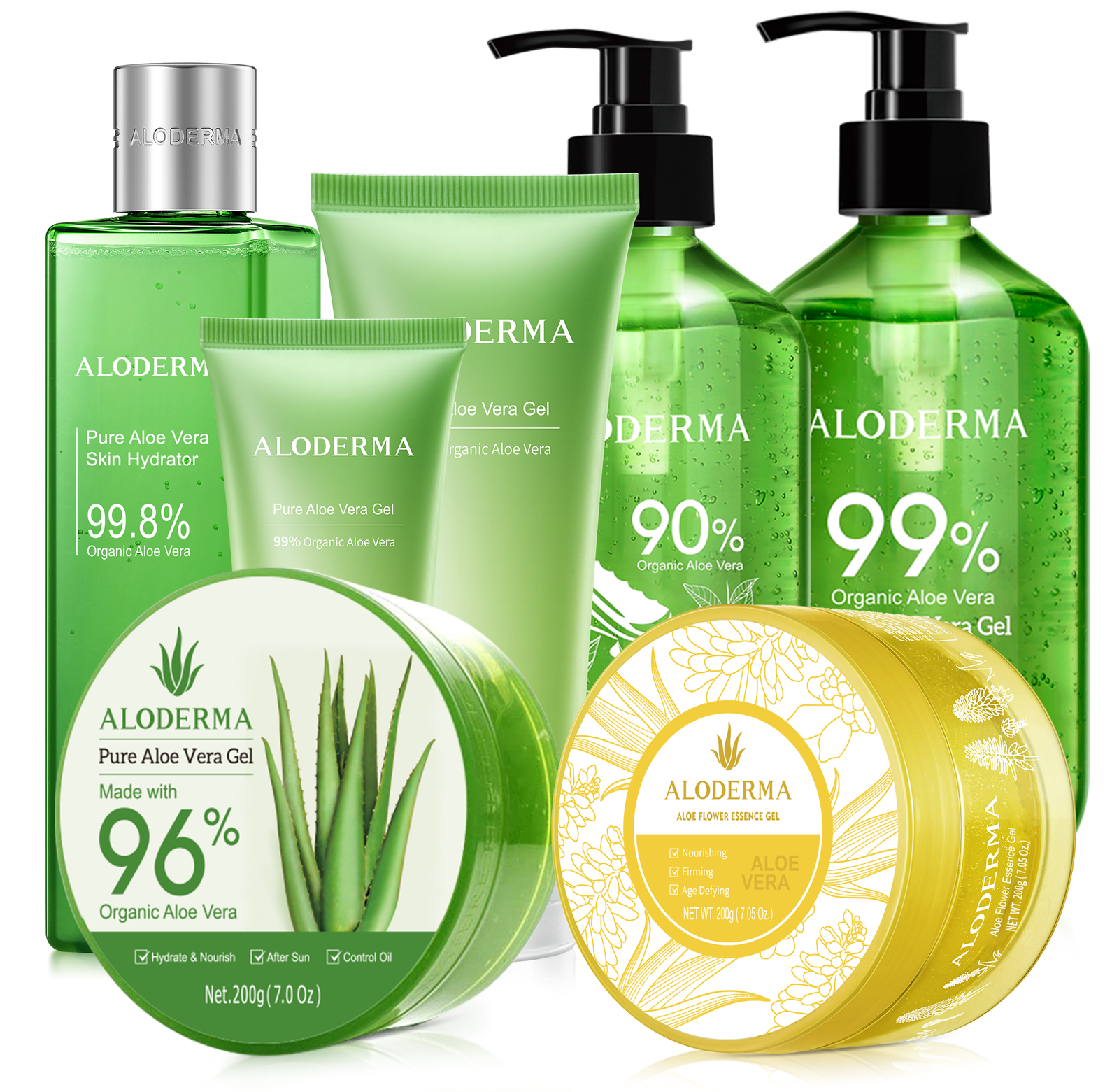
If you want skincare built around that kind of balance, explore ALODERMA. As a fully vertically integrated aloe vera company, Aloderma grows its own organic aloe vera, processes it, and manufactures on-site within 12 hours of harvest so the primary ingredient in every product remains as bioactive and effective as possible. That farm-to-skin approach is especially helpful if you want lightweight, aloe-first formulas that feel comfortable on sensitive, oily, or blemish-prone skin.