



You're standing in front of a wall of pretty boxes, or scrolling through gift options with a birthday approaching fast. One set promises “natural” care, another displays an organic badge, and a third costs more because the packaging looks luxurious. The difficult question is simple: what's inside, and will the recipient use it?
Organic skincare gift sets deserve more scrutiny than a decorative ribbon and a green label. Read them like a formulator. Check certification depth, ingredient order, freshness signals, skin-type fit, and packaging integrity. That approach helps you choose a thoughtful routine instead of paying for filler, vague claims, or a box that looks better than it performs.
A Gift That Says You Care Without the Guesswork
The best skincare gift feels personal without requiring you to know every detail of someone's routine. A colleague who keeps hand cream beside the keyboard may appreciate a compact hydration set. A sibling who travels regularly needs sturdy tubes and a simple sequence. A partner who already uses several products will notice whether the formulas complement one another or create another half-used collection in the bathroom.
The label alone can't answer those questions. “Organic” may describe a certified formula, a partial ingredient story, or a broad marketing position, so the front of the box is only the starting point. Price isn't a reliable shortcut either. An expensive set can contain oversized cartons, tiny samples, and a fragrance-heavy formula, while a modestly packaged set may give the recipient a more coherent routine.
The four checks I use first
Certification depth tells you how much of the formula meets a defined organic standard. A recognized seal carries more meaning than an unqualified natural claim.
Ingredient order and freshness reveal whether the set is built around meaningful plant ingredients or mostly water, texture agents, and decorative extras. The first part of the INCI list deserves more attention than the marketing copy.
Skin-type fit determines whether the recipient can use the whole set comfortably. A lightweight aloe routine may suit someone who dislikes rich creams, while a dry-feeling recipient may want a moisturizer alongside a gel.
Packaging sustainability and protection belong together. A recyclable container is useful, but it also has to protect a delicate botanical formula from light, oxygen, and contamination.
Practical rule: Buy for the recipient's actual habits, not the fantasy version of them who will suddenly complete a complicated ritual every morning.
A good set should tell a clear story. The cleanser prepares, the toner or mist refreshes, the serum adds targeted care, and the moisturizer finishes the routine. If every product does roughly the same thing, choose a smaller set with stronger formulation logic.
What Organic Actually Means on a Skincare Label
Start with the certification language, not the color of the carton. According to ALODERMA's explanation of USDA organic beauty product standards, a product labeled “Organic” must contain at least 95% certified organic ingredients, while “Made with Organic...” requires at least 70% certified organic ingredients. Those labels describe different certification thresholds, so they shouldn't be treated as interchangeable.
USDA certification also differs from European schemes such as ECOCERT and COSMOS Organic. These systems assess ingredient sourcing, processing methods, formulation rules, and aspects of packaging, with their own requirements for permitted materials and production practices. A logo is useful, but the brand should explain which standard applies and what the certification covers.

Read the claim in context
Words such as natural, clean, plant-based, and botanical can communicate a brand's philosophy, but they don't automatically establish a regulated organic percentage. Independent guidance on natural and cruelty-free gifting also points out that “natural” isn't tightly regulated in the United States, while cruelty-free claims carry more weight when supported by certifications such as Leaping Bunny or PETA. For broader principles around responsible presents, this guide to impactful green gifting offers useful context beyond skincare.
Turn the box over and read the INCI list. Look for the position of certified organic ingredients, the presence of water or aloe juice near the beginning, and whether the brand explains its preservative and fragrance choices. A certified label doesn't mean every ingredient is organic, and a non-certified product isn't automatically poor quality. It means you need more evidence from the ingredient list and sourcing information.
For a brand-focused comparison, use this organic skincare brands guide alongside the product page. My quick habit is consistent: logo on the front, INCI list on the back, sourcing and certification details on the brand website.
Reading the Inside of a Gift Set Like a Formulator
Formulators don't judge a set by the number of bottles. They ask what each product contributes, how the ingredients are preserved, and whether the packaging protects the formula until the last use.
Start with the first five ingredients
The first five INCI names usually tell you the formula's basic character. For an aloe-forward set, I want aloe vera juice, aloe leaf extract, or a related aloe ingredient positioned prominently rather than appearing near the end as a decorative addition. I also look for a sensible balance of humectants, emollients, and texture ingredients.
Denatured alcohol isn't automatically disqualifying, but it deserves context. A small amount in a toner may create a quick-drying feel, while a strongly alcohol-led formula may be a poor choice for someone who prefers a gentle routine. Undisclosed “fragrance” is another reason to pause, especially when the recipient's scent preferences are unknown.
A useful companion to this checklist is ALODERMA's guide to ingredients to avoid in skincare. Use it to investigate unfamiliar names rather than rejecting every ingredient that sounds technical.
Freshness changes the buying decision
Natural formulas often rely on more sensitive preservation systems and botanical materials. If a set contains a shorter preservative system, I'd favor products intended for use within 6 to 12 months, and I'd check the batch code, expiration information, or period-after-opening symbol before wrapping it. That timeframe is a practical freshness guide, not a universal guarantee, because the formula, container, storage conditions, and opening date all matter.
Preservatives such as radish ferment, gluconolactone, and potassium sorbate can appear in natural skincare systems. Parabens aren't the only factor in product safety, but shoppers who specifically want a natural-preservation approach should understand what the brand uses and why.
Packaging has a technical role. Expert formulation guidance explains that no package preserves a cosmetic by itself, while airless pumps, opaque containers, and high-barrier formats can reduce exposure to oxygen, light, and contamination. Compatibility and preservative efficacy still need validation, particularly with transparent packaging. For a polished example of how a curated beauty box can be assembled, browse this Osea beauty gift bundle, then inspect the individual product formats rather than judging the box alone.
Matching the Set to the Person on Your List
Choose by skin profile and routine behavior, not by personality type. The person who loves minimalist design may still dislike a rich balm, and the person who enjoys elaborate packaging may only use one fast morning product.
For a sensitive recipient, keep the sequence quiet and uncomplicated. A calming aloe gel paired with a fragrance-free moisturizer and a thermal-sourced mineral mist creates a straightforward hydration-focused routine. Avoid strong actives, heavily scented formulas, and sets that demand several new products at once.
An oily or combination recipient usually has different priorities. A pore-refining aloe toner, lightweight gel-cream, and clay-aloe weekly mask create variation without making every step feel heavy. Look for quick-absorbing textures and avoid sets built around dense oils if the recipient already dislikes a greasy finish.
A blemish-prone recipient needs careful selection, not an aggressive-looking box. A non-comedogenic aloe cleanser, a salicylic-friendly serum, and a soothing aloe spot treatment can make sense as a coordinated lineup, provided the product instructions support that combination. Don't give a highly active routine to someone whose current products are deliberately gentle.

Read the clues they already give you
Look at what the recipient carries and uses:
- Current texture: A lightweight lotion, gel, or mist suggests they may not enjoy a dense cream.
- Existing steps: A shelf full of serums means a cleanser or moisturizer may be more useful than another treatment.
- Scent habits: Fragrance-free products are safer when you don't know whether they enjoy essential oils.
- Lifestyle: Travelers benefit from secure tubes and compact sizes, while homebodies may appreciate full-size packaging.
A multi-step set should include a usage card. Write the order plainly: cleanse, mist or tone, apply serum, then moisturize. The card turns a beautiful box into an actionable gift and prevents the recipient from guessing which product comes first.
Freshness, Farming, and Sustainable Packaging
Freshness, farming, and packaging aren't separate selling points. They form one chain. If a brand controls the crop, processes the ingredient quickly, and chooses a container that limits exposure, the product story becomes easier to verify.
ALODERMA is a fully vertically integrated aloe vera company. The brand states that it grows all of its own organic aloe vera, processes the aloe, and manufactures onsite within 12 hours of harvest so the primary ingredient in every product is as bioactive and effective as possible. That farm-to-bottle model gives shoppers a concrete freshness signal instead of asking them to rely on a generic “fresh aloe” phrase.
The model also changes what you should ask about sustainability. A brand should explain where its aloe comes from, how it tracks batches, and what happens to the container after use. An attractive box doesn't compensate for opaque sourcing or packaging that creates unnecessary waste.

Five checks that take less than a minute
- Harvest language: Does the brand explain what happens between harvest and processing?
- Lot traceability: Can the company identify a batch or production code?
- Packaging purpose: Is the container opaque, airless, or otherwise designed for formula protection?
- Refill or recycling route: Does the brand tell you how to dispose of or reuse the package?
- Outer carton materials: Look for responsibly sourced paper and minimal plastic windows.
The technical reason matters. Guidance on organic skincare packaging notes that natural preservation systems can be more vulnerable to light, oxygen, and interactions with the container, so packaging integrity supports both freshness and responsible formulation. You can read more about the certification side in this ECOCERT organic certification guide.
Here's a visual explanation of the farm-to-package approach:
Choosing the Right Budget for the Moment
Budget should follow the recipient's routine depth. Don't buy a large box for someone who wants one dependable moisturizer, and don't give a tiny sampler to someone who already understands skincare and wants a complete sequence.
| Tier | Typical Price | Typical Contents | Best For | Watch For |
|---|---|---|---|---|
| Entry | Under $40 | A curated trio of travel sizes | Coworker, teacher, or first-time organic user | Decorative filler, weak samples, short remaining shelf life |
| Mid-range | $40 to $90 | One full-size hero product plus two supporting items, often with better packaging | Close friend or family member | Paying for presentation instead of formula quality |
| Premium | $90 and up | A multi-step routine with cleanser, serum, moisturizer, and mask | Partner or milestone occasion | Repeated product functions and oversized cartons |
At the entry level, the set should still have a clear order and useful formats. Travel sizes make sense when you're introducing someone to a new line, but “gift-with-purchase” minis can be less appealing if they've been sitting in a promotional bundle without clear freshness information.
The mid-range tier is where I'd expect the best balance. A full-size aloe gel, moisturizer, or cleanser gives the recipient something substantial, while two supporting products make the gift feel considered. At the premium level, inspect every step before paying. A single well-formulated full-size aloe product can be more useful than a basket of weak samples.
Personalizing the Unboxing Experience
A memorable set feels edited, not crowded. Start by deciding whether the recipient needs a trial experience or a reliable supply. Travel sizes suit a first introduction and make it easier to test textures. Full sizes work better when you already know the person uses that product category.
Scent deserves the same attention as texture. If the cleanser has a bright botanical aroma and the moisturizer has a heavy essential-oil profile, the products may compete across the routine. When you don't know the recipient's preference, choose fragrance-free or low-scent options and let the ingredient story carry the gift.
Build the box around a small ritual
Take a friend who's moving into a new apartment. I'd choose a cleanser, aloe gel, and moisturizer, place them in application order, and add a handwritten note that says, “For the nights when unpacking can wait.” That message is more personal than a generic “enjoy” card because it connects the products to a real moment.
Use tissue paper and ribbon in restrained colors that match the recipient's style. Add a small ingredient card with three details: the hero botanical, the intended role of each product, and the order of use. If the set includes a mask, write how often to use it according to the product directions rather than assuming the recipient knows.

Protect the gift before it reaches them
Shipping directly from the producer can reduce unnecessary handling. In a warm climate, ask whether temperature-sensitive products need additional protection during transit. A sealed freshness sticker, intact carton, and clear batch information make the unboxing feel professionally handled rather than improvised.
Don't add unnecessary scented paper or perfume to the package. The recipient should experience the products' own character, not a layer of competing fragrance from the wrapping.
Aloe-First Gift Ideas Worth Wrapping Up
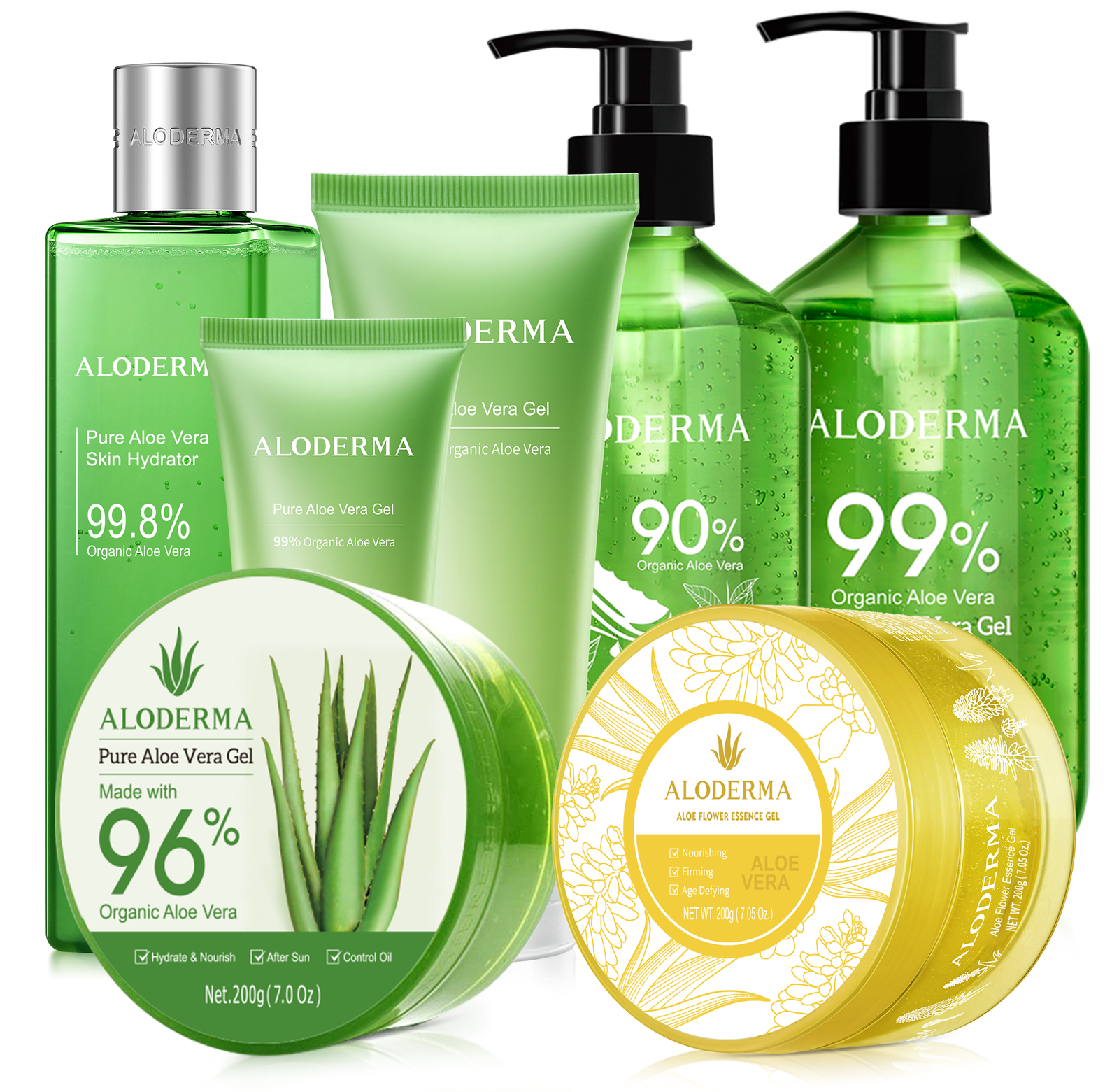
ALODERMA's published information says its products range from 64% to 99.8% organic ingredients, and that all new products introduced from 2022 onward contain at least 95% naturally derived ingredients. The brand also states that it grows its own organic aloe, processes it onsite within 12 hours of harvest, and uses USDA and ECOCERT certifications as part of its standards. Those details give gift shoppers something specific to inspect when comparing aloe-forward organic skincare gift sets.
For a sensitive recipient, I'd build a calming trio around the Aloe Soothing Gel, a gentle moisturizer, and a mineral mist. Keep the presentation simple, include a usage card, and avoid adding a strongly scented treatment just to make the box look fuller.
For oily or blemish-prone skin, choose a cleanser, toner, and lightweight hydration step from the ALODERMA skincare collection. Check the individual INCI lists and instructions before combining products, especially when the set includes an active serum or mask. A staged unboxing works well here, with the daily routine in one layer and the occasional treatment underneath.
A curious newcomer may prefer a discovery-style assortment. Select smaller formats where available, explain the order of use, and ask the recipient to introduce products gradually rather than opening every item at once. That makes the gift feel generous without forcing a complicated routine.
| Recipient | Recommended Set | Key Features | Product Link |
|---|---|---|---|
| Sensitive-skin user | Aloe gel, gentle moisturizer, mineral mist | Simple hydration-focused layering and low-fragrance presentation | Aloe Soothing Gel |
| Oily or combination user | Aloe cleanser, toner, gel moisturizer, clay-aloe mask | Lightweight daily care with a separate weekly step | ALODERMA skincare collection |
| Curious newcomer | Travel-friendly aloe essentials | Easy introduction, clear usage order, less commitment per product | ALODERMA giftable skincare options |
The strongest recommendation is the set with a coherent formula story, suitable textures, visible sourcing information, and packaging that protects the contents. Choose fewer products when each one earns its place.
ALODERMA offers fresh, aloe-forward skincare made from the brand's own organic aloe and processed onsite within 12 hours of harvest. Visit ALODERMA to choose an organic skincare gift set that matches the recipient's skin profile, routine, and values.