



You're standing in front of a shelf with a facial toner in one hand and a body cream in the other. The word “clean” appears on one label, “natural” appears on another, and both products have a noticeable fragrance. You turn the bottles around, scan unfamiliar names, and still can't tell whether the scent comes from clearly listed plant extracts or a hidden fragrance blend.
That moment is exactly why phthalate free skincare deserves a practical, rather than fearful, explanation. Phthalates aren't distributed evenly across every cleanser, cream, or gel. They're more closely connected with certain fragrance systems and product categories, while regulatory positions differ between markets. Once you understand where to look, how to interpret certifications, and how to judge the whole formula, ingredient shopping becomes much less overwhelming.
Why Phthalate Free Skincare Matters Right Now

You pick up a toner for its refreshing feel, then pause at “fragrance” on the ingredient list. The label does not explain whether the scent comes from named extracts or a broader fragrance blend. Nearby, a body lotion says “natural,” but that single word leaves several practical questions unanswered, including how clearly the fragrance is described and which ingredient classes the formula excludes.
Phthalate free skincare gives shoppers a useful way to assess those details without treating one label claim as a complete safety verdict. Phthalates are synthetic chemicals that may be used in personal care formulas, especially in fragrance-related applications. The more helpful question is which products deserve closer attention and how much information the brand provides.
Start with the product category
Fragrance-heavy perfume, scented body cream, and aromatic toner warrant a closer label review than an unscented, water-based gel. Focus your attention on products where fragrance plays a central role, while judging leave-on products according to their actual formula and intended use. A leave-on product remains in contact with skin, so clear disclosure matters, but fragrance presence alone does not establish that phthalates are included.
A U.S. survey found category-specific differences, with DEP detected in perfumes and skin toners and DBP detected in perfumes and nail polishes. The detailed findings appear in the ACS Environmental Science & Technology study. These results support a targeted review of fragrance-led products rather than identical scrutiny of every cleanser, cream, or gel.
Practical rule: Check fragrance transparency first, then review the rest of the formula. A short, understandable ingredient list tells you more than a vague “clean” badge.
Ingredient awareness also helps you compare phthalates with other concerns without turning shopping into a chemistry exam. A useful guide to ingredients to avoid in skincare can build that vocabulary. Use it to identify what a product contains, what remains unclear, and whether the formula matches your preferences. The aim is informed comparison, especially for leave-on products and products built around fragrance, rather than automatic fear of unfamiliar names.
What Are Phthalates and Where Do They Hide
Phthalates are synthetic chemicals used in several consumer-product applications. In personal care, some have been associated with fragrance blends, where they may serve as solvents or fragrance fixatives. They can help a scent remain noticeable on skin for longer. This role matters most when fragrance is central to the product, not because a formula is a lotion, toner, cleanser, or other leave-on item.
A long-lasting fragrance does not prove that phthalates are present. Their presence depends on the product, brand, and formulation. For shoppers, the practical question is whether the label clearly identifies the fragrance system and whether the formula will stay on skin for extended contact.
What product surveys found
A U.S. survey found DEP in 100% of perfumes and 90% of skin toners, while DBP appeared in 67% of perfumes and 90% of nail polishes. DEP was also detected in 103 of 252 cosmetic and personal care products in that sample. The category findings are reported in the published ACS research.
A Canadian market survey examined 252 cosmetic and personal-care products and detected five phthalates across fragrances, hair products, deodorants, lotions, cleansers, and baby-care items. For adult females, the maximal estimated daily dermal exposure reached 78 μg/kg body weight per day for DEP, according to the Canadian survey record. The finding supports closer review of leave-on products when phthalates are present. It does not show that every leave-on skincare product contains them.
Contamination isn't the same as universal use
A five-year quality-control survey of 1,110 cosmetic samples from France and Spain identified nine phthalate esters. 4.86% of samples exceeded the 1 µg/mL threshold for at least one phthalate, as reported in the Molecules quality-control study. Supplier checks, manufacturing controls, and finished-product testing therefore matter alongside label reading. Detection in some samples is evidence for quality oversight, not proof of universal use.

For a child's lotion or a product chosen for minimal fragrance, a guide to ingredients to avoid in skincare can help build label vocabulary. A resource on dermatologist recommended baby lotion offers further context for fragrance-free selection. Review fragrance transparency first, then assess the full formula and its intended use.
The Regulatory Landscape and Consumer Concerns
Regional rules explain why shoppers encounter different messages about phthalates. In the EU, DEHP and DBP were classified as reproductive toxicants in 2001. The EU amended Cosmetics Directive 76/768/EEC in November 2002, removing those substances from cosmetics. Regulation (EC) No 1223/2009 later consolidated the framework and repealed the older directive from 11 July 2013, as described in the EU-focused phthalate briefing.
The same briefing discusses a 0.1% by weight threshold for certain phthalates in plasticized materials intended to contact skin or mucous membranes. This threshold applies to specified materials and regulatory conditions, not every cream, serum, or toner. It also illustrates why packaging can matter alongside the formula itself.
Why the U.S. message sounds different
The U.S. FDA currently says it does not have evidence that phthalates as used in cosmetics pose a safety risk, according to its phthalates in cosmetics information. Shoppers can still choose phthalate free skincare as a precaution or because they prefer clearer fragrance policies. The FDA's position means its current public assessment has not established a cosmetic safety risk, not that every brand must make the same purchasing choice.
For a leave-on moisturizer, this distinction helps keep the decision practical. A fragrance-free product may reduce uncertainty about undisclosed scent components, while a strongly fragranced product deserves closer attention to its fragrance policy. Regulatory status and personal preference answer different questions, so neither alone proves that every formula is alike.
Laws keep influencing label expectations
Washington State's Toxic-Free Cosmetics Act restricts ortho-phthalates in cosmetics starting in 2025 and gives in-state retailers a sell-through period until 2026, according to the FDA's discussion of phthalate regulation. A proposed federal Toxic-Free Beauty Act would ban all ortho-phthalates in cosmetics from 2027, as stated in the Congressional bill text. Because that federal measure is proposed rather than enacted, shoppers should not read it as a current nationwide requirement. These policy changes can affect future packaging, fragrance decisions, and the explanations brands provide, while the product's ingredient list remains the starting point for evaluating what is being sold.
How to Spot Phthalates on Product Labels
A shopper comparing a fragrance-free moisturizer with a scented leave-on product may notice that the ingredient lists do not reveal the scent blend in equal detail. Fragrance may appear under the general terms “fragrance” or “parfum,” which can leave individual aromatic components undisclosed. For leave-on products, that level of disclosure deserves attention because the formula stays on the skin. A fragrance term alone does not identify phthalates, but it tells you to look for the brand's fragrance policy and supporting information.
Search the ingredient list for diethyl phthalate, dibutyl phthalate, butyl benzyl phthalate, and DEP. Other names ending in “phthalate” may also appear. If a product claims to be phthalate-free, check whether the brand defines the claim, explains its fragrance approach, and provides a complete ingredient list.
A practical label checklist
- Scan the fragrance terms: “Fragrance” and “parfum” identify a scent blend but may not disclose every component.
- Search for named phthalates: Check for diethyl phthalate, dibutyl phthalate, butyl benzyl phthalate, DEP, and other names ending in “phthalate.”
- Compare product types: Pay closer attention to perfumes, scented toners, and strongly scented leave-on products than to an unscented moisturizer.
- Look for responsible disclosure: Prefer brands that explain their fragrance approach, preservation system, and certification status.
- Read the full package: “Clean” and “natural” are broad marketing terms. The ingredient list and supporting documentation provide more concrete information.

Certifications can narrow the guesswork
COSMOS standards require at least 95% of physically processed agro-ingredients in a certified product to be organic. The standard also excludes petrochemical moieties and petrochemical-origin preservatives and denaturing agents, according to the COSMOS standard. Readers who want to understand another certification framework can review this guide to what USDA Organic means.
NATRUE says its organic certification level requires at least 95% of ingredients of plant and animal origin to come from certified controlled organic farming or wild collection. It also states that certified products contain only natural, derived natural, and nature-identical ingredients, as explained in the NATRUE FAQ. These standards give shoppers defined criteria for comparing certification claims, while the ingredient list remains useful for checking the individual product.
For readers seeking more supply-chain detail, reading GC-MS reports for oils can clarify how laboratories identify volatile compounds in aromatic materials. You do not need laboratory training to shop carefully. Focus on whether the brand can explain its scent ingredients, certification, and phthalate-free claim in specific terms.
Why Fresh Organic Aloe Formulations Naturally Avoid Phthalates
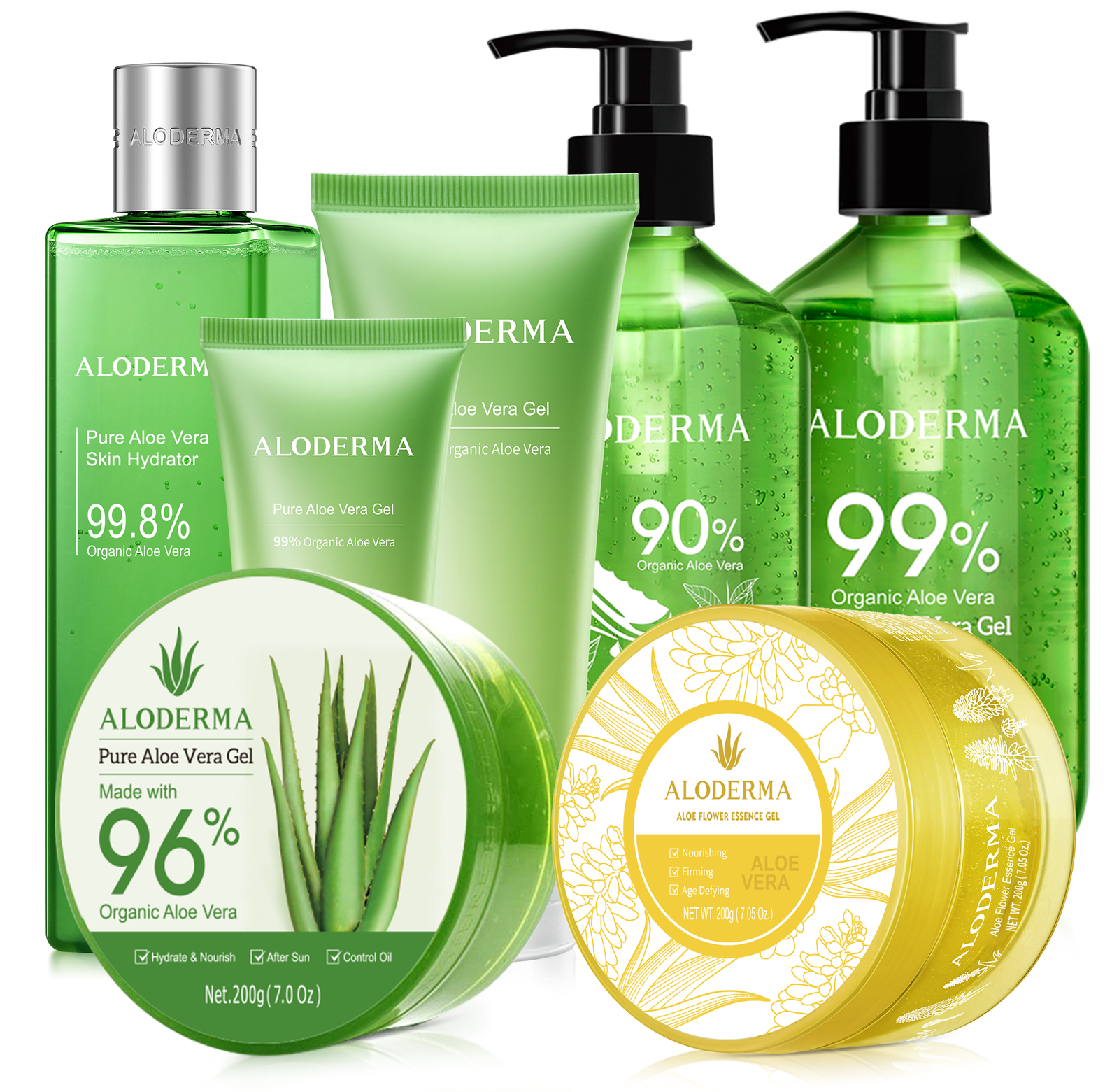
A formula built around fresh organic aloe vera begins with a different design priority than a formula built around a persistent synthetic fragrance. ALODERMA is a fully vertically integrated aloe vera company. It grows all of its own organic aloe vera, processes the aloe vera onsite, and manufactures onsite within 12 hours of harvest so the primary ingredient in every product is intended to be the most bioactive and effective aloe vera possible.

That farm-to-skin model gives a brand more control over sourcing, processing, and manufacturing. It doesn't automatically prove that every natural formula is well made, but it makes the supply chain easier to define. For a shopper comparing products, that distinction matters because “plant-based” describes an ingredient direction, while vertical integration describes how the company manages the primary raw material.
ALODERMA's products prioritize organic aloe as the main ingredient and use plant-based essential oils in selected formulas. The brand also identifies ECOCERT, USDA, and EU Organic certifications, plus a commitment to vegan, cruelty-free, and sustainable practices. Its product information states that products such as Pure Aloe Vera Gel and Aloe Hydrating Cream don't contain phthalates.
Avoidance should support performance
Phthalate free skincare isn't useful if avoiding one ingredient leads to a heavy texture, unclear preservation, or a product you won't use consistently. Fresh aloe-centered formulas can offer a lightweight, water-rich feel, but shoppers should still check the full ingredient list, scent level, packaging, and directions for use.
The brand's onsite processing approach also provides a useful example of formulation philosophy. When fragrance retention isn't the central purpose of a product, a brand can design around hydration, texture, and ingredient freshness rather than adding a synthetic fixative to make a scent last.
A short visual explanation of this farm-to-skin approach can help make the process easier to understand:
Shopping Smart Beyond Just the Phthalate Label
A product can be phthalate-free and still fail your routine. You may dislike its scent, find the texture too rich, or question how the brand protects a water-based formula from contamination. Ingredient avoidance and formulation performance need to work together, especially if you want a lightweight daily product that feels comfortable on sensitive, oily, or blemish-prone skin.
Regulation is also moving toward broader chemical-class approaches. That means a label claim can reflect a brand's voluntary formulation choice, a certification standard, or compliance with a particular market. Ask what the claim covers instead of assuming that “phthalate-free” defines the entire product.
A practical evaluation matrix
| Evaluation Criterion | What to Look For | Why It Matters |
|---|---|---|
| Phthalate-free status | A direct brand statement paired with a complete ingredient list | Helps you understand whether the claim is specific and verifiable |
| Fragrance transparency | Fragrance-free, clearly named aromatic ingredients, or an explanation of “fragrance” and “parfum” | Fragrance-related exposure is a central reason shoppers investigate phthalates |
| Organic certification | Recognized standards such as COSMOS, NATRUE, USDA Organic, or EU Organic | A certification gives “organic” a defined framework |
| Texture suitability | Lightweight gel, fluid lotion, cream, or another texture you'll use consistently | Avoidance matters less if the product doesn't fit your daily routine |
| Manufacturing practices | Clear sourcing, processing, testing, and supplier information | Better documentation can reduce uncertainty around raw materials and finished products |
Formulator's perspective: Removing an ingredient is only one formulation decision. The finished product still needs a suitable texture, reliable preservation, clear labeling, and a scent level that matches the person using it.
Before you buy, compare the product page with the packaging. Look for the complete INCI list, certification details, and the brand's explanation of fragrance and manufacturing. A broader clean beauty brands guide can help you compare philosophies, but your final choice should reflect your own preferences and how the product feels in regular use.
Building Confidence in Your Skincare Choices
Standing in front of two toner bottles, you can make a useful comparison without memorizing every chemical name. Check whether the product is strongly scented, look for named phthalates, and ask what “fragrance” or “parfum” represents when no further explanation appears. Certification and manufacturing details can add context, but they do not replace the ingredient list.
A phthalate-free claim is one clue, not a complete verdict. For leave-on products, especially those used daily, a shopper may reasonably prefer a formula that avoids phthalates. Fragrance deserves closer attention because it can make the label less specific. A fragrance-free product and a product with undisclosed “parfum” are not equivalent choices, even if both use the same phthalate-free wording.
The practical takeaway is balanced: phthalate free skincare can be a meaningful preference, particularly for fragrance-conscious shoppers, but it isn't a complete clean-beauty standard by itself. The FDA's current position, category-specific survey findings, and changing regulations support careful label reading rather than automatic fear or trust.
Choose products with ingredients and manufacturing practices you can understand. A fresh organic aloe formula and a texture you will use consistently can make a routine feel simpler.
ALODERMA offers fresh organic aloe vera skincare, including gels, creams, toners, serums, and everyday hydrators made with a farm-to-skin approach and phthalate-free product options. Visit ALODERMA to review ingredient information and explore an aloe-centered routine that fits your preferences.