







You try a new serum before work, your cheeks sting by the time you reach your desk, and by mid-afternoon your skin feels tight enough to make you reapply moisturizer in the bathroom mirror. You don't know if it was the serum, the cleanser you swapped last week, or the hot water this morning. That's exactly why a simple skincare routine for sensitive skin works best as a controlled experiment, with fewer steps and one change at a time.
The Morning and Evening Routine at a Glance
Start with three steps, twice a day, and keep them steady.
| Time of day | Step 1 | Step 2 | Step 3 (final) |
|---|---|---|---|
| Morning | Lukewarm water rinse, pat dry | Fragrance-free moisturizer | Broad-spectrum sunscreen, SPF 30 or higher |
| Evening | Gentle cleanser applied with fingertips | Rinse fully, pat dry | Fragrance-free moisturizer while skin is damp |
That stinging, flushing, tight feeling isn't rare or a personal failure. A 2020 systematic review and meta-analysis examined 26 studies covering 51,783 people across 18 countries and estimated that 71% of adults reported some degree of sensitive skin, while 40% reported moderately or very sensitive skin.
Those figures come from questionnaires, so they may overstate prevalence because sensitivity is self-declared and definitions vary. They still make the practical point clearly. If reactivity is common, tolerance and consistency matter more than stacking actives.
Why Fewer Products Give You Better Information
With three products, a reaction has three likely suspects. With eight, you're guessing. Fewer exposures also mean fewer chances to irritate skin on a day when wind, heat, or a brisk walk already leaves it flushed.
If your skin is very dry or reactive, evening cleansing once daily may be enough, with a lukewarm rinse in the morning. Add a step only when your skin asks for it, for example extra moisturizer on a dry winter evening, and note the date you changed it.
Practical rule: Keep the basics boring for two weeks. Boring is data.
For another grounded view on building the order without overdoing it, choosing skincare for sensitive skin from Healtsy is a useful companion read. I would treat any longer routine as optional until this short version feels comfortable most days.
How to Cleanse Without Stripping Your Skin
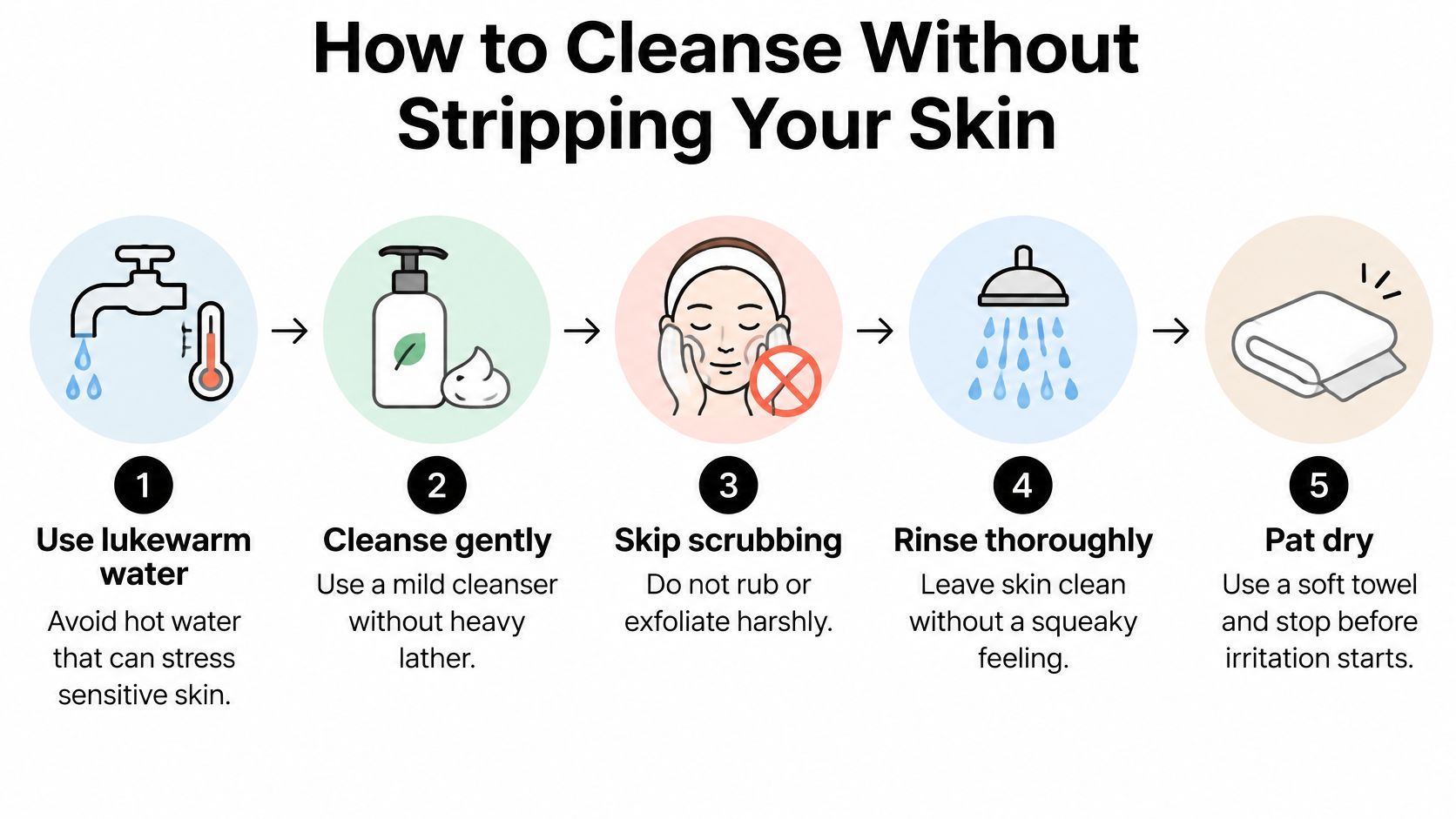
Cleansing is where sensitive skin usually gets stressed. Hot water, a rough washcloth, and chasing heavy lather until your face feels squeaky can leave skin tight within the hour. The goal is clean and comfortable, not squeaky.
Say you scrub with a hot washcloth before a morning call and feel tight by lunch. Switching to lukewarm water, fingertips, and a full rinse often ends that midday tightness once the new habit stays steady. That approach matches American Academy of Dermatology routine guidance to use a mild, non-abrasive cleanser with fingertips, rinse completely, pat dry, and moisturize while skin remains slightly damp.
The Six-Step Evening Cleanse
- Splash with lukewarm water. Wet your face and neck first because hot water strips surface oils faster. The common slip is using shower-hot water at the sink.
- Lather in your palms. Work a small amount of fragrance-free gentle cleanser into a lather before it touches your face, so it spreads evenly and you use less product.
- Massage with fingertips for about 30 seconds. Use light circles on damp skin, not a washcloth or brush. Friction, not dirt, is often what leaves cheeks red.
- Rinse completely. Leftover cleanser around the hairline, nose, and jaw is a frequent reason for tightness after drying.
- Pat dry with a clean towel. Press, don't rub. Rubbing undoes the gentle work you just did.
- Moisturize within a minute. Apply while skin is still damp so the moisturizer helps hold that water in.
Frequency and a Product Example
Twice daily is the default for many people, once in the evening suits skin that feels tight, and you should also cleanse after heavy sweating. Don't solve oiliness by scrubbing harder. If you're comparing cleanser types, this resource on pH-balanced soap for blemish-prone skin from Sphagnum Botanicals helps explain why formula balance matters, though I'd still choose a gentle facial cleanser for daily facial use.
Our cleanser example follows this same method. It's used twice daily, morning and night, massaged onto damp face and neck after working it into a lather, then rinsed with warm water. The Aloe Hydrating Cleanser contains fresh organic aloe juice, and our guide to the best gentle cleanser for sensitive skin walks through choosing that kind of formula.
Success looks unspectacular. Your skin feels comfortable in the minutes after rinsing, with no burning and no urge to layer three products to recover.
Testing New Products and Spotting Irritation
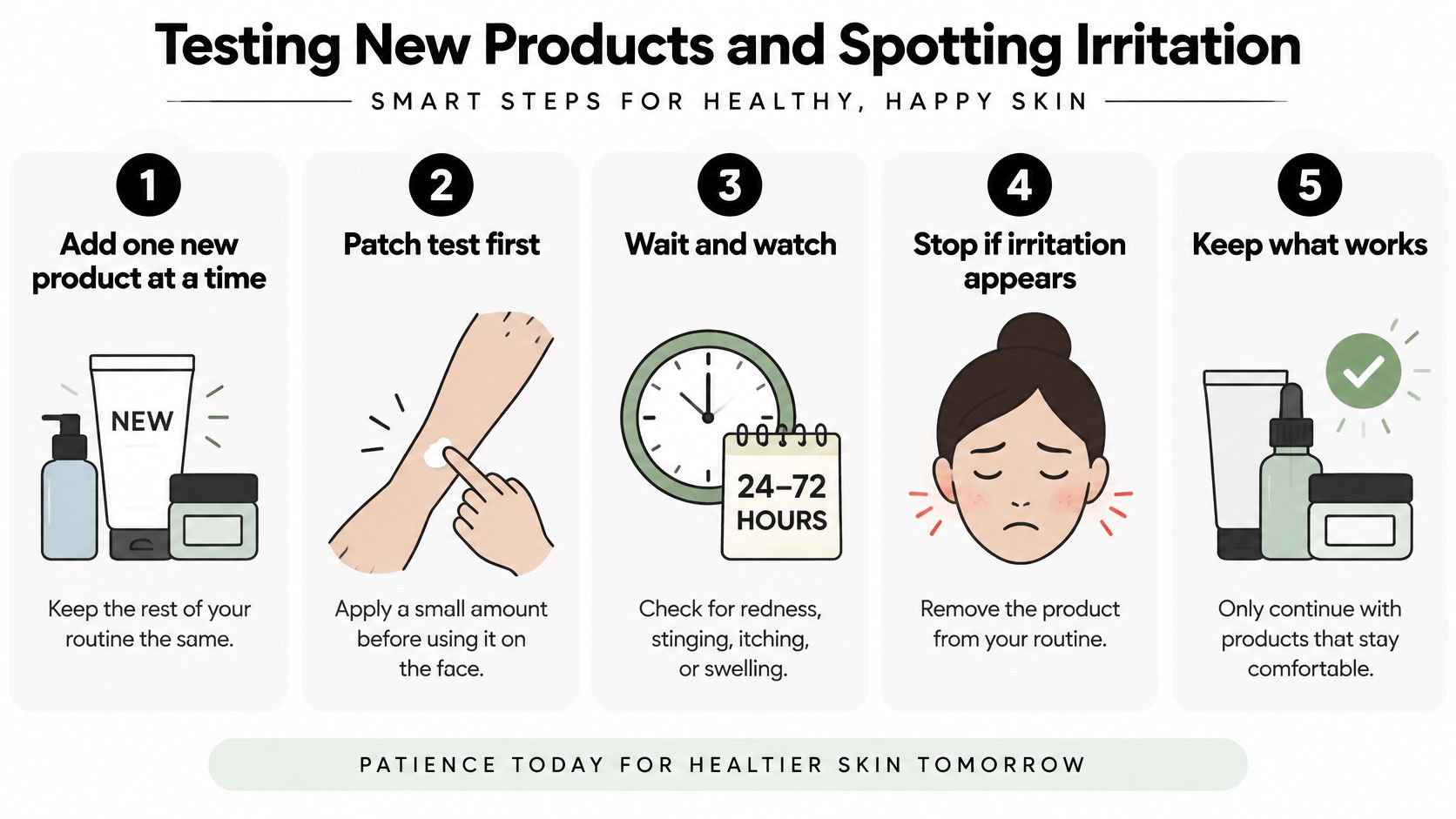
Add one new product at a time and test it before it goes on your whole face. That includes aloe-based and plant-based products, because natural doesn't automatically mean your skin will tolerate it.
Say you add a serum on Monday and a cleanser on Wednesday, then sting on Thursday. You've learned nothing except that something went wrong. One change gives you an answer you can act on.
The Patch Test in Five Steps
- Pick one product. Keep your current cleanser, moisturizer, and sunscreen unchanged on your face.
- Test the inner forearm. Apply a small amount twice daily for 7 to 10 days before broader use.
- Watch and note timing. Look for stinging, burning, itching, or visible redness, and write down when it starts.
- Widen use gradually. If the area stays calm for the full period, try the product on a small part of the face first.
- Stop and reset if needed. If a reaction appears, stop the new product and return to your three basics.
Our step-by-step explainer on how to patch test skincare gives you a simple place to log the days.
Timing Tells You What to Do Next
Stinging right after application usually points to irritation from that use, especially if your barrier already feels stressed. Itching or redness appearing 24 to 72 hours later points more toward sensitivity to a specific ingredient, so the full ingredient list matters, not just the front label. The FDA cosmetics labeling claims page notes that cosmetic claims and labeling must be truthful and not misleading, and U.S. ingredient lists generally present ingredients in descending order of predominance.
| Symptom | Likely cause | First action |
|---|---|---|
| Stinging or burning right after applying a product | Ingredient sensitivity or a stressed barrier | Rinse, stop the new product, return to basics |
| Tightness or dryness after cleansing | Washing too often or water too hot | Cleanse once in the evening with lukewarm water |
| Redness that fades within an hour | Friction from a towel or scrubbing | Pat dry and stop scrubbing |
| Itching or redness appearing 24 to 72 hours later | Possible sensitivity to a specific ingredient | Stop the product, check the full ingredient list, ask a dermatologist if it persists |
| Small bumps on oily areas after a new moisturizer | Heavy or clogging formula | Switch to a non-comedogenic option |
Stop first, troubleshoot second. Pushing through burning rarely teaches you anything useful.
Get professional advice promptly for swelling, spreading redness, blisters, or symptoms lasting beyond a few days. A home patch test is a screening habit, not a replacement for professional advice.
Choosing a Moisturizer and Hydrating Gel You Can Trust
After washing, your face feels tight, but a richer cream leaves you shiny by midday. That difference is useful: choose a texture that feels comfortable, then change only one product at a time so you can tell what your skin tolerates.
| Label term | What it means | How to use it |
|---|---|---|
| Fragrance-free | No fragrance is added to the product | Use as a baseline filter for each step |
| Unscented | Masking fragrance may still be present | Check the ingredients if fragrance bothers your skin |
| Naturally derived | Ingredients come from natural sources, not a guarantee of gentleness | Read the full ingredient list |
| Non-comedogenic | Designed not to clog pores; says nothing about sensitivity | Consider it if your skin is oily or blemish-prone |
| Dermatologist tested | Tested under professional supervision; not a tolerance guarantee | Patch test before wider use |
| Hypoallergenic | The term does not guarantee tolerance | Check the ingredients rather than relying on the label |
The Two Confusions That Cause Trouble
Unscented and fragrance-free are different. Unscented products may contain masking fragrance, and fragrance ingredients can bother sensitive skin. Check the full ingredient list, especially if you already know which ingredients trigger a reaction.
Natural ingredients can irritate, too. Botanical extracts and plant-derived essential oils are not automatically gentle. A natural label is not a substitute for testing the product on your skin.
How to Judge an Aloe-Forward Formula
ALODERMA's Aloe Soothing & Moisturizing Cream is used over the face and neck, morning and night, when extra hydration or dry conditions call for it. It contains Squalane, Allantoin, and Vitamins C & E. Check the ingredient list against your known triggers, and patch test before applying it more widely.
For aloe-forward products, look at the full ingredient list rather than relying on the front label. If aloe vera is presented as the primary ingredient, check its position on the list. Introduce the product on its own, so any reaction is easier to trace.
Label rule: Front-label words start the conversation. The full ingredient list helps you decide what to try.
If a moisturizer stings on day one, stop using it and return to a product you already tolerate. Note the ingredients for comparison, and avoid adding another new product until your skin settles.
Sunscreen Is the Step You Cannot Skip
You walk twenty minutes to school pickup, drive home with sun through one side window, then wonder why one cheek looks flushed by dinner. Daytime exposure adds up in ordinary moments, so sunscreen belongs inside the routine, not as a beach-only extra.
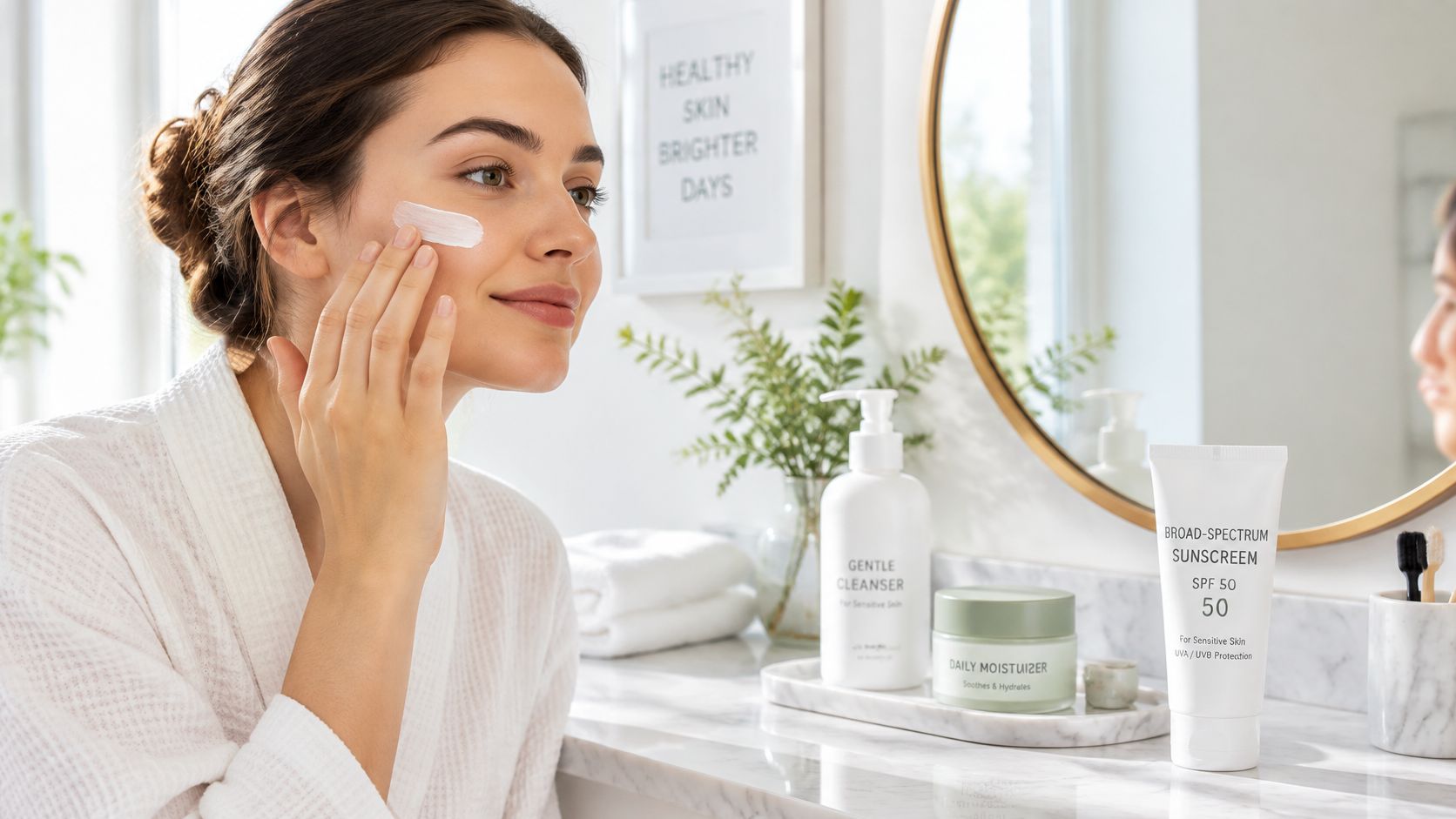
The American Academy of Dermatology dermatologist guide recommends a gentle, non-abrasive cleanser, a fragrance-free moisturizer, and broad-spectrum, water-resistant sunscreen with SPF 30 or higher. Apply sunscreen as the final morning step, after moisturizer has settled for a minute.
Making It Work on Real Days
- School run or dog walk: Apply before you leave, including ears and the front of your neck.
- Long drive: Cover both sides of your face, not only the window side, so you don't miss reflected light stops.
- Beach, sport, or gardening: Reapply about every two hours outdoors and after swimming or sweating, because water and towels break up the film.
Many sensitive-skin users prefer mineral filters such as zinc oxide or titanium dioxide, while others tolerate chemical filters well and like the lighter finish. The trade-off is simple. Mineral formulas can leave a cast but often feel calmer on reactive skin, and any formula should still be fragrance-free.
This short video is a helpful visual reminder of application order before you head out.
Sunscreen sits on your face all day, so patch test a new one like any other leave-on product. If it stings within ten minutes, switch formulas rather than pushing through. Our guide to choosing a sensitive skin moisturizer with SPF can help you compare finishes without adding extra steps.
Most days, it's just moisturizer, then SPF, then makeup if you wear it. Short doesn't mean incomplete.
Start Your Routine Tonight and Test One Change
Don't overhaul your bathroom shelf tonight. Run the experiment properly, on paper, for two weeks.
Your Two-Week Plan
- Tonight: Follow the evening steps, cleanser with fingertips, full rinse, pat dry, moisturizer on damp skin. Write the date and the exact products used.
- Days 1 to 14: Keep morning and evening unchanged. Log one line each day, comfortable, tight, stinging, flushed, or itchy, plus anything unusual like heavy sweating or a long outdoor day.
- Day 15: Consider one new product only if most days felt calm. Patch test it for 7 to 10 days first, and add nothing else until that result is clear.
If you want help narrowing choices, our Skin Care Questionnaire gives personalized recommendations for a customer's specific skin type. We also have a Skin Care Quiz and an Our Ingredients section on our website for ingredient lookups before you buy.
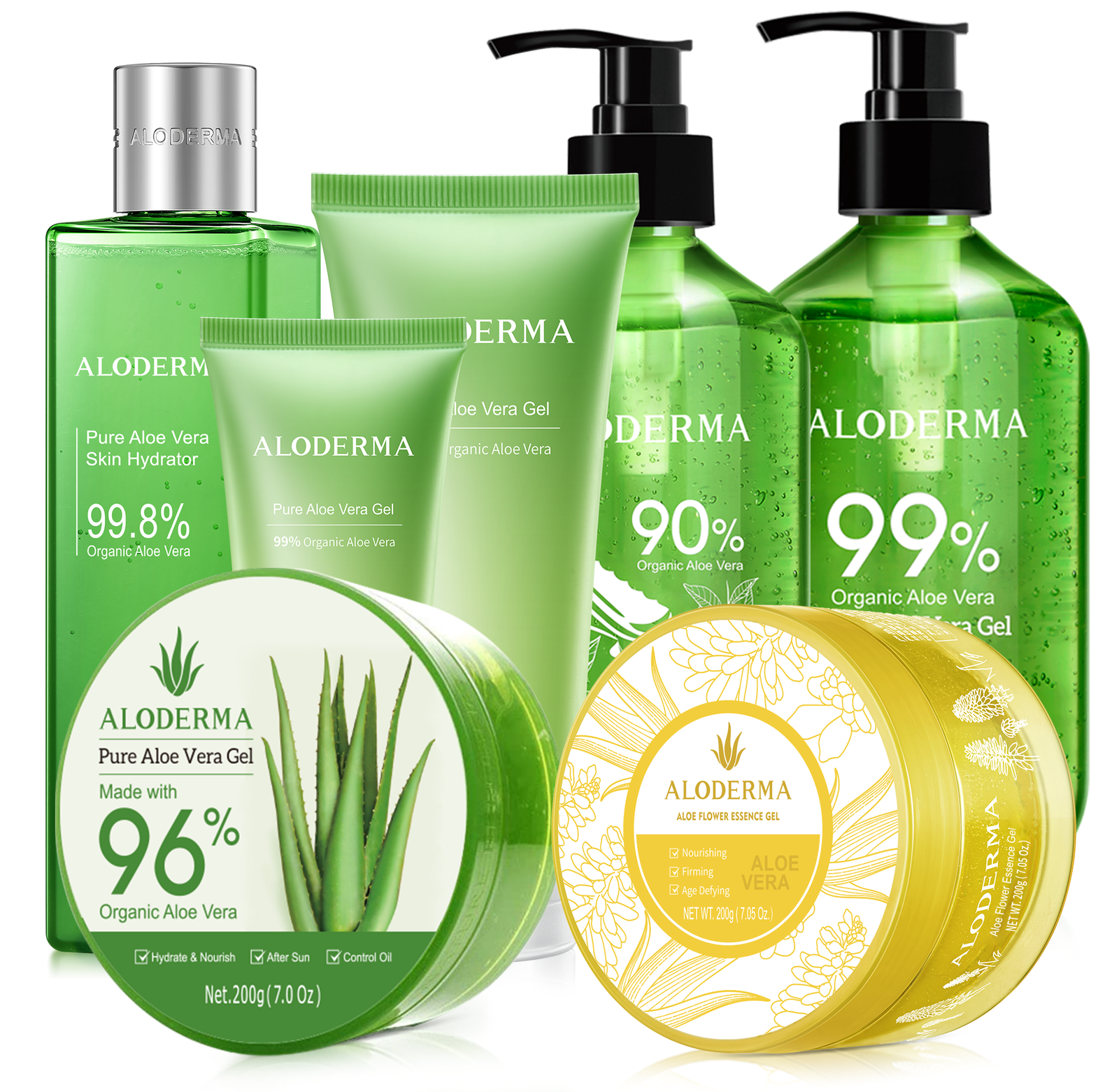
Say your skin is sensitive and oily, and a ready-made set appeals because shopping product by product feels overwhelming. The Aloe Skin Clearing Set is made for people with sensitive and blemish-prone skin, but I'd still introduce its products one at a time and write down the day each change happens. A set doesn't remove the need for the experiment, it just makes the starting lineup easier to choose.
After two weeks, answer two questions carefully. Is your skin calmer than when you started, and which single change made the difference? If you can name that change, your simple skincare routine for sensitive skin is doing its job.
Start tonight with the three basics, then use the Skin Care Quiz and Our Ingredients section to screen one aloe-forward addition at a time before you patch test it. Visit ALODERMA to explore fresh, organic aloe cleansers, gels, and creams made for simple routines you can stick to.