







You’re in the store, staring at a wall of bottles. One promises deep cleaning. Another says gentle hydration. A third claims to be plant-based, family-safe, and good for everything from dishes to your shower. Then you spot a simple bottle labeled castile soap and wonder whether it’s useful or just another product with a good story.
That question is reasonable. A lot of people are tired of buying one cleanser for hands, one for floors, one for the shower, and another for the sink. They want fewer products, cleaner ingredient lists, and a routine that feels manageable. That’s where interest in castile soap uses usually begins.
Castile soap has a long history, but what matters most to a modern reader is this. It’s one of the few traditional products that still makes practical sense today when you use it correctly. Used well, it can simplify both personal care and household cleaning. Used carelessly, it can feel too strong, too drying, or just plain confusing.
Introduction The One Bottle That Does It All?
A friend once told me her bathroom cabinet looked like a tiny convenience store. Separate hand soap. Separate body wash. Separate produce wash. Separate counter spray. She wasn’t trying to be excessive. She was trying to make good choices, and the choices kept multiplying.
That’s why castile soap catches people’s attention. It suggests a simpler approach. One bottle. Many jobs. Fewer synthetic ingredients. Less clutter. For anyone dealing with product fatigue, that feels like a relief.

Its appeal isn’t new. Castile soap originated from the Castile region of Spain, where it was first crafted as a pure olive oil-based soap. Its roots trace to ancient Aleppo soap, which was introduced to Europe by Crusaders around the 11th-12th centuries. Spanish soapmakers adapted the formula using abundant local olive oil, creating a prized white, hard soap that gained favor with royalty and revolutionized hygiene across Europe by the mid-1500s, as described in the history of Castile soap.
That history helps explain why people still trust it. Castile soap isn’t a trendy idea dressed up in earthy packaging. It’s a traditional soap with a reputation for simplicity.
Why people still get confused
The confusion starts when labels and social posts make it sound universal. “Use it everywhere” is catchy, but it leaves out the most important part. How you use castile soap matters just as much as where you use it.
A concentrated soap can work beautifully in one setting and feel harsh in another. A great floor cleaner might not be the best facial cleanser. A DIY recipe that sounds natural might turn into a sticky mess in real life.
Castile soap can simplify your routine, but only if you match the dilution and use to the task.
This is the goal. Not to treat castile soap like a miracle product, but to help you use it with confidence. If you like the idea of cleaner ingredient lists and fewer unnecessary products, you may also enjoy this roundup of best clean beauty brands.
What Exactly Is Castile Soap and How Does It Work
Castile soap starts with a simple idea. Plant oils react with an alkali and turn into soap through a process called saponification. In practical terms, the oils are converted into cleansing compounds that help loosen grime so it can rinse away with water.
Those cleansing compounds are surfactants. According to Dr. Bronner’s explanation of castile soap, surfactants made during saponification have two useful ends. One is hydrophilic, or attracted to water. The other is lipophilic, or attracted to oil. That split is what makes soap effective on oily skin, greasy dishes, and everyday residue on surfaces.
A simple way to picture it
Soap works a bit like a connector between oil and water, two things that do not naturally mix well.
The oil-attracting end attaches to sebum, sunscreen, sweat, or kitchen grease. The water-attracting end stays oriented toward the rinse water. Once enough of these molecules surround the grime, water can carry the whole bundle away. That is the basic cleaning action.
This helps explain why one bottle can seem so versatile. The chemistry stays the same, even though the mess changes.
Why some castile soaps lather more
Foam often gets mistaken for cleaning power. The feel matters, but the bubbles are only part of the experience. As the Dr. Bronner’s page explains, castile soaps made with coconut oil tend to produce richer lather because that oil contains more lauric acid.
So if one formula feels fluffier or creamier, that usually reflects the oil blend. It does not automatically mean it cleans better or suits skin better.
Quick reality check: A satisfying lather can make washing feel more effective, but gentle cleansing depends more on the formula and dilution than on bubble volume.
What that means for sensitive and blemish-prone skin
This is the part many guides skip. Because castile soap is a true soap, it cleans differently from a facial cleanser made for a more delicate skin environment. On hands, body, or around the home, that can be useful. On reactive, very dry, or blemish-prone facial skin, it may feel too stripping if the formula is too strong or used too often.
Fresh aloe can sound like the obvious fix, but mixing aloe directly into castile soap is not a great pairing. Soap needs its own chemistry to stay stable and cleanse well, while fresh aloe brings different skin-soothing components that are better delivered in a cleanser designed around them from the start. Blending the two in a DIY bottle can lead to a texture that feels off, cleans unpredictably, or is harder to preserve safely.
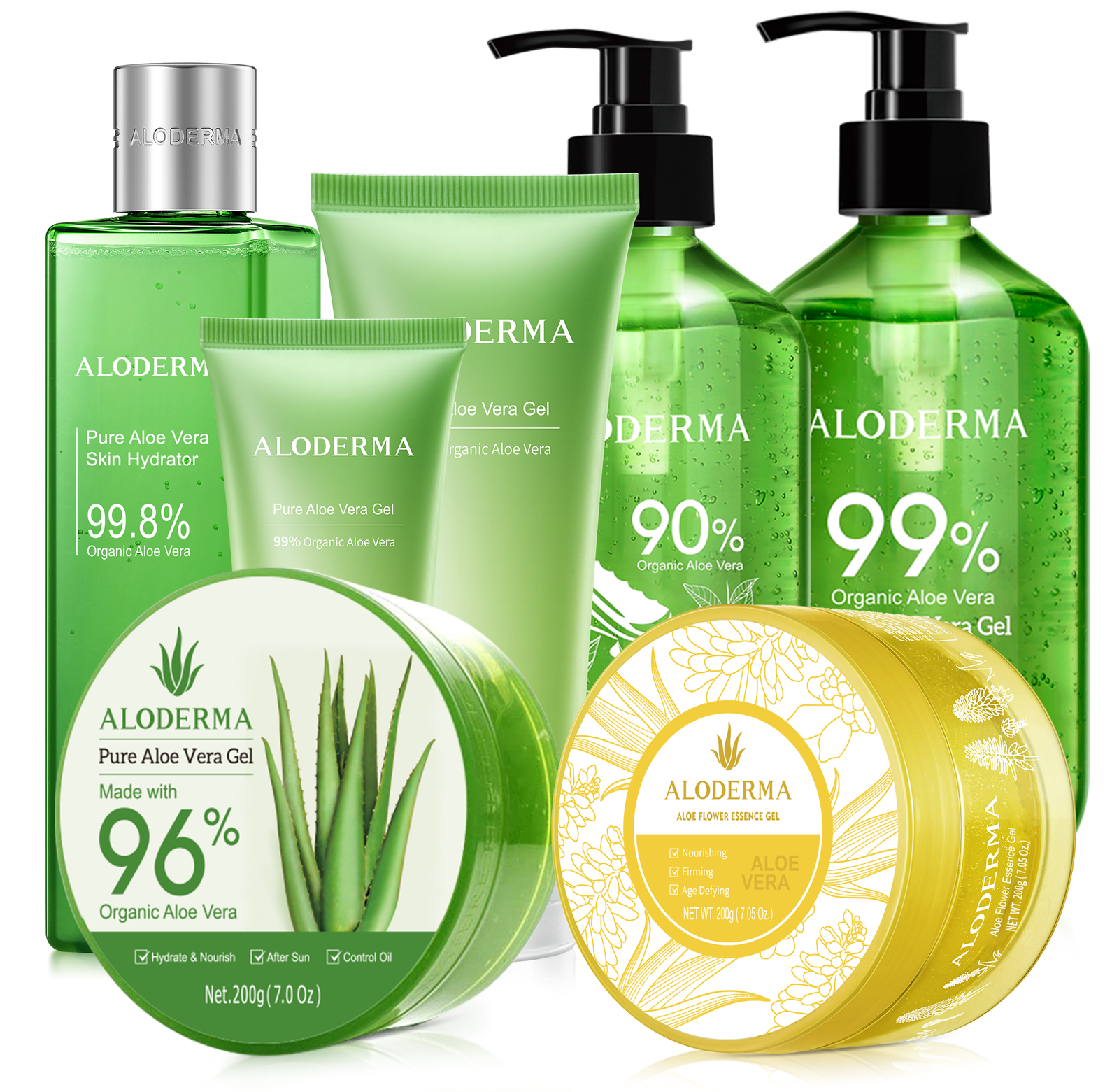
A better approach is to treat them as separate tools. Use castile soap where simple soap cleansing makes sense. For facial skin that gets easily irritated or breaks out, pair the idea of simple ingredients with a specialized aloe-based cleanser instead. ALODERMA follows that path with aloe vera as the primary ingredient in formulas made to cleanse without asking soap to do a job it is not always best suited for. Its vertically integrated process also means the organic aloe vera is processed and manufactured on-site within 12 hours of harvest, which helps preserve the fresh, bioactive character people look for in aloe skincare.
Your Ultimate Guide to Castile Soap Dilution Ratios
The biggest mistake people make with castile soap is using too much.
Because it’s concentrated, a little goes a long way. If you skip dilution, the soap can feel harder to rinse, less pleasant on skin, and wasteful for cleaning. Good results usually come from matching the concentration to the job.

The ratios that matter most
According to Medical News Today’s castile soap guide, a body wash typically works at 1:2 or 1:3 soap-to-water, a foaming hand soap works best at 1:4 or 1:5, and dish soap is often used at around 1:10 for grease-cutting tasks.
Those three numbers do a lot of heavy lifting in real life because they cover the uses commonly tried initially.
Castile Soap Dilution Cheat Sheet
| Application | Soap to Water Ratio | Practical Example |
|---|---|---|
| Body Wash | 1:2 or 1:3 | Add 1 part soap, then 2 to 3 parts water in a small shower bottle |
| Foaming Hand Soap | 1:4 or 1:5 | Fill one portion of a foaming dispenser with soap, then top with 4 to 5 portions water |
| Dish Soap | 1:10 | Mix a small amount of soap with more water for hand-washing dishes |
How to use the ratios without overthinking them
There's no need for math in the kitchen or bathroom. You don’t need to. Just think in parts.
If you use 1:4, that means one unit of soap for every four equal units of water. The “unit” can be a teaspoon, tablespoon, small cup, or anything else, as long as you keep it consistent.
Here’s how that feels in practice:
- For hand soap: Use a foaming dispenser. Add soap first, then more water than you think you need.
- For body wash: Keep it stronger than hand soap so it still feels satisfying on a washcloth or in your hands.
- For dishes: Use a more concentrated mix because grease needs more help than everyday skin cleansing.
Why dilution changes the user experience
A stronger solution often feels more powerful, but that doesn’t always improve results. Sometimes it just makes the product harder to rinse or more drying.
A well-diluted mix spreads better, rinses better, and usually feels more pleasant. That’s especially true for hand soap, where people wash often and notice quickly if a cleanser leaves their skin feeling tight.
Practical rule: Start with the lighter end of the recommended range. You can always increase concentration if you need more cleaning power.
Common dilution mistakes
People usually run into trouble in one of these ways:
- Using it straight from the bottle: This often feels harsher than necessary.
- Guessing wildly: “A splash” can become far too much soap in a small bottle.
- Using one ratio for every task: Hands, skin, and greasy dishes don’t need the same strength.
- Blaming the soap for residue: Sometimes the issue is only overuse.
If you’re just getting started with castile soap uses, keep one hand soap bottle, one dish mix, and one body wash mix. That’s enough to learn how your skin and home respond without turning the whole house into a DIY lab.
Safe and Effective Personal Care Uses
Castile soap can fit into personal care beautifully when you use it with restraint. I think of it as a practical cleanser, not a pampering treatment on its own. It does the washing part well. Then your routine should do the comforting and replenishing part afterward.
That mindset helps a lot, especially if you’ve ever tried a trendy natural cleanser that left your skin feeling squeaky but not comfortable.

Hand soap that doesn’t feel heavy
A foaming castile hand soap is one of the easiest wins. The diluted format makes it easy to spread, easy to rinse, and less likely to leave too much residue behind.
If you wash your hands often after cooking, gardening, or running errands, this is usually the first use worth trying. It keeps the routine simple without crowding the sink with another highly fragranced bottle.
A body wash for people who like simple formulas
A diluted castile body wash works best when you keep expectations realistic. It cleans sweat, sunscreen residue, and everyday buildup well. It won’t feel like a creamy lotion cleanser, and that’s okay.
Use it on a wet washcloth, soft sponge, or directly in your hands. If your skin leans dry, apply a hydrating lotion or gel right after showering while skin is still slightly damp.
Some of the best natural routines come from separating jobs. Let cleanser cleanse, and let hydration come after.
Shaving and foot care
Castile soap can also help in routines that need slip and rinse-away ease.
For shaving, a small diluted amount can help the razor glide better on legs or underarms. For feet, a basin of warm water with a little diluted castile soap makes a solid soak before trimming nails or smoothing rough areas.
These uses tend to work best because the skin involved is generally less reactive than facial skin, and the soap is there for a short, specific job.
Pet washing with caution
Some people also use castile soap for pet care, especially when they want a simpler ingredient list. If you bathe a dog at home, technique matters as much as product choice. Keep soap away from the eyes, rinse thoroughly, and don’t assume what works for your skin will automatically suit your pet’s coat. If you want help with the actual bathing process, this calm dog bath time guide is a useful companion.
A simple cleanse and hydrate rhythm
Here’s where many natural routines improve fast. Don’t ask one product to do everything.
Try this rhythm instead:
- Cleanse with diluted castile soap when you want a straightforward wash.
- Rinse thoroughly so soap doesn’t linger.
- Follow with hydration suited to your skin and the area you washed.
That last step matters. Castile soap is about cleansing. Comfort usually comes from what you use next.
Personal care uses that usually work well
- Frequent hand washing: Great for kitchens and bathrooms when diluted in a foaming bottle.
- Body cleansing after workouts: Useful when you want something simple and easy to rinse.
- Foot soaks before home pedicures: Good for loosening dirt and refreshing tired feet.
- Shaving support: Helpful when you want light slip without a heavy cream texture.
For many people, these are the most successful castile soap uses because they’re practical, low-risk, and easy to adjust based on how your skin feels.
Transform Your Home with Natural Cleaning Solutions
Castile soap earns its keep in the home because it can replace several harsher cleaners without making daily chores feel complicated. If you want a kitchen and bathroom that smell clean without that aggressively perfumed “just sanitized” cloud, the soap excels.
Families often care about this for emotional reasons as much as practical ones. They want surfaces that feel clean, a sink that doesn’t smell chemical-heavy, and a home that’s easier to maintain without a cabinet full of specialty sprays.
Where it works best around the house
Castile soap is especially useful for routine messes rather than heavy-duty restoration jobs.
Think of the places you clean often:
- Kitchen counters: daily crumbs, fingerprints, light grease
- Dining tables: food smudges and sticky spots
- Bathroom sinks: toothpaste splatter and soap residue
- Floors: regular tracked-in dirt
- Dishes: hand-washing everyday plates, mugs, and utensils
If your goal is steady maintenance, not industrial-strength stripping, castile soap makes a lot of sense.
Smart ways to boost cleaning power
Soap alone handles a lot, but scrubbing matters too. For tougher spots in bathrooms or on stuck-on messes, pair the soap with a little mechanical action from a sponge, brush, or cloth.
Baking soda can also help as a gentle scouring partner when you need more friction. What you don’t want to do is mix castile soap directly with acidic ingredients in the same bottle. That usually creates disappointment, not a better cleaner.
A natural cleaner still needs the right method. Good contact, light scrubbing, and a proper rinse often matter more than making the formula stronger.
If you’re trying to build a lower-toxicity home routine, this overview of the benefits of green cleaning products offers helpful context on why many households make the switch.
A few easy home routines
An all-purpose spray is the obvious starting point. Mix your diluted solution, spray lightly onto counters or sealed surfaces, then wipe with a microfiber cloth.
For dishes, keep a separate bowl or bottle with your stronger dish ratio. Don’t judge it by bubble volume alone. Natural soap often looks quieter than synthetic detergent, but that doesn’t mean it isn’t working.
For floors, use a mild diluted solution in a bucket and wring the mop well. You want the floor damp-cleaned, not flooded.
A broader seasonal reset can also support your skin, especially if dust, residue, and harsh sprays tend to linger in your space. This guide to spring cleaning for healthier skin connects the condition of your home environment with how your skin feels day to day.
Here’s a visual walk-through if you like seeing natural cleaning ideas in action before mixing your own solution:
What to avoid
Some cleaning disappointments come from using castile soap in the wrong context, not from the soap itself.
- Don’t use too much: More soap can leave more film.
- Don’t expect synthetic-style foam: Low drama doesn’t equal low cleaning power.
- Don’t mix it carelessly with acidic ingredients: Keep formulas simple.
- Don’t use one bottle for every mess: A dish mix and a surface mix should not be identical.
For many households, the best part of castile soap uses at home is the feeling of control. You know what you’re using. You know why it’s there. And your cleaning shelf gets a lot less crowded.
Important Precautions for Sensitive and Blemish-Prone Skin
This is the part many “natural living” guides skip. Castile soap is not automatically the best choice for every face.
That doesn’t make it bad. It just means facial skin, especially skin that’s sensitive, oily, or prone to blemishes, often needs more nuance than a one-bottle solution can provide.
Why facial skin may react differently
According to Lisa Bronner’s guidance on mixing castile soap, castile soap is brief-contact cleansing, not a delivery system for ingredients you hope will sit on the skin and do more. That’s a useful mindset for facial care.
Another detail matters too. Castile soap is commonly discussed as an alkaline cleanser, and for some people that can feel too stripping on the face. When facial skin feels over-cleansed, it may feel tight, look unsettled, or become harder to keep balanced.
The fresh aloe DIY myth
A lot of DIY recipes suggest mixing castile soap with fresh aloe vera to make it gentler. It sounds perfect on paper. In real life, it often turns into a strange texture that nobody wants to use.
Lisa Bronner warns against mixing castile soap directly with fresh aloe vera because the combination can gelatinize into a mucous, unusable texture, and because soap doesn’t stay on skin long enough for aloe’s benefits to transfer in a meaningful way. In plain language, you use more ingredients and get a worse product.
Fresh aloe and castile soap may sound compatible because both feel natural, but natural doesn’t always mean mixable.
A better way to pair cleansing and aloe
Use castile soap and aloe sequentially, not mixed together.
That means:
- cleanse first
- rinse thoroughly
- apply your aloe-based hydration afterward
This approach makes more sense for sensitive or blemish-prone skin because it gives the aloe time to remain on the skin instead of getting washed down the drain.
When to skip castile soap on the face
If your face already feels tight after washing, reacts easily to strong cleansers, or struggles with congestion, castile soap may not be your best everyday facial wash. In that case, a cleanser formulated specifically for the face is usually the smarter choice.
This is also where ingredient awareness matters. If breakouts are part of the picture, it helps to learn what else in a routine may be contributing. This article on ingredients that clog pores can help you troubleshoot beyond the cleanser alone.
A cautious rule for facial use
If you still want to experiment, patch test first and don’t build your entire facial routine around castile soap. Many people do better reserving it for hands and body, then choosing a dedicated facial cleanser and leave-on hydration product for the face.
That’s not giving up on natural skincare. It’s using the right tool for the right skin zone.
Frequently Asked Questions About Castile Soap
Can you use castile soap on hair
You can, but hair often reacts differently than skin. Hard water can leave a film, and some hair types feel rough or tangled after rinsing. Start with a well-diluted amount on a small wash day, then judge the result by how your scalp and lengths feel once dry.
Is castile soap safe for babies
Extra care makes sense here. If a parent chooses castile soap for a baby, an unscented version and generous dilution are the safer starting points. Use only a small amount, avoid the eye area, and stop if you notice dryness or redness. A pediatrician can help if your child has eczema, very reactive skin, or persistent irritation.
Is castile soap okay for septic systems
Many households choose castile soap because plant-based, biodegradable formulas fit a lower-waste routine. Even so, the amount you use still matters. Good dilution and moderate use are better for both plumbing and skin.
Can you add essential oils
Yes, but less is better. Essential oils can turn a simple soap into a more irritating one, especially for sensitive or blemish-prone skin. If your goal is gentle personal care, unscented castile soap is usually the easier place to start.
Why doesn’t it always foam a lot
Foam is only part of the story. Water type, dilution, and the oils used in the soap all affect lather, so fewer bubbles do not automatically mean poor cleaning. A soft, clean finish matters more than a sink full of suds.
What are the most beginner-friendly castile soap uses
The easiest uses are the ones with the least risk of irritation and the simplest dilution mistakes. Hand soap is a good first step. Body wash can work well for many people. Dish washing and all-purpose surface cleaning are also practical places to start.
Facial cleansing is different. Sensitive or acne-prone skin often does better with a cleanser made for the face, where the formula is designed to clean without leaving skin feeling stripped. Castile soap can still have a place in your home and routine, but it does not need to do every job.
If you like the simplicity of castile soap for hands, body, or household cleaning, pair that approach with a face cleanser and hydrators made for reactive skin. ALODERMA focuses on fresh aloe vera skincare, with aloe processed soon after harvest to help preserve its soothing feel. You can keep castile soap in its lane, then use products like the Aloe Hydrating Facial Cleanser, Aloe Oil Controlling Facial Cleanser, and Pure Aloe Vera Gel for the parts of your routine that need more care. That pairing is often the more skin-friendly path, especially if your face is easily irritated or prone to breakouts.