



You bought the soothing mask everyone was recommending, followed the directions, and went to bed expecting calm, comfortable skin. By morning, your cheeks feel tight, look flushed, and seem covered in tiny bumps. That reaction is frustrating, especially when the label promised gentle hydration.
The answer usually isn't another dramatic treatment. Face masks for sensitive skin work best when they reduce variables, limit fragrance and aggressive actives, and respect how heat, moisture, and friction change the skin's response. This guide will help you choose between sheet, gel, and cream formats, read fragrance labels properly, test a new product safely, and evaluate aloe formulas beyond the word “natural.”
Why Sensitive Skin Reacts to the Wrong Mask
A reader once told me she bought a popular “calming” sheet mask before an important event. The fabric felt cool for the first few minutes, so she left it on longer than directed. Her skin looked dewy at first. The next morning, her cheeks felt hot and tight, and the area around her nose had developed small irritated bumps.
That pattern is common enough to take seriously. A 2022 systematic review of 37 studies found pooled prevalences of 31% for mask-related acne, 24% for facial dermatitis, 30% for itching, and 31% for pressure injuries. When researchers grouped facial dermatoses together, the pooled prevalence was 55%, with a 95% confidence interval of 46% to 63% (systematic review of mask-related facial dermatoses). These findings do not mean every mask causes trouble. They do show that reactions to masks are common, and that a “calming” label is not a guarantee.
The symptoms deserve a practical response
In a Korean study involving 330 patients, the most common complaints were clear and specific:
- Itching: 66.06%
- Stinging: 31.52%
- Dryness: 26.36%
Researchers also found objective lesions in 93.64% of participants, with redness affecting 60.91% and the cheeks affected most often at 70.61% (Korean study on mask-related skin symptoms).
That explains why a leave-on mask deserves more caution than a cleanser. A cleanser is gone in minutes. A sheet, gel, or cream stays pressed against the face, usually with warmth and moisture trapped underneath, while fragrance, preservatives, and active ingredients keep contacting skin. If a formula smells strong, that matters. Fragrance is one of the first things I would strip out for reactive skin.
Practical rule: If a mask burns, it is not proving that it works. Burning is a reason to remove it.
Sensitive skin also does not always look dry. Oily, blemish-prone skin can sting, itch, or turn red and still produce plenty of sebum. Choose a mask based on reactivity and tolerance, not just whether your forehead shines or your cheeks feel flaky.
Fabric matters too. For a broader look at low-irritation textiles, especially for delicate skin, see gentle materials for baby skin. The same principle applies here: soft contact and low friction matter more than a dramatic sensory feel.
How Sensitive Skin Behaves Under a Mask
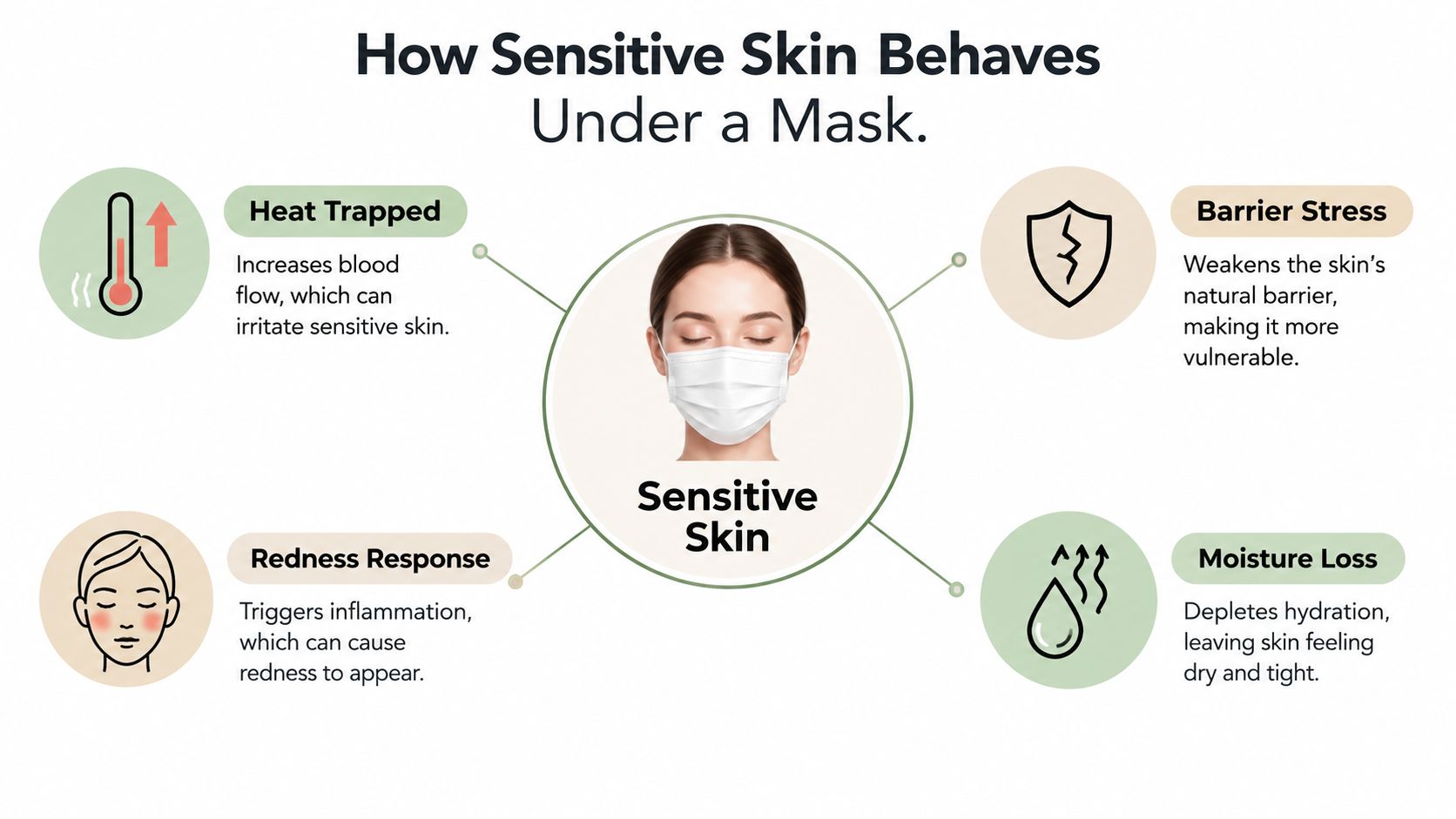
A mask changes the skin environment fast. Heat builds, moisture gets trapped, and friction rises whenever you talk, move, or adjust the fabric. That can make skin feel temporarily softer, then leave reactive skin redder, stingier, and more irritated if the product or wear time is wrong.
Research on sensitive skin found that wearing a medical mask for three hours increased transepidermal water loss, redness readings, surface hydration, and local temperature, while lowering pH in a group of women with sensitive skin (study on medical-mask wear and sensitive skin). The key point is simple: skin can look wetter on the outside while the barrier is under more stress underneath.
Why short contact beats prolonged dampness
A damp towel on the face feels soothing for a few minutes. Leave it there, and warmth, rubbing, and trapped moisture start working against you. A face mask should be a short hydration step, not a long occlusive hold.
That matters for aloe, glycerin, panthenol, and similar water-binding ingredients. They can help the skin feel calmer, but only when the formula is simple, the wear time is short, and the base is not packed with fragrance or heavy residue. Sensitive skin needs restraint here.
Moisturizer can improve tolerance before masking. In the same research, applying moisturizer before mask wear reduced water loss and redness and helped skin recover faster. Use a light, bland moisturizer first if your skin stings easily, then keep the mask contact brief and avoid rubbing during removal.
If your face feels tight right after cleansing, hard water may be part of the problem too. The same mineral exposure that contributes to how hard water damages hair can also leave skin feeling rough and stripped after washing.
Sheet Gel and Cream Masks Compared for Reactive Skin
No format is automatically gentle. The right choice depends on how much warmth, residue, and contact time your skin can tolerate.
| Format | Typical Wear Time | Occlusion Level | Hydration Feel | Best For |
|---|---|---|---|---|
| Sheet | Short, according to the package | Medium | Cool, wet, immediate | Sensitive skin that prefers a light, controlled hydration step |
| Gel | Short to moderate | Low to medium | Fresh, lightweight | Oily-sensitive skin and people who dislike rich residue |
| Cream | Short to moderate, unless specifically designed otherwise | Medium to high | Cushioned, nourishing | Dry-sensitive skin that tolerates emollient textures |
Sheet masks
A thin cotton sheet can be convenient while traveling because the dose is premeasured and the application is quick. Choose one with a short ingredient list, no added fragrance, and a serum that feels watery rather than sticky or heavily coated.
Don't wait for the sheet to dry on your face. As the material loses moisture, it can feel tight and may encourage rubbing during removal. Press it into place gently, smooth out folds, and take it off while it still feels comfortable. ALODERMA's guide to using sheet masks provides a practical reference for applying and removing this format.
Gel masks
A lightweight gel is often the safest first experiment for oily-sensitive skin because it can provide hydration without the dense finish of a cream. Aloe, glycerin, and panthenol can make sense here, provided the formula doesn't rely on strong fragrance, cooling irritants, or a long list of botanical extracts.
For example, someone whose cheeks flush after sun exposure may prefer a thin cooling gel for brief contact rather than a rich overnight layer. “Cooling” should mean a comfortable texture, not a burning or intense tingling sensation.
Cream masks
Cream masks suit dry-sensitive skin when the face feels tight and rough, particularly in cold or dry indoor air. They can backfire when the formula is heavily fragranced, overly occlusive, or layered over several rich products.
My recommendation is simple. Start with a thin layer on the driest areas, keep the contact time conservative, and remove it before the face becomes warm. If your skin is both oily and reactive, use cream only where needed instead of covering the entire face.
Reading the Label Like a Dermatologist
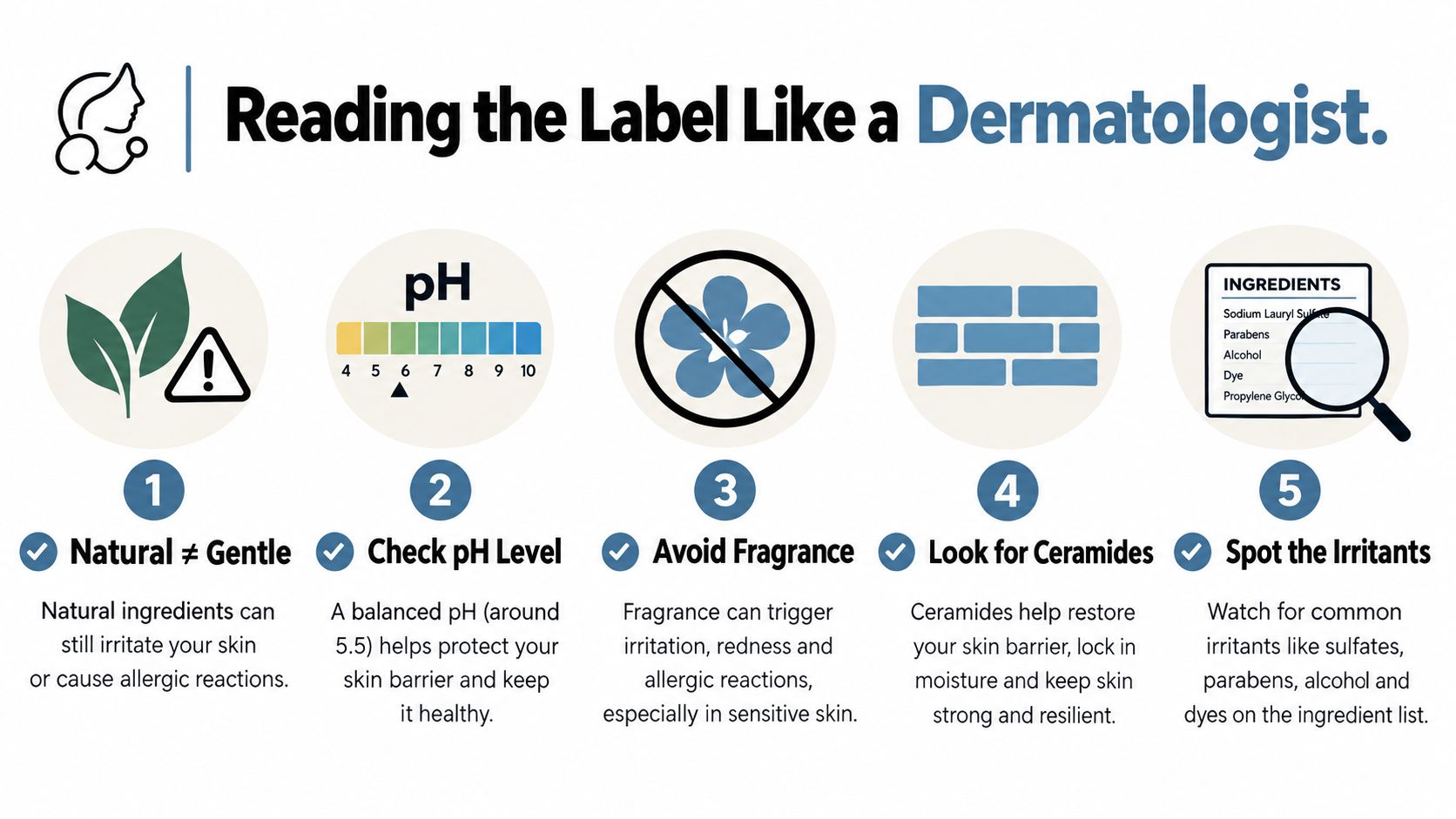
“Natural” is not a synonym for gentle. Essential oils can irritate skin or trigger allergic contact dermatitis, and fragrance ingredients remain relevant even when a product is marketed as botanical, organic, or clean. The U.S. Food and Drug Administration notes that cosmetic fragrance ingredients generally don't require premarket approval and that some people may react even when an ingredient is considered safe for most users (FDA cosmetic fragrance guidance).
Start with the fragrance panel, not the front of the package. Look for parfum, aroma, and essential-oil constituents such as limonene, linalool, citronellol, geraniol, and eugenol. “Unscented” can still contain fragrance-related ingredients, while “fragrance-free” is the more useful direction when your skin is reactive.
A label checklist that works in real life
Use this quick filter before you buy:
- Choose fragrance-free: Don't assume a leaf icon or “pure” claim means low risk.
- Prefer a short list: Fewer ingredients make it easier to identify what your skin tolerated or rejected.
- Look for familiar hydrators: Aloe, glycerin, and panthenol can support a simple hydration-focused formula.
- Skip aggressive combinations: Avoid pairing a new mask with exfoliating acids, retinoids, benzoyl peroxide, sulfur, or other strongly active ingredients.
- Notice the product category: Leave-on products deserve more scrutiny than a cleanser you rinse away.
Leave-on products also have stricter European disclosure thresholds for specified fragrance allergens than rinse-off products, 0.001% for leave-on products versus 0.01% for rinse-off products (American Academy of Dermatology facial-mask guidance). That doesn't make a disclosed allergen automatically harmful. It does mean leave-on exposure deserves careful label reading.
A “tingle” isn't a quality test. If a mask tingles because it contains an exfoliating acid, essential oil, or another irritating component, your skin isn't asking you to persevere. It's giving you information.
Patch Testing and Layering Masks With the Rest of Your Routine
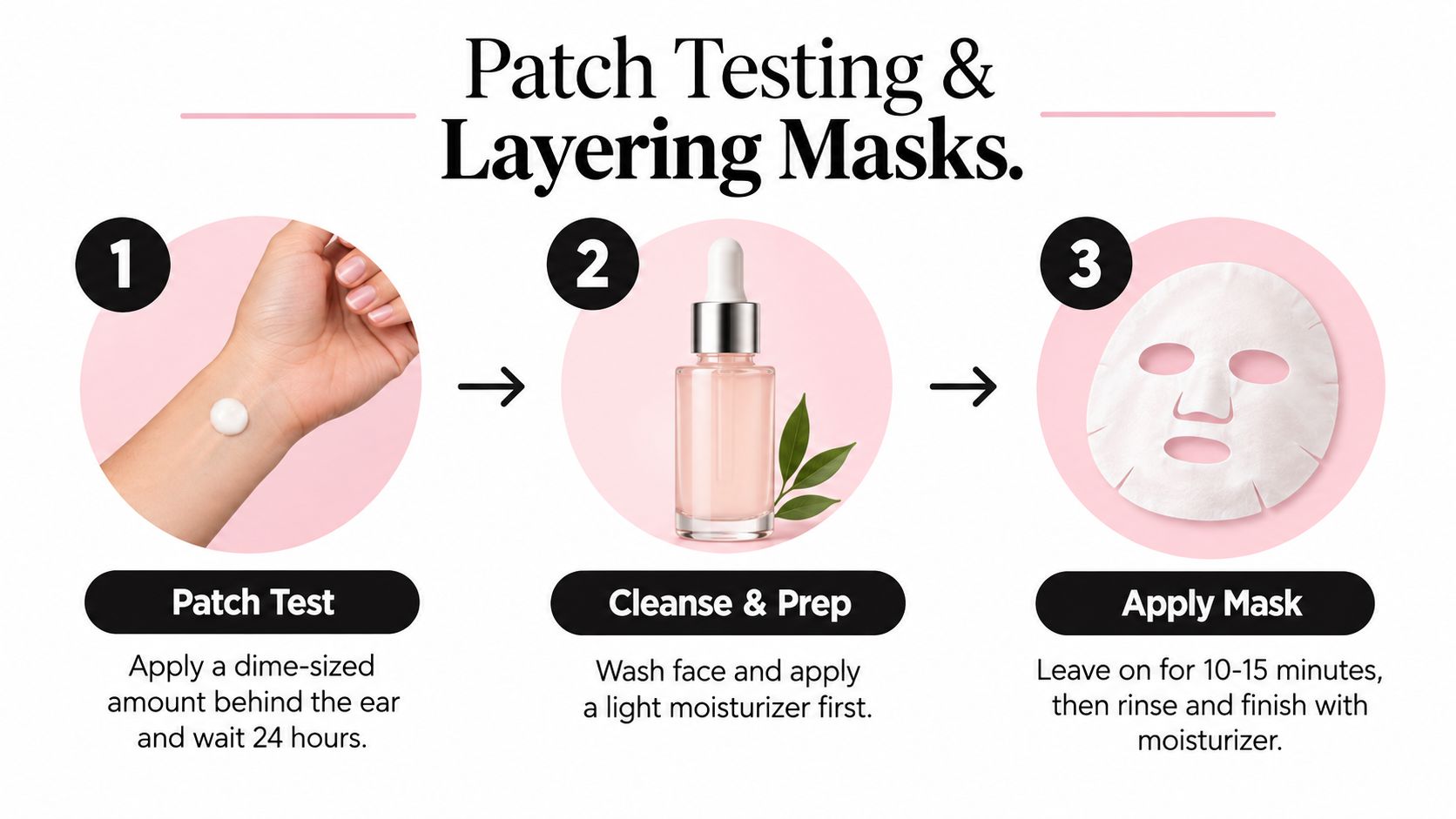
Patch testing is less exciting than applying a new mask across your whole face, but it can save you from spending the next few days trying to calm a visible reaction. The American Academy of Dermatology recommends applying the product to an approximately quarter-sized area that won't be washed or rubbed away, such as the underside of the arm or the bend of the elbow, twice daily for 7 to 10 days (AAD repeat-use product testing guidance).
Use the mask at its normal thickness and follow the package's stated contact time. If the test area burns, itches, swells, becomes persistently red, or develops a rash, stop. Don't “push through” because the product contains an ingredient you hoped would help.
A low-drama mask routine
- Cleanse without scrubbing. Use lukewarm water and pat your face dry. Don't apply the mask to skin that already feels raw from rubbing or hot water.
- Keep the base simple. If your skin tends to feel tight, apply a light moisturizer first. Skip a new serum underneath the mask because you won't know which product caused trouble if your face reacts.
- Apply a thin, even layer. Keep the product away from the eyes and lips. Smooth it on with clean fingers rather than massaging it into the skin.
- Remove gently. Rinse with lukewarm water if the product calls for removal, then pat dry. Finish with a bland moisturizer.
- Separate strong routines. Don't introduce a new mask on the same evening as a retinoid or exfoliating acid. Sensitive skin has a lower tolerance for stacked variables.
For a repeatable protocol, use ALODERMA's patch-testing guide before putting a new product across your face. A successful first use is encouraging, but repeated exposure gives you a more useful picture of tolerance.
Why Aloe Forward Masks Make Sense for Reactive Skin
Aloe can be a sensible foundation for a lightweight hydration mask, but the word alone doesn't tell you how the ingredient was grown, processed, or placed in the formula. Look past “aloe-infused” language and check whether aloe leaf juice appears near the beginning of the ingredient declaration, whether fragrance is necessary, and whether the finished texture encourages brief, comfortable use.
ALODERMA operates a fully vertically integrated farm-to-finished-product model. The company grows its own organic aloe vera, harvests it, processes it, and manufactures skincare onsite within 12 hours of harvest. Its Aloe Hydrating Moisturizer and Aloe Hydrating Cleanser both list Organic Aloe Barbadensis Leaf Juice first in the ingredient declaration, according to the brand's product information.
That supply-chain control gives shoppers a concrete question to ask about any aloe product: is fresh aloe central to the formula, or is aloe present mainly as a marketing cue after extensive processing? Freshness doesn't cancel out the need for fragrance awareness or patch testing. It does help explain why two products carrying the same plant name can feel very different.
A panthenol mask study involving 177 participants evaluated dry-sensitive, oily-sensitive, and oily-acne skin subgroups using hydration, transepidermal water loss, sebum, and redness measurements. Dry-sensitive skin showed increased hydration and reduced redness, while oily-sensitive skin showed improved hydration alongside sebum regulation (controlled panthenol facial-mask study). For an aloe-focused formula, that supports a practical benchmark: prioritize hydration and comfort, then look for objective tolerability testing rather than assuming every botanical ingredient behaves the same way.
Aloe forward doesn't have to mean a complicated routine. A lightweight aloe product can sit after gentle cleansing, before a simple moisturizer, or serve as the hydration step on a night when you aren't using exfoliating acids or retinoids. The sensible goal is fresh, low-irritation hydration, not the richest possible layer.
For more context on choosing aloe when your skin is easily reactive, see aloe vera for sensitive skin. Read the ingredient list, check the texture, and treat the first application as a tolerance test.
Troubleshooting Reactions and Building a Long Term Routine
If a mask stings immediately, remove it and rinse gently. Don't apply another active product to “fix” the feeling. Finish with a bland moisturizer and give your skin a quiet routine until it feels comfortable again.
Persistent redness, swelling, itching, or a rash means the product isn't suitable for you. Stop using it, record the ingredient list, and seek professional advice if the reaction doesn't settle or feels significant. Small bumps after a rich mask usually call for shorter contact, less occlusion, or a lighter format, not a stronger scrub.
The richer-is-better mistake
A thicker cream and an overnight mask aren't automatically safer than a brief sheet or gel mask. Occlusion, sweat, trapped moisture, fragrance, and strong actives can work together in ways that leave oily-sensitive skin uncomfortable. Research on mask-related reactions also warns that ingredients such as lactic acid and urea may become more irritating under occlusion, while benzoyl peroxide, salicylic acid, sulfur, alpha-hydroxy acids, and retinoids can carry greater irritation risk in that setting (review of mask-related skin reactions).
Build your routine around short contact, simple formulas, gentle removal, and recovery afterward. Use a hydrating mask when your skin is calm, not when it is already burning or visibly reacting. If you find a product that leaves your face comfortable after repeated use, keep the rest of the routine steady instead of adding several new products at once.
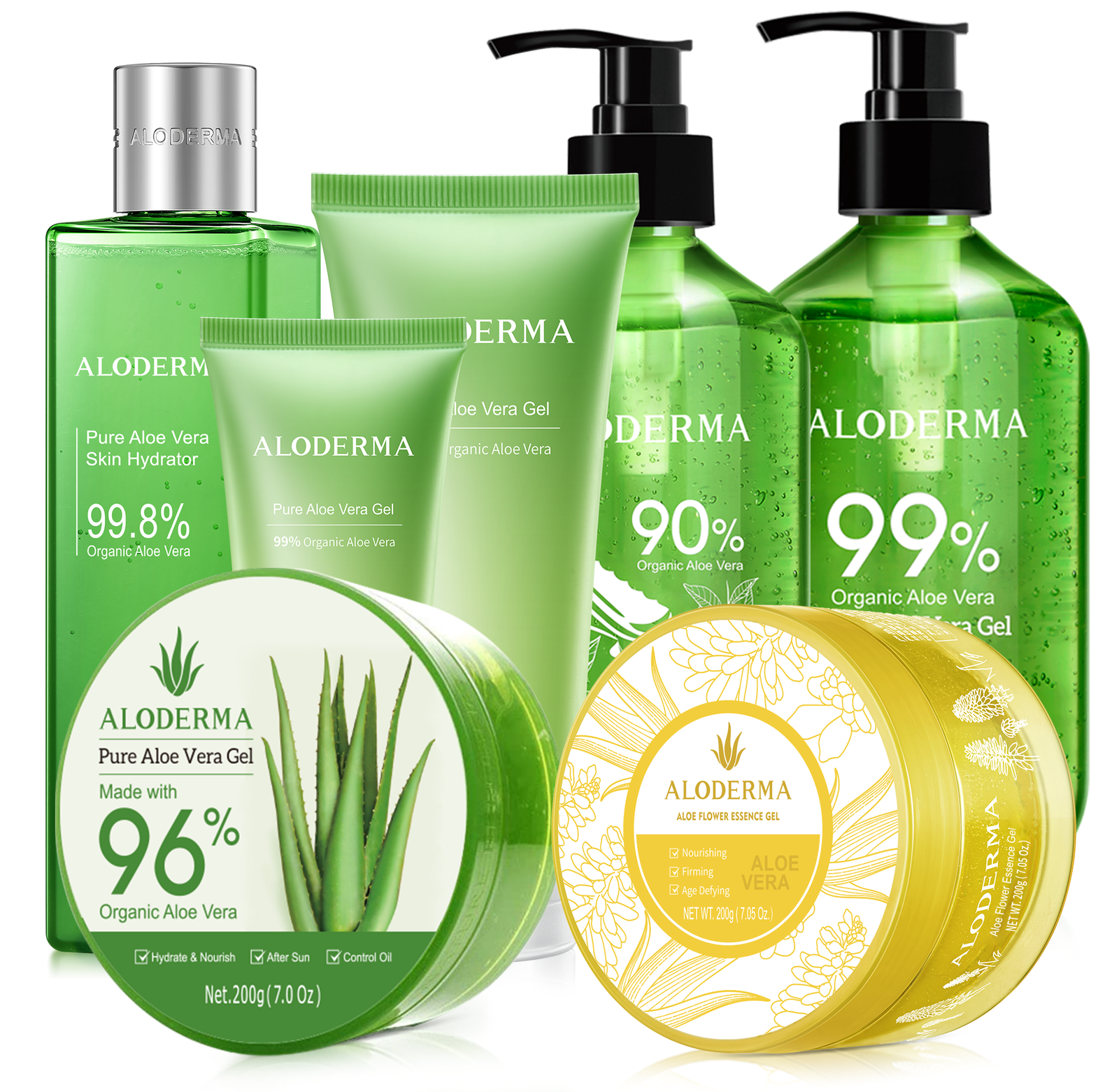
ALODERMA offers fresh organic aloe-based cleansers, moisturizers, gels, and mask options designed for lightweight hydration and simple routines. Visit ALODERMA to review the ingredient details and choose an aloe-forward product that fits your sensitive-skin routine.