



Some of the most common ingredients to avoid in skincare are formaldehyde-releasers, sulfates, parabens, phthalates, and PFAS. These additives can cause all sorts of skin discomfort and are often hiding in plain sight on product labels. Learning how to spot them is a crucial first step toward healthier skin.
Learning to Read Skincare Labels for a Healthier Routine
Have you ever flipped over a skincare bottle, scanned the long, complicated ingredient list, and felt completely lost? You're not alone. It's an overwhelming experience that can leave you questioning if the promises on the front of the bottle match the reality on the back. This desire for safe, effective products that deliver a healthy glow without causing discomfort is completely valid, especially if you have sensitive or reactive skin.
The good news is that you have the power to make informed choices. The global skincare ingredients market is set to grow from USD 13.4 billion to USD 21.5 billion by 2034, and a big reason why is that 72% of consumers are now carefully checking labels to sidestep ingredients like formaldehyde, parabens, and sulfates. Many of these chemicals are categorized as carcinogenic, mutagenic, or reprotoxic. Understanding the impact of these CMR substances is key to building a safer routine for your skin.
Prioritizing Ingredients Over Marketing
At ALODERMA, we believe what’s first on the ingredient list matters most. That’s why we built our entire brand on a unique ‘farm-to-skin’ promise. We are a fully vertically integrated aloe vera company, which means we control everything from start to finish. We grow our own organic aloe, harvest it by hand, and process our aloe vera and manufacture onsite within 12 hours of harvest.
This is the hierarchy we think everyone should use when looking at a skincare label, placing real, farm-fresh ingredients far above any marketing claims.

This really drives home the point that a product's true value comes from its core ingredients, not just the flashy promises on the bottle.
Our commitment ensures the primary ingredient found in every ALODERMA product isn't water or a cheap filler, but the most bioactive and effective aloe vera possible. We focus on pure, potent ingredients so you don’t have to worry about what you're putting on your skin.
This journey isn’t just about avoiding certain ingredients; it’s about choosing genuinely better ones. It’s about building trust and transparency, knowing your skincare is rooted in freshness and quality from the very first drop. If you ever feel uncertain about an ingredient, our comprehensive product ingredient dictionary can help you decipher any label with confidence.
Why Formaldehyde Releasers Don't Belong in Your Cabinet
Let's talk about one of the most concerning ingredient groups you might find in your bathroom: formaldehyde releasers. Think of them as tiny, slow-release capsules hidden inside your products. Their main purpose is to release small amounts of formaldehyde over time, which acts as a preservative to stop bacteria from growing and extend a product's shelf life.
While that might sound like a good thing, this constant, low-level exposure can be a huge trigger for skin sensitivity and discomfort. If you already have reactive skin, discovering that your daily moisturizer might be the source of your flare-ups is incredibly frustrating. It feels like a betrayal of trust in the products you’ve carefully chosen for your skincare routine.
Spotting These Hidden Ingredients
The first step toward healthier skin is learning how to identify these preservatives on an ingredient list. They're sneaky—you'll never see the word "formaldehyde" printed on the bottle. Instead, you have to become familiar with their chemical names, which can feel like a chemistry lesson at first.
But don't worry, a little knowledge here goes a long way. To help you screen your products before they ever make it into your shopping cart, we've put together a quick guide to the most common culprits.
Common Formaldehyde Releasers on Skincare Labels
| Formaldehyde Releaser Name | Where It's Commonly Found | Potential Concern |
|---|---|---|
| DMDM hydantoin | Shampoos, conditioners, lotions, moisturizers | Common skin irritant and allergen |
| Quaternium-15 | Cleansers, styling gels, lotions | Strong allergen, known to cause contact dermatitis |
| Imidazolidinyl urea | Foundations, serums, eye creams, lotions | Can trigger skin sensitivities and allergic reactions |
| Diazolidinyl urea | A wide range of cosmetics and personal care | Known to cause dermatitis in sensitive individuals |
| Sodium hydroxymethylglycinate | Shampoos, skincare, and baby products | Can release formaldehyde and cause skin/eye irritation |
Knowing these names gives you the power to make informed choices. For a deeper dive, you can learn more about specific ingredients like DMDM Hydantoin in our dedicated guide.
The fundamental problem is how these ingredients work: they continuously break down and release small amounts of formaldehyde. This means every time you use the product, your skin gets a micro-dose of a known irritant.
The Fresh Alternative to Harsh Preservatives
At ALODERMA, we believe that effective, long-lasting skincare shouldn’t involve a trade-off with your skin’s health. Our entire philosophy is built on freshness, which is how we’re able to create our products without relying on harsh preservatives like formaldehyde releasers.
Because we are a fully vertically integrated aloe vera company, we have an advantage other brands simply don’t. We grow our own organic aloe vera, then process our aloe vera and manufacture onsite within 12 hours of harvest. This extreme freshness ensures the primary ingredient found in every one of our products—is as bioactive and potent as possible.
This unique farm-to-skin approach means our formulas, which are at least 95% naturally derived, are inherently more stable. The high concentration of pure, fresh aloe creates a supportive environment that eliminates the need for the questionable chemicals often found in mass-produced skincare.
Our Aloe Firming & Rejuvenating Cream is a perfect example. Instead of using preservatives like formaldehyde releasers, it harnesses the natural power of fresh aloe, and supportive botanicals to deliver beautiful results. It's proof that you can have an effective, luxurious cream that feels incredible on your skin, without any of the worry. This is the peace of mind that comes from choosing products built on transparency and freshness from the very start.
Understanding PFAS 'Forever Chemicals' in Cosmetics

You’ve probably seen the term ‘forever chemicals’ in the news, usually tied to environmental issues. What you might not know is that this same group of substances, called PFAS (per- and polyfluoroalkyl substances), could be hiding in your makeup bag. This makes them a critical group of ingredients to avoid in skincare and cosmetics.
In cosmetics, PFAS are the secret behind that water-resistant, ultra-durable, and long-lasting finish. Think of a foundation that promises to look flawless all day or a lipstick that simply won’t budge. It’s almost like applying a thin, invisible Teflon-like layer to your skin—one that doesn't wash away easily.
The thought of knowingly smearing such a persistent chemical on your face every day is unsettling, to say the least. It’s one thing for a product to last through a busy afternoon, but it’s another for its ingredients to linger on your skin and then stick around indefinitely in the environment after you wash them down the drain.
How to Identify PFAS on a Label
Spotting PFAS on a label requires a sharp eye, as they often hide behind complicated chemical names. The easiest trick is to look for ingredients that include the prefixes "perfluoro-" or "polyfluoro-" in their name.
Here are some common culprits to watch for:
-
PTFE (Polytetrafluoroethylene): Yes, this is the same material better known as Teflon, often added for its smoothing effects.
-
Perfluorooctyl Triethoxysilane: Used to treat pigments and make them more spreadable.
-
Perfluorononyl Dimethicone: A conditioning agent that gives products a silky, slippery feel.
-
C9-15 Fluoroalcohol Phosphate: Used to create a water-repellent film on the skin.
These chemicals are more common than most of us realize. A 2021 study found high levels of fluorine—a key indicator of PFAS—in many foundations, mascaras, and lip products. This has led to more scrutiny; in fact, a 2025 FDA report identified 51 different types of PFAS intentionally used in over 1,700 cosmetic products. You can explore the growing concerns about these ingredients in cosmetics to better understand their impact.
The real problem with PFAS is their extreme persistence. These man-made chemicals were engineered not to break down. That’s why they’re so effective in long-wear makeup, but it's also why they build up in our bodies and the environment over time.
Choosing a Fresh, Clean Alternative
The great news is you don’t need these persistent chemicals for a beautiful, smooth complexion. Nature offers gentle yet powerful alternatives that work with your skin, not just sit on top of it. At ALODERMA, this belief is at the very core of what we do.
We are a fully vertically integrated aloe vera company. This means we don’t buy aloe powder or concentrate from a third party. We grow all of our own organic aloe vera and we process our aloe vera and manufacture onsite within 12 hours of harvest. This farm-to-skin approach guarantees that the primary ingredient found in every one of our products is the most bioactive and effective aloe vera possible, bursting with the natural vitamins, minerals, and amino acids your skin craves.
Instead of relying on synthetic film-formers like PFAS, we let the power of fresh aloe do the hard work. A product like our Aloe Firming Serum gives you a visibly smooth and hydrated look using the natural goodness of fresh aloe vera. It’s proof that you can have radiant, healthy-looking skin without compromising on clean ingredients. It's all about choosing skincare that nourishes deeply and gives you peace of mind with every single application.
The Truth About Parabens and Phthalates in Skincare
Two of the most talked-about ingredients to avoid in skincare are parabens and phthalates. They’re everywhere, but having them in your daily routine is something that deserves a closer look. It’s a frustrating feeling, isn't it? To think that a product you trust might contain ingredients that work against your body's natural balance.
Parabens are basically preservatives. They give products a longer shelf life, keeping them stable for years. Phthalates are often used to make fragrances stick around longer on your skin. While that might sound useful, the controversy swirling around them is their potential to disrupt the body’s delicate systems—a risk many of us are no longer willing to take.
How to Spot Parabens and Phthalates
Knowing what to look for on an ingredient list is the first step to taking back control of your skincare choices. Once you can spot them, you're empowered.
-
Parabens: These are usually pretty easy to find. Just scan the ingredient list for anything ending in "-paraben". You’ll commonly see methylparaben, propylparaben, butylparaben, and ethylparaben.
-
Phthalates: This is where it gets tricky. They are almost always hidden under the catch-all term "fragrance" or "parfum". Since they’re used to make synthetic scents last, companies aren’t required to list them individually. Sometimes you might see abbreviations like DBP (dibutyl phthalate) or DEP (diethyl phthalate), but finding them buried in the "fragrance" loophole is far more common.
Finding these in your favorite products can feel like a real breach of trust, especially when you’re actively trying to build a routine that truly supports your skin. The good news is, there are much better, cleaner ways to make skincare that actually works.
The real issue with these ingredients isn't just one single application. It's the cumulative exposure—the buildup from multiple products, day in and day out—that raises red flags for anyone pursuing a truly healthy lifestyle.
A Fresh Approach to Preservation and Scent
This is where ALODERMA's philosophy really comes to life. We believe you should never have to choose between effective skincare and your peace of mind. Our promise begins on our very own organic farms, where we grow the aloe vera that becomes the star ingredient in every single one of our products.
Because we are a fully vertically integrated aloe vera company, we oversee every part of the process. We grow all of our own organic aloe vera and process it right on-site within 12 hours of harvest. This unique farm-to-skin approach guarantees the primary ingredient found in every one of our products is the most bioactive and effective aloe vera possible. It's this high-quality, powerful aloe that forms the backbone of our formulas, allowing us to completely skip questionable preservatives like parabens.
On top of that, we never use synthetic fragrances or phthalates. If we do add a scent, we turn to natural, plant-based essential oils for a gentle, authentic aroma without any hidden chemicals. It’s all about transparency and putting your well-being first.
Our Aloe Hydrating Toner is a perfect example of this principle in action. Made with fresh, organic aloe vera, it calms, hydrates, and rebalances your skin without a single paraben or phthalate in sight. It’s a simple, elegant formula that proves you don’t need controversial ingredients to achieve beautiful, healthy-looking skin. Choosing ALODERMA means choosing skincare that is as pure and honest as the ingredients we grow ourselves.
Rethinking Sulfates and Synthetic Fragrances for Your Skin
Have you ever washed your face, only to have it feel tight, dry, and squeaky—but not in a good way? That sensation is often the calling card of sulfates, one of the most common ingredients to avoid in skincare. Or maybe you’ve tried a new lotion that smells amazing, but suddenly your skin is red and reactive. A hidden synthetic fragrance could be the culprit.
These two ingredients are everywhere, but they can be the source of some serious skin drama. It’s a frustrating cycle: you buy a product to help your skin, only to find it's making things worse. Let's dig into why letting go of these popular additives can be a game-changing step toward a calmer, happier complexion.
The Problem with a Satisfying Lather
Sulfates, like Sodium Lauryl Sulfate (SLS) and Sodium Laureth Sulfate (SLES), are the cleansing agents that create that rich, satisfying lather we’ve all been taught means "clean." Think about the mountains of foam from your shampoo or body wash. While it feels like it’s working, using a harsh sulfate cleanser on your face is like scrubbing delicate silk with dish soap.
These powerful detergents are incredibly efficient at dissolving oil and grime. The problem is, they don't know the difference between the day's dirt and the natural oils your skin needs to stay healthy and balanced. This stripping action compromises your skin’s protective barrier, leaving it vulnerable, dehydrated, and uncomfortably taut. And it’s not just about your face; considering SLS-free formulas in personal care products like toothpaste can benefit your overall well-being.
The "Fragrance" Loophole
Synthetic fragrances are a different kind of tricky. When you see "fragrance" or "parfum" on an ingredient list, it seems innocent enough. In reality, that single word can hide a complex cocktail of potentially hundreds of unlisted chemicals, all thanks to what’s known as the "fragrance loophole."
This lack of transparency is deeply frustrating for anyone trying to be mindful of what they put on their skin. It could be the hidden reason for sudden sensitivities, unexplained redness, or even headaches after using a new product. For a deeper look at this, our guide on choosing a fragrance-free moisturizer breaks it down even further.
The emotional toll of this uncertainty is real. It's that feeling of betrayal when a product you trusted turns on you, leaving you to play a frustrating guessing game to figure out what’s causing your skin to react.
The Fresh, Gentle Alternative
At ALODERMA, we believe cleansing should be a gentle, restorative act—not a stripping one. Our entire philosophy is built on freshness and transparency, which is why we formulate without sulfates and synthetic fragrances. As a fully vertically integrated aloe vera company, we control the entire process from our organic farms to the bottle in your hand.
We grow all of our own organic aloe vera and process our aloe vera and manufacture onsite within 12 hours of harvest. This ensures the primary ingredient found in every one of our products is the most bioactive and effective aloe vera possible. This farm-to-skin promise allows us to create powerful formulas that don’t need harsh additives to work.
Our ALODERMA Aloe Soothing & Moisturizing Cleanser is the perfect example of this approach. It effectively removes impurities without a single sulfate, using the natural, calming power of fresh aloe to leave your skin feeling clean, soft, and hydrated—never stripped. It’s the peace of mind that comes from knowing exactly what you're putting on your skin. Your complexion will thank you for it.
How to Build a Clean Routine with ALODERMA
Knowing which ingredients to avoid in skincare is a huge step, but the best part is what comes next. It’s the chance to build a routine that feels incredible, delivers real results, and gives you total peace of mind. Creating a clean skincare ritual is more than just a habit; it’s a daily act of self-care where you consciously choose to nourish your skin with ingredients that are transparent, effective, and straight from nature.
Let's walk through a simple, powerful routine built around ALODERMA’s farm-fresh aloe. This is about more than just applying products. It’s about reinforcing the trust that comes from using skincare where we handle everything ourselves. As a fully vertically integrated aloe vera company, we grow all of our own organic aloe vera and we process our aloe vera and manufacture onsite within 12 hours of harvest to ensure the primary ingredient found in every one of our products is the most bioactive and effective aloe vera possible.
Step 1: Start with a Gentle Cleanse
The foundation of any great routine is a cleanser that works with your skin, not against it. So many cleansers rely on harsh sulfates that strip away everything—good and bad—leaving your skin feeling tight, dry, and vulnerable. A truly clean start means washing away impurities without wrecking your skin's delicate moisture barrier.
This is why we always recommend starting your morning and evening with the ALODERMA Aloe Soothing & Moisturizing Cleanser. It’s completely sulfate-free. Instead, it uses the gentle, calming power of our farm-fresh aloe to lift away dirt and oil, leaving your skin feeling soft, refreshed, and comfortable—never stripped.
Step 2: Tone and Rebalance Your Skin
Right after cleansing, your skin is primed and ready to soak up all the good stuff to follow. A toner is the perfect bridge in your routine, helping to hydrate, rebalance your skin’s pH, and get it ready for serums and moisturizers. Think of it like giving your skin a big glass of water to quench its thirst and set the stage for everything else.
Our Aloe Hydrating Toner is a beautiful example of pure, simple, and effective skincare. Made with fresh, organic aloe vera juice, this toner delivers an instant wave of soothing hydration. It feels incredibly refreshing and leaves your skin perfectly prepped and balanced for the next step.
Step 3: Deliver Concentrated Aloe Hydration
Now it’s time for the main event: giving your skin a concentrated dose of our hero ingredient. This step is all about delivering pure, potent hydration that helps your skin feel plump, soothed, and visibly healthy. It’s truly the heart of the ALODERMA routine.
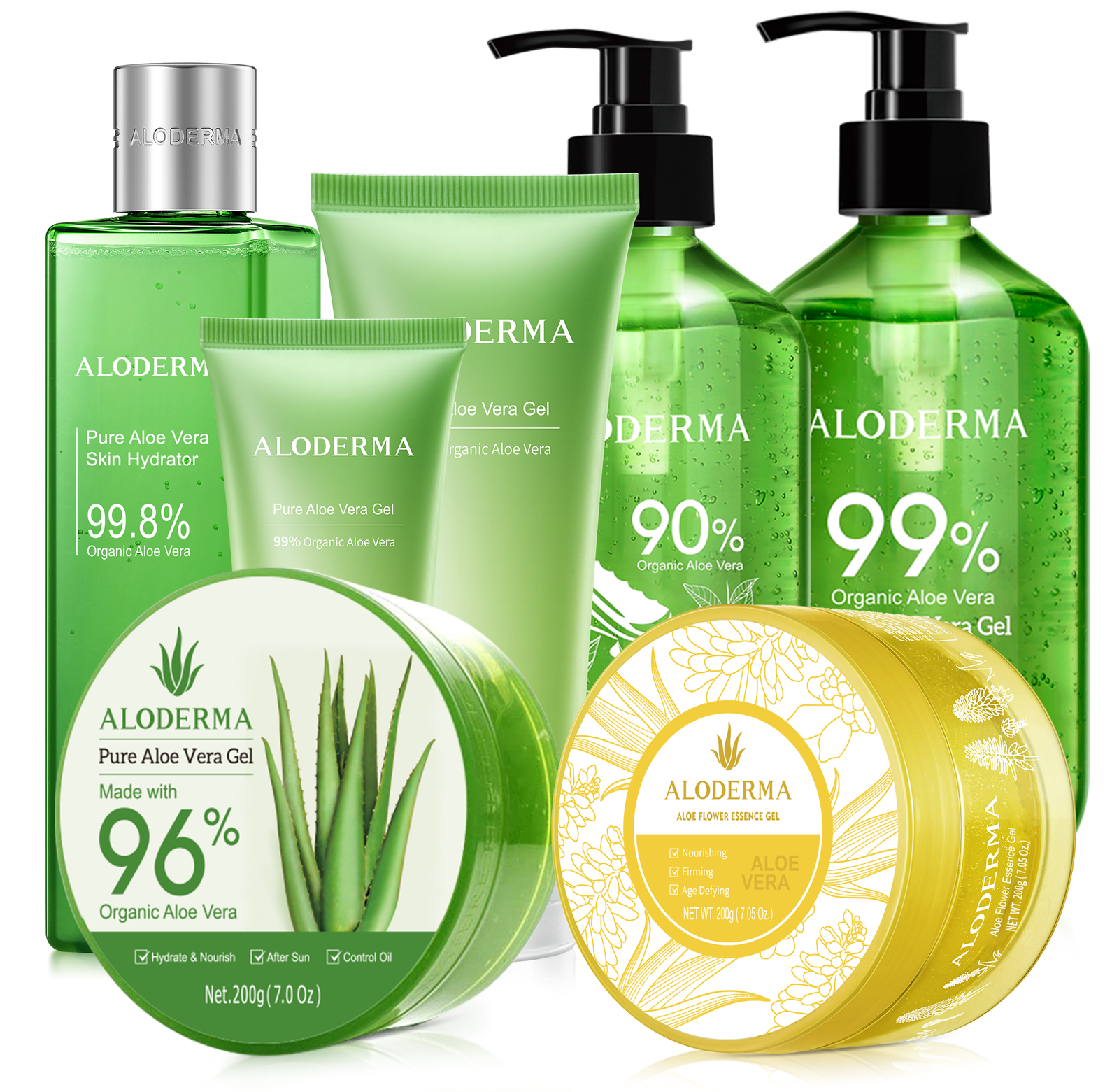
For this, nothing beats our iconic Pure Aloe Vera Gel. Containing 99% organic aloe vera, this is as close as you can get to snapping a fresh leaf off the plant and applying it directly to your skin. It floods your skin with moisture and nutrients, providing a calm, dewy base that boosts the effects of every product you layer on top.
This simple, three-step foundation—Cleanse, Tone, Hydrate—creates a powerful synergy. Each product builds on the last, reinforcing your skin's health with fresh, bioactive aloe vera at every turn. It’s an empowering choice for achieving a visibly radiant complexion, naturally.
Step 4: Lock in Moisture
The final, crucial step is to seal in all that wonderful hydration with a moisturizer that fits your skin's needs. This creates a protective blanket over your skin, keeping moisture in and environmental stressors out, ensuring your skin stays soft and supple all day.
By choosing a cream formulated without the problem ingredients we've talked about, you're solidifying your commitment to a truly clean routine. This last step ensures all the aloe-rich benefits you've layered on are locked in for results that last.
We Get It - You've Got Questions
Stepping into the world of clean skincare can feel like learning a new language, but it doesn't have to be complicated. Let's tackle some of the most common questions people ask when they start their journey to healthier, happier skin.
Is 'Natural' or 'Organic' Always Better?
While 'natural' and 'organic' are great signposts, they don't tell the whole story. What really matters is transparency and, most importantly, freshness. At ALODERMA, 'organic' isn't just a sticker on a bottle; it’s a promise we live by every single day.
We're a fully vertically integrated aloe vera company, which is a fancy way of saying we control everything from start to finish. We grow all of our own organic aloe vera without a drop of pesticides. Then, we process our aloe vera and manufacture onsite within 12 hours of harvest. This isn't just for bragging rights—it’s critical for capturing the aloe's full bioactive power, ensuring the primary ingredient found in every one of our products is the most bioactive and effective aloe vera possible, not a watered-down afterthought.
I Don't Have Sensitive Skin. Do I Really Need to Avoid These Ingredients?
Yes, it’s a smart move for everyone. Think of it less like an emergency fix and more like a long-term wellness plan for your skin. You might not have an immediate, dramatic reaction to some of these chemicals, but many of them can cause cumulative issues that build up silently over time.
Avoiding these ingredients isn’t just about dodging today's irritation; it's about making a long-term investment in your skin's health and cutting down on your body’s overall chemical load.
How Do I Even Start Switching to a Cleaner Skincare Routine?
Don't panic and toss everything in the trash at once! The easiest way to begin is by swapping out the products that spend the most time on your skin—think moisturizers and serums.
A great, low-stress strategy is to simply wait until you run out of something. When your current moisturizer is empty, replace it with a cleaner alternative. This approach makes the transition feel manageable and doesn't blow your budget. It’s all about taking gentle, deliberate steps toward a routine you can feel truly good about.
Ready for that first step? There’s no better way to start than by experiencing the pure, calming hydration of fresh aloe. Discover how ALODERMA’s farm-to-skin difference can become the cornerstone of your new clean beauty ritual with our iconic Pure Aloe Vera Gel.