





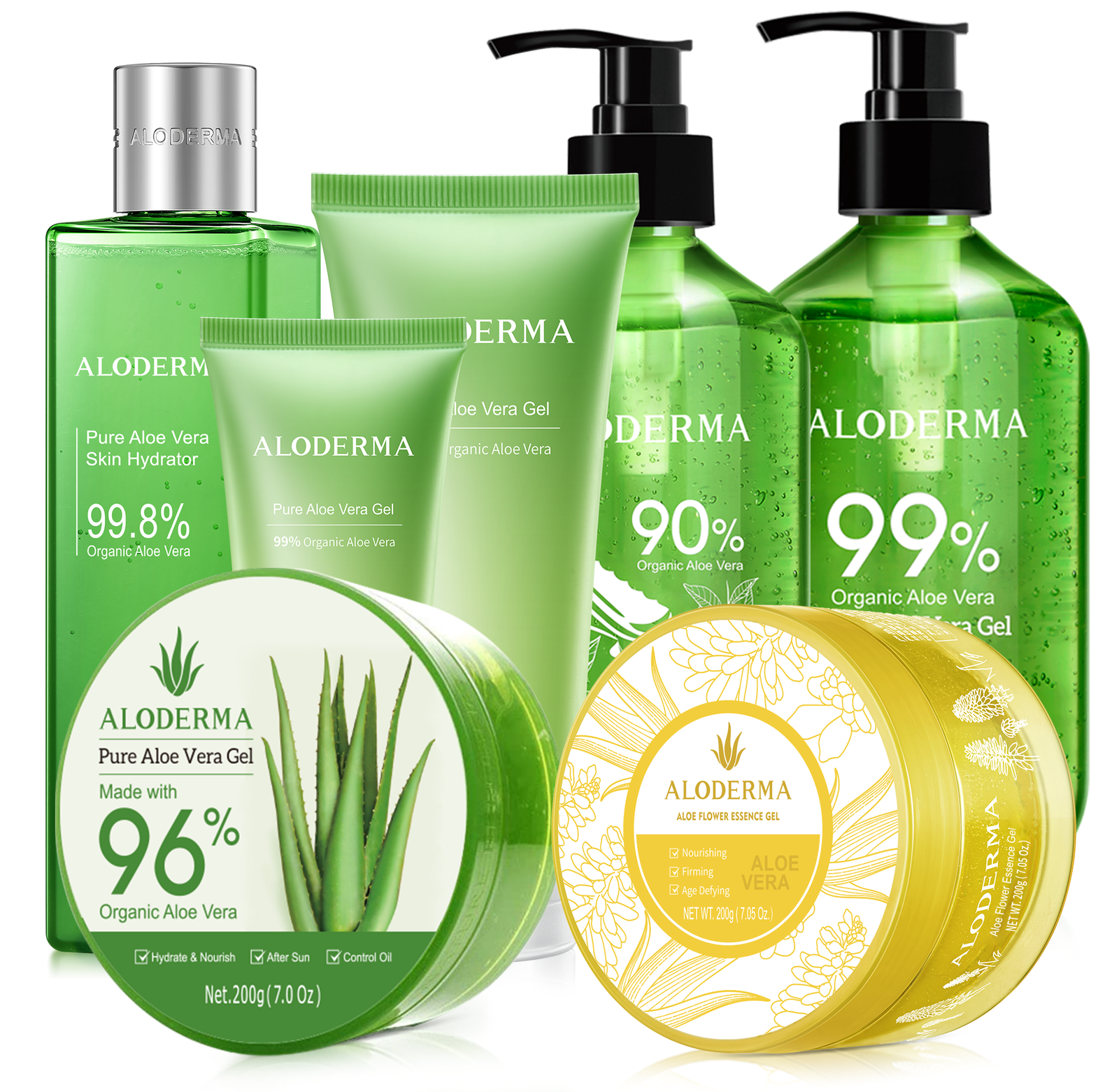


Ninety-four percent of the more than 3,900 U.S. female beauty consumers surveyed by The Benchmarking Company in January 2025 had bought a multitasking skincare product in the previous year, according to the company's multi-tasker report. Almost everyone had tried one. That isn't a niche preference sitting at the edge of the shelf. It's the shelf.
Which is why the shelf is so confusing. A bottle that claims four jobs is not four products, and a routine cut from ten steps to four isn't automatically gentler, cheaper or faster. Most multi use skincare products are sold on the count of claims rather than the count of jobs the bottle does, and that's where shoppers get stuck.
So the useful questions are short ones. What's the main job? What's the second job? And does either overlap something you already own? Answer those three and a crowded cabinet turns into a routine you can explain to a friend in one sentence.
What Counts as a Multi-Use Skincare Product
A multi-use skincare product is one formula asked to handle more than one job in your routine. Picture the bag you carry every day: keys, wallet, phone, water bottle. It isn't a suitcase. The moment a bottle claims to replace your cleanser, your serum, your cream and your sunscreen at once, it has stopped being a day bag and started pretending to be luggage.
You already recognize the jobs a product can double up on: hydration, cleansing, a light polish, sun protection, a touch of color and one simple treatment step. Multi-use means two or three of those come out of the same base without the formula contradicting itself.
What the shelf looks like
In January 2025, The Benchmarking Company surveyed more than 3,900 U.S. female beauty consumers about products that perform multiple functions, and 67 percent said they regularly buy beauty products with more than one function, as GCI Magazine's report on the survey notes. The formats those buyers named most often were facial serums making several benefit claims (49 percent), lip balms combining SPF or tint (47 percent), exfoliating cleansers (46 percent) and tinted moisturizers with SPF (43 percent).
The same research found that only 38 percent said multifunctionality itself was important to their purchase decision. That gap is the useful part. People buy these products, but not because of the count. They buy when the first job is convincing and the second job is believable.
The five-word test: if you can't name the main job in five words, the second job won't rescue the product.
Match the format to the job it can carry
| Format | Extra jobs shoppers expect | Leave this job to another product | Share who named it |
|---|---|---|---|
| Facial serum | Hydration plus treatment claims | Dedicated sunscreen | 49% |
| Lip balm with SPF or tint | Moisture plus sun filter or color | Full-face moisturizer | 47% |
| Exfoliating cleanser | Cleanse plus a light polish | Leave-on hydrator | 46% |
| Tinted moisturizer with SPF | Moisture, light color and sun filter | A separate night cream | 43% |
| Lightweight aloe gel | Face, hands, body, or a base under cream | Sunscreen and a rich cream in very dry air | Not broken out in the survey |
Two rows carry most of the confusion. The tinted moisturizer with SPF is a real morning product, and it still isn't your sunscreen. A deliberate sunscreen layer goes on at the dose the product was tested at, over face and neck, and gets reapplied through the day. Tinted moisturizer is worn thinner than that, which is exactly why it can't be the only filter you count on.
The exfoliating cleanser is the other trap. It cleanses and it polishes, and because you rinse it off within a minute, it isn't a leave-on hydrator no matter what the back label promises. If your skin feels tight afterwards, the missing step is a hydrating layer, not a stronger cleanser.
Open the cabinet and find the row that matches a bottle you already own. Judge that bottle first, before you buy anything new.
Why a Shorter Routine Can Feel Better
It's 7:40 on a weekday morning, and there are three minutes between the toothbrush and the door. Nobody wants to open five bottles in that window. The pull toward fewer products shows up in purchasing behaviour, not only in the mirror.
A 2025 Euromonitor report, drawing on its Voice of the Consumer: Beauty Survey from June and July 2024, found that 32.1 percent of Asia-Pacific consumers would rather buy fewer, higher-quality items, as Euromonitor's analysis of simplified beauty routines sets out.
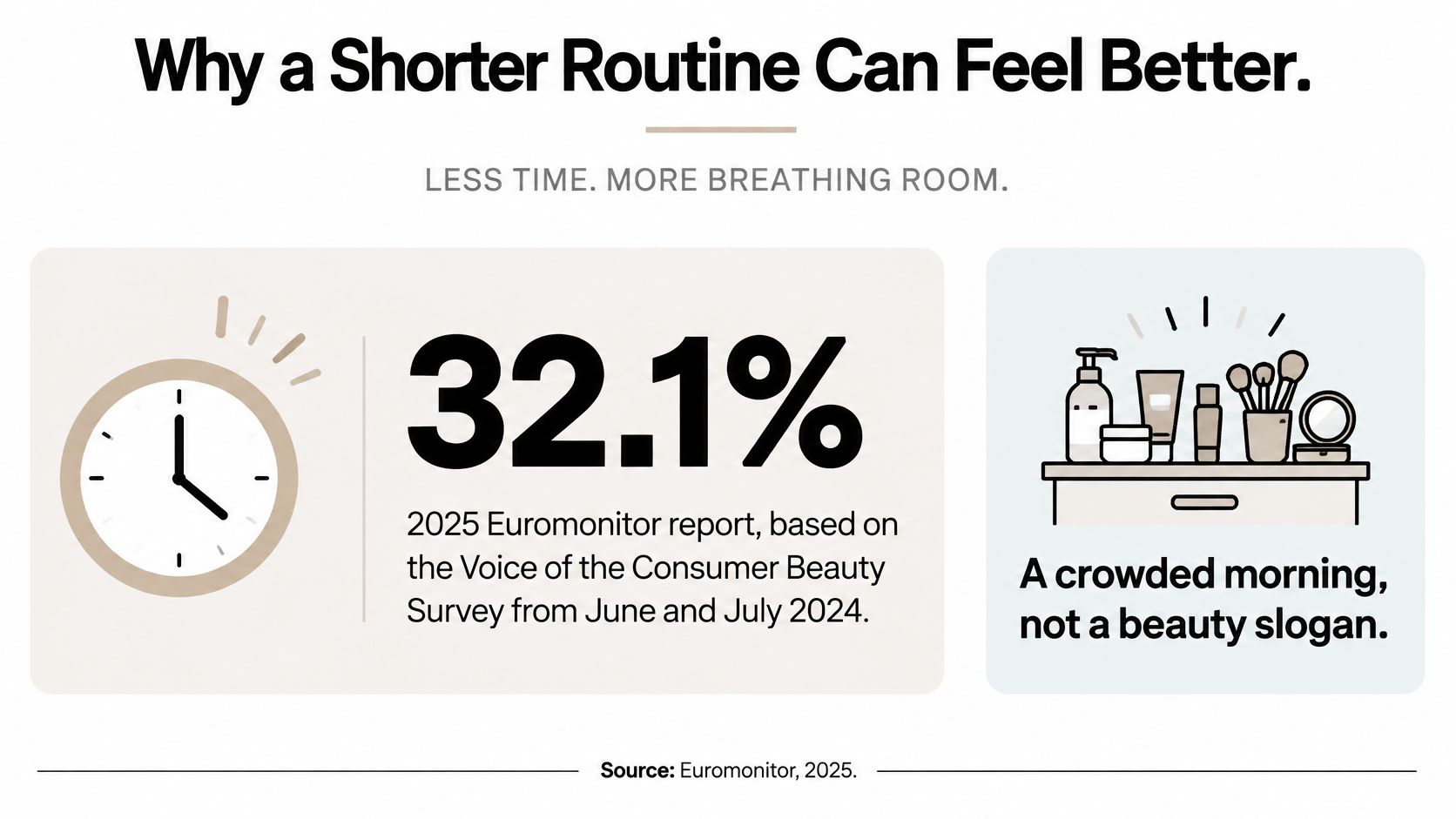
Put a person behind each figure. A parent with three minutes before school. A traveler with room for one bottle in a carry-on. Someone staring at a shelf of half-used jars who wants fewer decisions, not another step. The second figure in the set is the one that separates a trend from a marketing slogan: 15.2 percent were most influenced by multifunctionality when choosing beauty products. Everyone else picks on something better, such as how the product feels or whether it suits their skin.
| Finding | Figure | What it changes at the sink |
|---|---|---|
| Would rather buy fewer, higher-quality items | 32.1% | A shorter shelf is a quality choice, not only a space choice |
| Most influenced by multifunctionality | 15.2% | A second job matters only when it is the reason they pick the bottle |
| Willing to pay 10% to 20% more for new formats | 31% | A staple can cost more if it replaces a step they already skip |
| Looking for ways to simplify their lives | 21% | Fewer decisions in the morning, not a smaller collection for its own sake |
| Willing to spend money to save time | 16% | One bottle that covers a second area is the time saving |
The gains that never make it into a table are the ones you notice at home: less time at the sink, fewer products going off in a drawer, and a clearer read on what your skin likes because fewer formulas are competing for the same job.
Cutting steps also means knowing which steps can't be cut. Skin tone, climate and how reactive your skin is all change the answer, and a guide to skincare steps for darker skin tones is worth reading before you delete a whole category from the shelf.
Practical rule: a shorter shelf is a quality decision. It isn't a prize for owning the smallest number of bottles.
The test of a good shorter routine is social, not scientific. Describe it to a friend in one sentence. If that sentence covers what your skin needs and how you cover it, the routine holds. If the sentence becomes a list of claims you can't rank, you've simplified the shelf without simplifying the decision.
How One Aloe Gel Covers Face Hands and Body
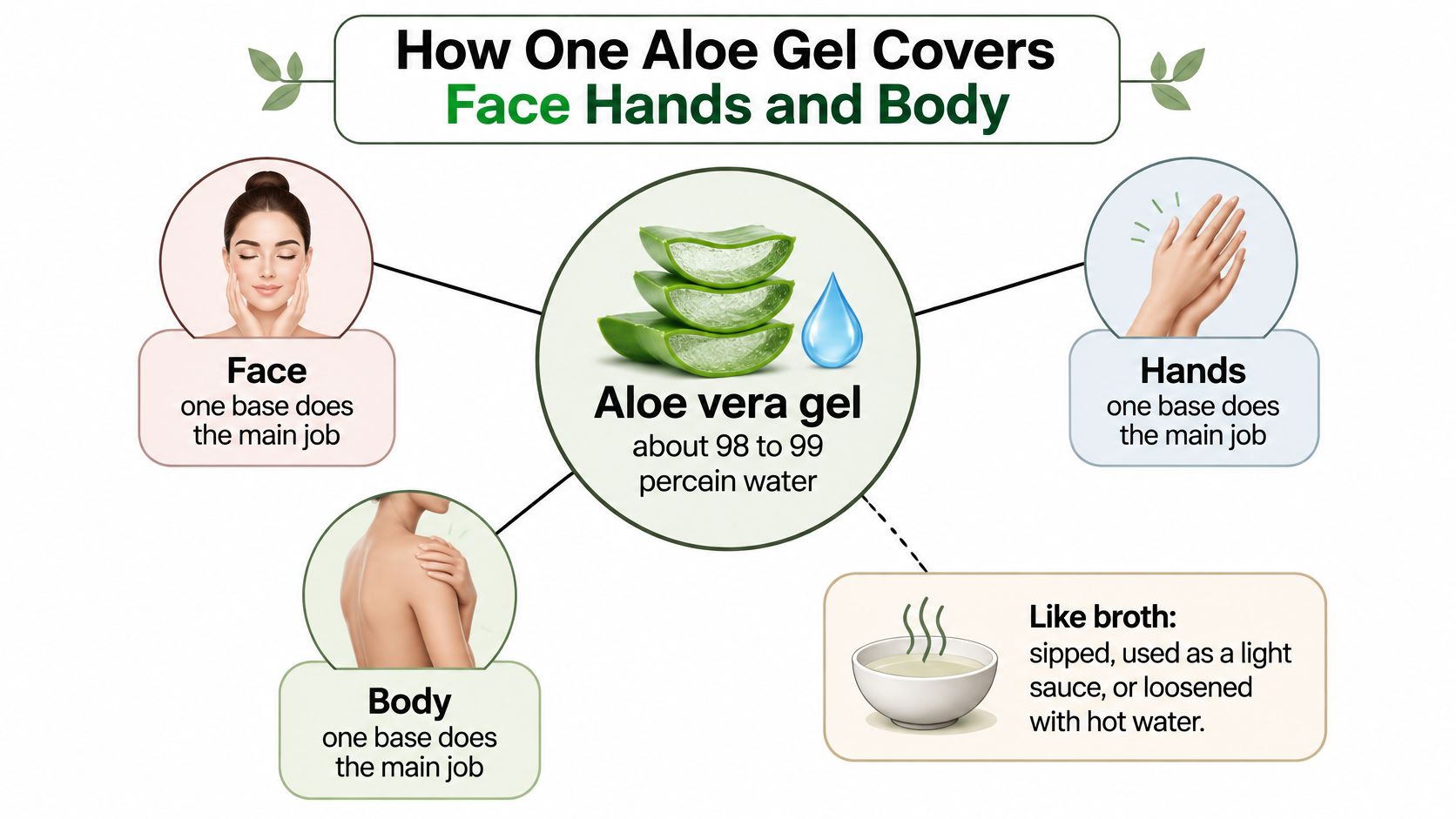
Aloe vera gel is mostly water, about 98 to 99 percent, with polysaccharides and smaller amounts of other compounds, which is why a thin layer sinks in and disappears while a cream sits on top. The Pure Aloe Vera Gel ingredient breakdown shows the same thing in a finished formula: 99 percent fresh organic aloe vera, with Organic Aloe Barbadensis Leaf Juice as the first listed ingredient, followed by carbomer, 1,2-hexanediol, hydroxyacetophenone, tetrahydroxypropyl ethylenediamine and disodium EDTA for texture and stability.
Think of a good broth. You can sip it from a cup, use it as a light sauce, or loosen it with hot water when you need it thinner. One base, three jobs, and no compromise in the base itself. A gel works the same way on skin.
What's in the bottle and what isn't
Our product page states that the gel uses aloe juice rather than water or aloe powder concentrates, and that it leaves out SD alcohol, parabens, mineral oil, GMOs, hormones and sulfates. That distinction matters more than the front label. A gel built on reconstituted powder plus added water can still print the word aloe in large letters and behave nothing like a fresh juice base.
Sizes make the second and third jobs practical. The 100 g gel fits a handbag or a travel bag. The 500 g format stays in the bathroom for face and body use at home.
Three places one gel earns its keep
- After cleansing, on the face and neck. Press a thin layer over damp skin and let it sink in. This is the hydrating layer, and it's the job the gel does best.
- After washing your hands. Smooth a little over dry knuckles and the backs of your hands. It absorbs fast enough that you can type a minute later.
- After a shower, on arms and legs that feel tight. Use a wider layer, then add cream only where skin still feels dry.
Post-shower is where a gel really earns its keep, and it's the same idea behind a stack of refreshment towels for hotel guests: a cool, damp layer on skin that feels hot and tight. If your body routine needs more structure than that, a full body skin care routine is the place to map the order.
Why the harvest window shows up in the ingredient list
We are a fully vertically integrated aloe vera company. We grow all of our own organic aloe vera, process that aloe, and manufacture onsite within 12 hours of harvest, which is how we explain the farm-to-factory window, so the primary ingredient in every product stays as bioactive and effective as it can be. That single detail gives you something concrete to compare when a label says fresh and nothing else.
Our products identify ECOCERT, USDA Organic and EU Organic aloe vera as the primary ingredient, with effective ingredients at least 95 percent naturally sourced. For a shopper, the useful part is what those credentials attach to: the aloe itself, not every ingredient in the bottle.
Where the gel stops and the next layer starts
A gel adds water; it doesn't seal it in. When the air is dry or your skin still feels tight after the gel, the next layer is a cream, not another layer of gel. An Aloe Hydrating Serum can serve as the treatment layer before the gel, and an Aloe Hydrating Cream as the richer coat over it, so the multi-use bottle stays the base instead of trying to be the entire routine.
The comparison that saves money is a boring one. Read the first ingredient, check whether the aloe is juice or powder, and then decide whether one bottle can cover the second job you have in mind.
Where Multi-Use Stops Being Efficient
Shoppers aren't naive about any of this. In September 2025, a nationally representative YouGov survey of 2,095 UK adults found that 25 percent of people who already had a skincare routine said they preferred multi-use products, according to YouGov's write-up of UK skincare trends. A preference, not a stampede.
The doubts held by much of the remaining group are specific. Reporting on that skepticism found 23 percent worried multi-use products wouldn't perform as well and 19 percent feared they wouldn't meet a skin-specific need, with more doubt among younger adults, as NewBeauty reported.
Both worries are reasonable, and neither one gets answered by buying more products.
So here's a compatibility check instead of a pep talk.
- Write the main job of every product you use. One line each. If two lines say the same thing, you've found the overlap.
- Note any second job the label claims. Hydrates and soothes is a sensible pair. Polishes and repairs is one product pulling in two directions.
- If two products both polish, or both lean on fragrance, keep the one you like and pause the other. Duplicated actives are how a short routine ends up harsher than a long one.
- Pair a hydrating gel with a plain cream rather than stacking treatment steps. The gel supplies water, the cream holds it in. That's a pairing, not a pile.
- Try anything new on a small patch of inner arm for a few evenings before it goes near your whole face.
Fewer bottles don't automatically mean less irritation. A 2025 peer-reviewed analysis of highly viewed teen skincare videos found that girls aged 7 to 18 used an average of six facial products, while the videos themselves contained an average of 11 potentially irritating active ingredients, as ScienceDaily reported. The bottle count was low. The active count wasn't.
One product with several modest benefits is not the same as one product replacing every targeted step. The first is a staple. The second is a claim that has to survive a dry January, a humid August and a week of travel. Sunscreen stays its own morning product. Very dry air still justifies a cream over a gel.
| Situation | One multi-use product is enough | Add or keep a second product |
|---|---|---|
| Short morning and skin feels comfortable | Gel as the hydrator after cleansing | Sunscreen still stands alone |
| Dry indoor air | Gel as a thin base | Cream over face and neck |
| Two products that both polish | Keep the one you prefer | Pause the second polish |
| Hands or arms feel tight | Same gel on those areas | A separate hand cream only if the gel is not enough |
| A label lists many benefits | Judge the main job first | Skip a product that only wins by counting claims |
How to Build a Three-Minute Routine
Here's the routine in the order of the sink, not the order of a marketing set. Start it tonight and it takes about three minutes.
- Cleanse, morning and night, with a gentle cleanser. Massage it into damp face and neck, work it into a lather, then rinse with warm water. No scrubbing, no washcloth friction.
- Pat dry until skin is damp, not dripping. Water sitting on the surface dilutes whatever you put on next, while bone-dry skin makes a watery gel drag.
- Press a pea-sized amount of the multi-use gel over face and neck. Pressing instead of rubbing spreads it in an even film and keeps you from tugging at your skin.
- Add a cream over the gel if the air is dry or your skin still feels tight. The cream is a coat, not the base, and it goes on top of the gel wherever hydration needs holding in.
- Use a little of the same gel on your hands, or on arms that feel dry. This is the second job that justifies the bottle, and it costs ten seconds.
- Apply sunscreen as its own morning step. The gel doesn't stand in for it, and neither does a tinted moisturizer.
- Once or twice a week, swap an extra serum for a hydrating sheet mask. A mask adds water and gives you a reason to sit still for ten minutes.
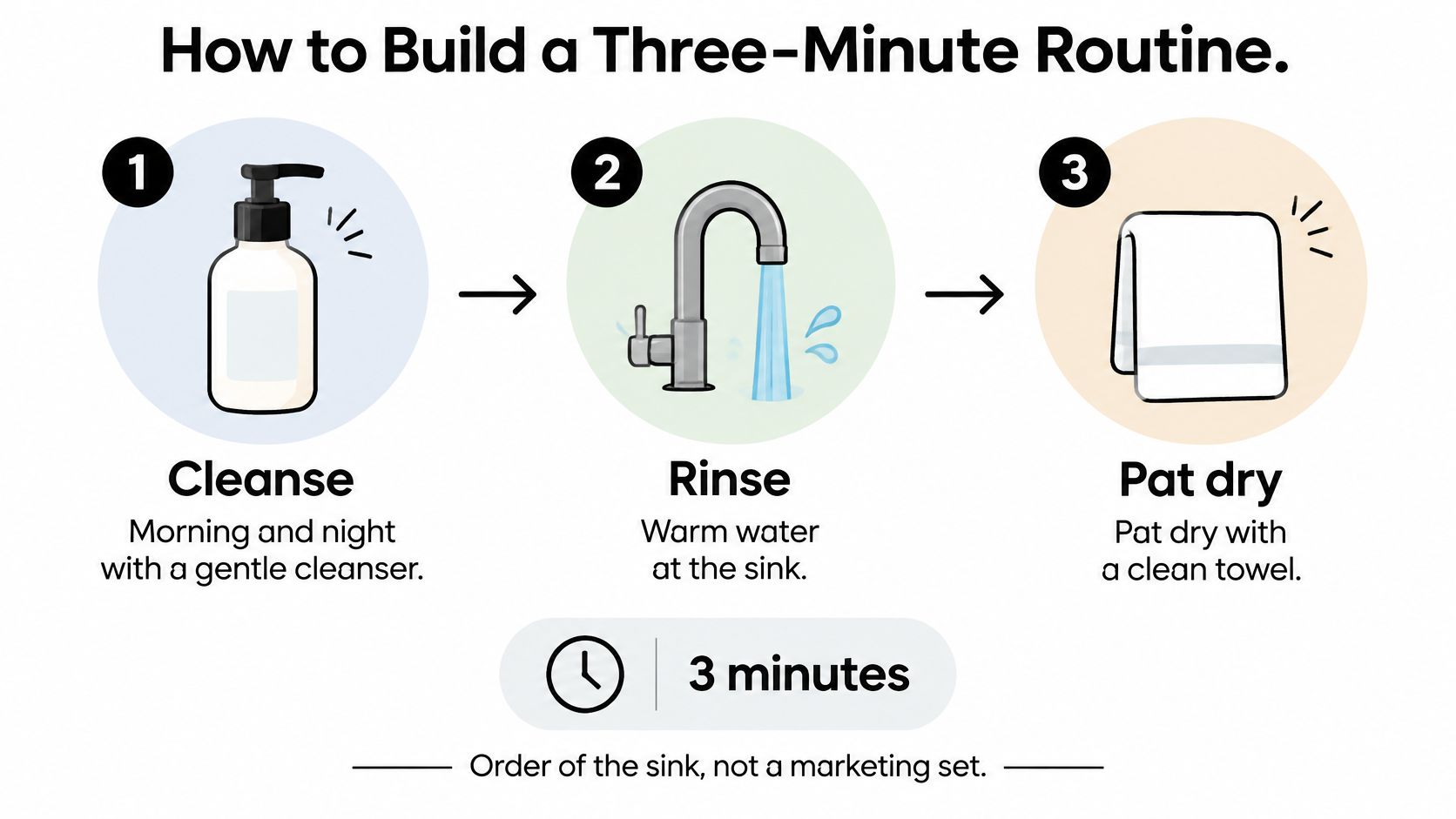
Three of those steps deserve their reason. Damp skin lets a water-based gel spread into a thin, even film, which is why step two exists at all. The cream comes after the gel because a coat over a damp layer holds better than a coat over nothing. And changing one product at a time is the only way to know which product made the difference.
Start with the sink, not the set: cleanser, gel, cream if you need it, sunscreen. Everything else is a weekly extra, not a daily step.
Two finishes, no new shopping list. Skin that feels oily or easily bothered can stop after the gel in the morning. Skin that feels dry adds the cream over face and neck, morning and night. Both versions are complete routines, which is the point: the gel's second jobs are optional extensions, not obligations.
If you're starting from nothing rather than trimming an existing shelf, this walkthrough of how to build a skincare routine fills in the order around the three steps you'll repeat daily.
Choose the Staple That Retires a Duplicate
Before you compare two bottles that both say natural, compare the words on them.
- 100 percent organic: only certified organic ingredients.
- Organic: at least 95 percent certified organic ingredients, with the rest from an allowed list.
- Made with organic ingredients: at least 70 percent organic ingredients, and no USDA Organic seal on the front panel, as this explanation of what USDA organic means sets out.
A 70 percent claim and a 95 percent claim can sit on shelves that look identical. Match the wording, the seal and the first ingredient before you decide anything else.
After that, the decision is two paths, not twenty. If the gap in your routine is a light hydrating layer, choose a fresh aloe gel that can also go on your hands. If dry indoor air leaves your face tight, keep the gel and add a cream to apply over the face and neck, twice daily, morning and night, whenever extra hydration or dry conditions call for it.
Our Skin Care Questionnaire gives personalized recommendations for your specific skin type, and answering it takes less time than reading the back of a bottle in an aisle. If you want one product carrying several jobs at once, Pure Aloe Vera Gel + Tea Tree Oil works as an all-over facial moisturizer used twice a day, so there's one bottle and one decision in the morning.
Aloderma grows all of its own organic aloe vera and manufactures onsite within 12 hours of harvest, so the aloe carrying those jobs is the freshest version of itself we can put in the bottle. Keep the product that retires a duplicate jar, and if you're still deciding what belongs on the shelf at all, this guide to how to choose skincare products walks through the order.
ALODERMA grows all of its own organic aloe vera, processes it and manufactures onsite within 12 hours of harvest, so the primary ingredient in every formula arrives as fresh and bioactive as we can make it. If you want one bottle that hydrates your face, your hands and your body after a shower, start with the Pure Aloe Vera Gel and read the full ingredient list before you buy. Visit ALODERMA to compare the gels, serums and creams, and to take the Skin Care Questionnaire for your own skin type.