







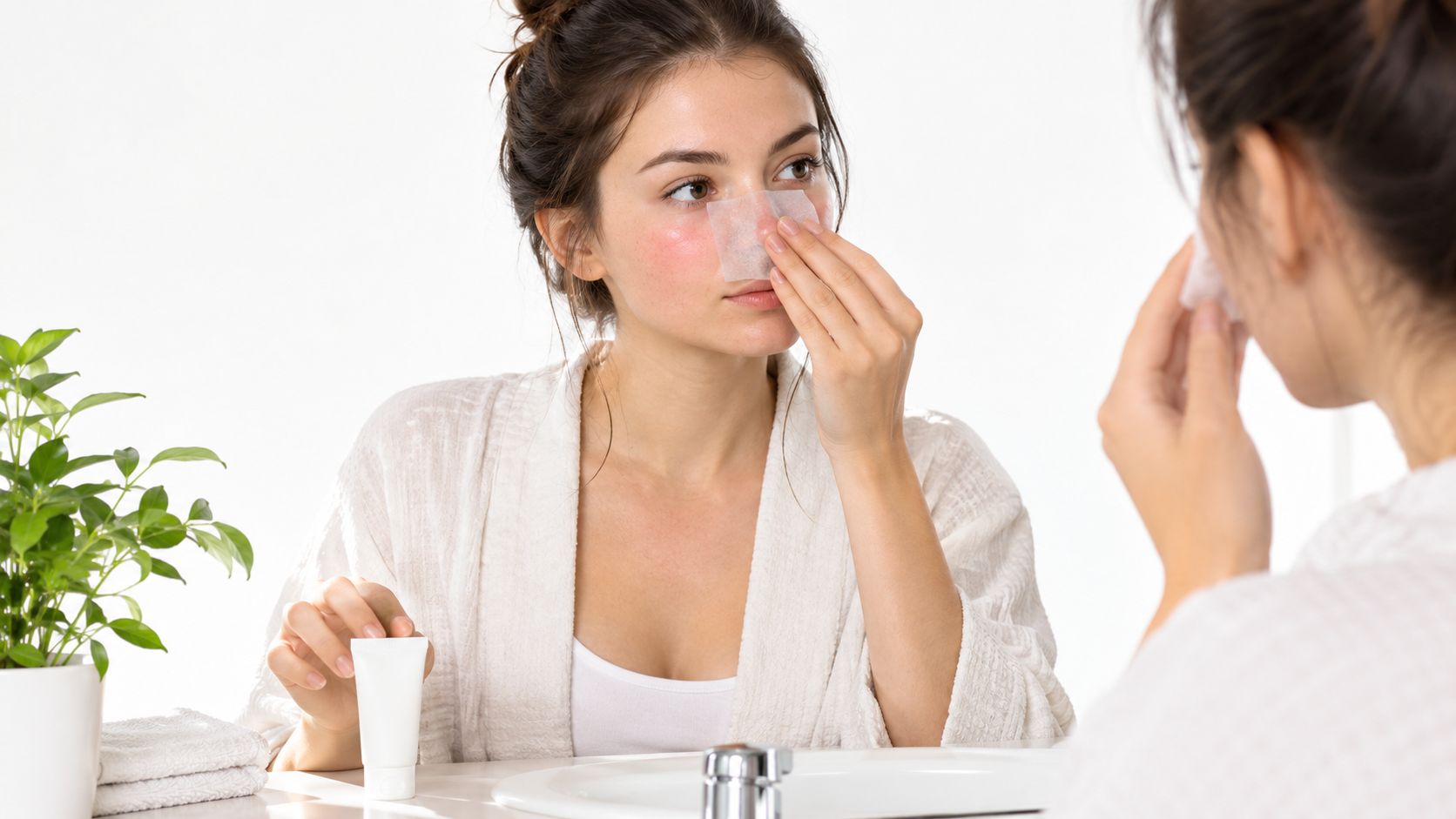
You blot your nose before breakfast, then pause with moisturizer in your hand because your cheeks still feel tight from the product you tried last night. Your T-zone is shiny, but the rest of your face feels easily bothered. That combination can make every skincare decision feel like a gamble.
A sensitive oily skin moisturizer shouldn't leave you choosing between comfort and a clear-looking finish. The right formula adds water without a heavy coating, supports the skin barrier, and turns moisturizing from a risky step into a soothing daily ritual.
When Your Face Feels Both Oily and Reactive
At the bathroom mirror, the signals seem contradictory. Your forehead and nose look glossy, while your cheeks sting when you touch them. You may reach for a strong mattifying product in the morning, then wonder why your skin feels even more uncomfortable by lunchtime.
Oily skin and sensitive-feeling skin can exist together. Sebaceous glands may produce plenty of sebum while the outer barrier struggles to hold enough water. That mismatch can leave the surface looking shiny and feeling tight at the same time.
A useful reset: shine doesn't prove that your skin has enough moisture.
Many people respond by scrubbing, skipping moisturizer, or choosing products that leave a very dry finish. Those tactics can make the face feel stripped, encouraging a cycle of tightness, more visible shine, and increased product switching. Dermatology guidance continues to recommend moisturizer for oily skin, with lightweight, water-based, gel, and non-comedogenic formulas preferred over dense textures. Vogue's guide to moisturizers for oily skin also reflects the modern shift away from treating moisturizer as something reserved only for dry complexions.
Look for comfort, not just a matte finish
A good moisturizer should feel almost uneventful. It spreads quickly, doesn't sting, doesn't leave a thick film, and lets you apply sunscreen or makeup without fighting the formula. Fragrance-free options are usually a sensible starting point when your skin reacts easily, especially if the rest of your routine already contains active products.
Your goal isn't to eliminate every trace of natural shine. It's to give your skin enough lightweight hydration that you don't need to keep correcting it with harsher steps. This will help you identify the right texture, understand useful ingredients, read an INCI list, and adjust your routine when pilling or midday shine appears.
Why Oily Skin Still Craves Moisture
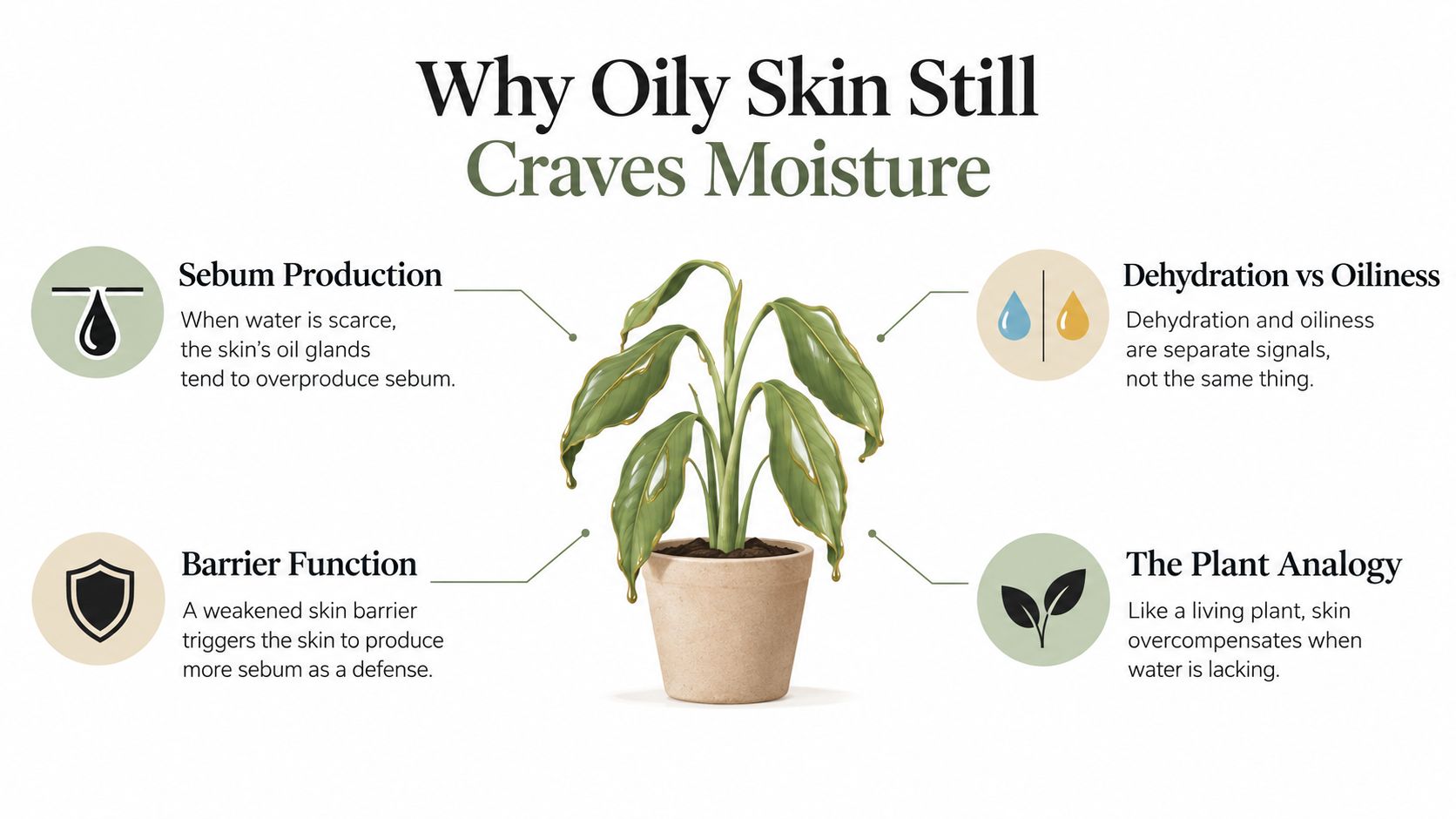
Think of your skin as a living plant in a pot. A plant may look glossy in bright light, but that sheen doesn't tell you whether the soil contains enough water. If the soil is dry, the plant changes how it behaves. Your skin can also show surface oil while lacking comfortable water content.
Oiliness refers mainly to sebum, the oily substance produced by sebaceous glands. Dehydration refers to insufficient water in the outer layers of the skin. They aren't opposites, and one doesn't cancel out the other. A face can feel greasy to the touch and still feel tight after cleansing.
The outer barrier works like a flexible seal. Water and lipids help it stay resilient, while a disrupted barrier allows moisture to escape more easily. When the skin feels depleted, people often notice more tightness and may also see stronger shine as the glands continue producing sebum.
Water and oil do different jobs
A moisturizer for this skin type needs to add water and help keep it in place without creating a dense, greasy layer. Humectants such as glycerin and hyaluronic acid attract water into the outer skin. Ingredients such as ceramides and dimethicone can help reduce water loss while keeping the formula comfortable when used in a suitable lightweight structure. Expert guidance on moisturizers for sensitive skin highlights this balance between hydration and barrier support.
That distinction explains why skipping moisturizer often feels like a solution at first, then becomes frustrating. The surface may feel temporarily less slick, but the underlying tightness remains. A gentle moisturizer gives you a better chance of making the routine feel calm and predictable.
For a deeper explanation of this balance, read whether oily skin needs moisturizer. The practical takeaway is simple: oily skin still needs moisture, but it doesn't need a heavy cream by default.
Matching the Right Texture to Your Skin
Texture is a daily comfort decision. The same ingredient list can feel completely different depending on whether the product is built as a gel, lotion, or fluid. Choose the format that fits how your skin feels after cleansing, how quickly you need to get ready, and what you plan to apply over it.
| Texture | Feel on Skin | Best For | Watch Out For |
|---|---|---|---|
| Gel | Cool, fresh, and quick to spread | Hot weather, shiny T-zones, and people who dislike residue | A very simple gel may feel insufficient when cheeks are tight |
| Lotion | Silky and softly cushioning | Combination skin or a routine that needs moderate comfort | Fragrance or a rich oil blend can make a lotion feel irritating or heavy |
| Fluid | Weightless and easy to layer | Reactive oily skin, sunscreen layering, and morning routines | Very watery formulas may need a second thin layer on dry-feeling areas |
Gel
A gel gives the immediate sensation of a cool splash. It's often the easiest choice for someone who avoids moisturizer because creams feel sticky. Look for a gel with water-binding ingredients rather than a formula that relies mainly on alcohol for a fast-drying finish.
Lotion
A lotion sits between a gel and a cream. It can be useful when your cheeks need more softness than your nose does, especially during colder or drier periods. Apply a small amount to the entire face, then add a little more only where your skin feels tight.
Fluid
A fluid has a weightless glide and usually works well beneath sunscreen. It suits readers who want hydration that disappears quickly, but the formula still matters. Oil-free, fragrance-free, and non-comedogenic claims can help narrow the options, while a short ingredient list makes it easier to identify potential irritants.
Heavy creams aren't automatically wrong, but they can feel excessive on oily skin and may increase visible shine. Market data shows that cream-based moisturizers held 32.5% of the global facial moisturizer market in 2025, while sensitive-skin moisturizers accounted for 28.3% in the same year, according to this facial moisturizer market report. The figures show that richer creams remain popular, but lighter formats have a clear place for people who want hydration without weight.
Ingredients That Calm and Hydrate
Ingredient names become less intimidating when you translate each one into a job. For sensitive oily skin, the most useful formula often combines a soothing base, water-binding humectants, and a few barrier-supportive ingredients rather than a long list of intense actives.
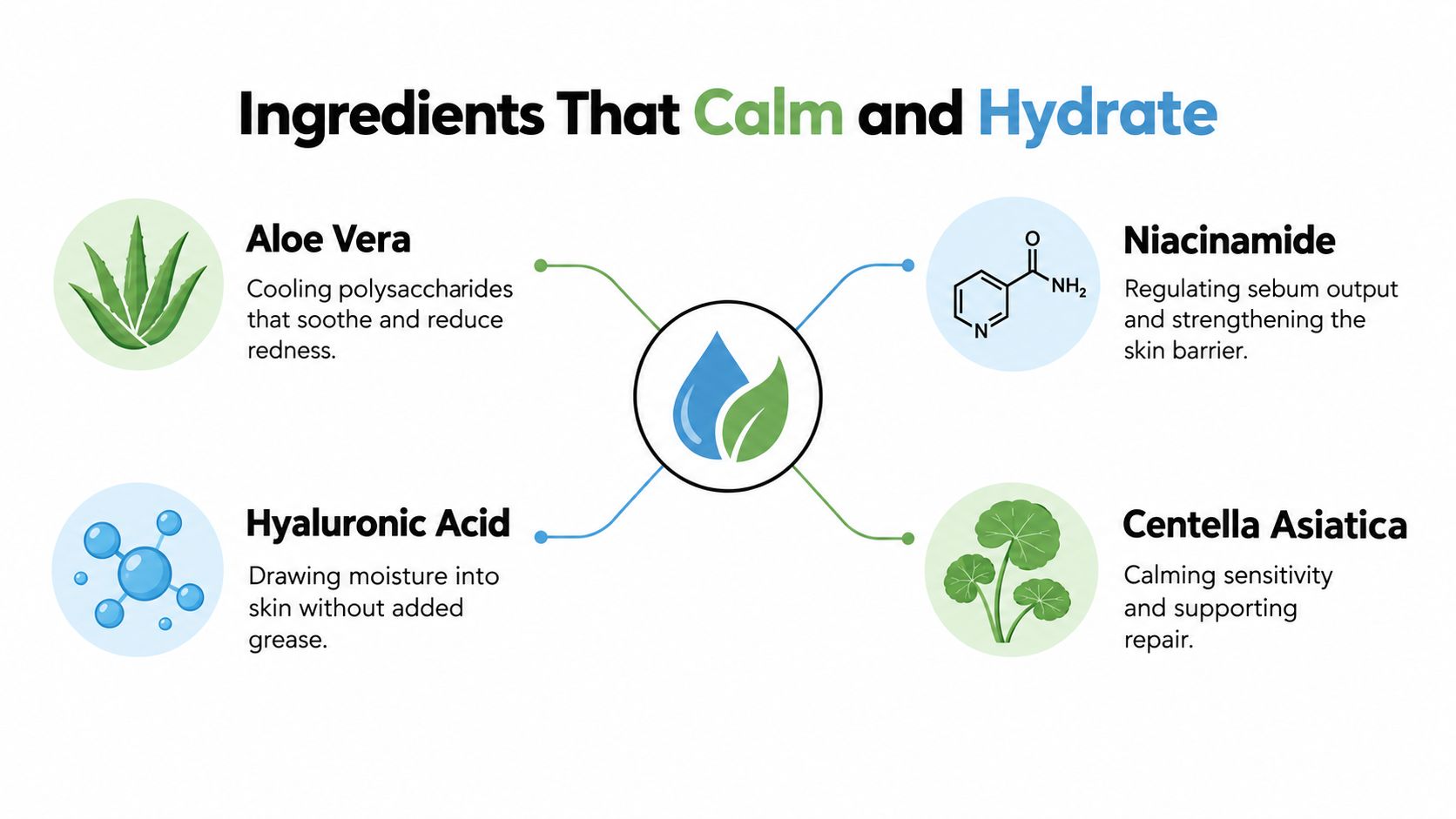
Aloe vera gives a formula a water-rich, soothing foundation. Look for names such as aloe barbadensis leaf juice or aloe barbadensis leaf extract. A fresh aloe-centered product can feel especially pleasant when your face feels warm or uncomfortable, but the complete formula still matters. Fragrance and essential oils can make an otherwise gentle plant-based product less suitable for reactive skin.
Glycerin is a humectant. In plain language, it helps attract and hold water near the outer layers of the skin. It doesn't need to feel oily to make a moisturizer feel more comfortable. A product may list it as glycerin, often alongside aloe, water, or other humectants.
Hyaluronic acid is another water-binding ingredient. On labels, you'll often see hyaluronic acid or sodium hyaluronate. It adds lightweight hydration without the feel of a facial oil, which makes it a common choice for oily complexions that still feel tight.
Build a balanced ingredient team
Niacinamide is often included in formulas designed for oily or combination skin because it can support a more balanced-feeling finish while helping the barrier function well. It may appear as niacinamide in the INCI list. Pairing it with glycerin, aloe, or hyaluronic acid helps prevent the formula from focusing only on surface oil.
Supporting ingredients can make the experience more comfortable. Panthenol helps the skin feel soft and conditioned, while allantoin is commonly used in formulas intended to soothe. Ceramides and dimethicone can add barrier support without requiring a thick cream texture. A non-comedogenic moisturizer guide explains why lightweight formulas with ingredients such as glycerin, niacinamide, and barrier-supportive components appeal to oily, reactive complexions.
The strongest formula isn't necessarily the one with the longest ingredient list. A thoughtful combination of aloe, humectants, and barrier-supportive ingredients can give you hydration, comfort, and a lighter finish in one step.
Reading Labels Without the Guesswork
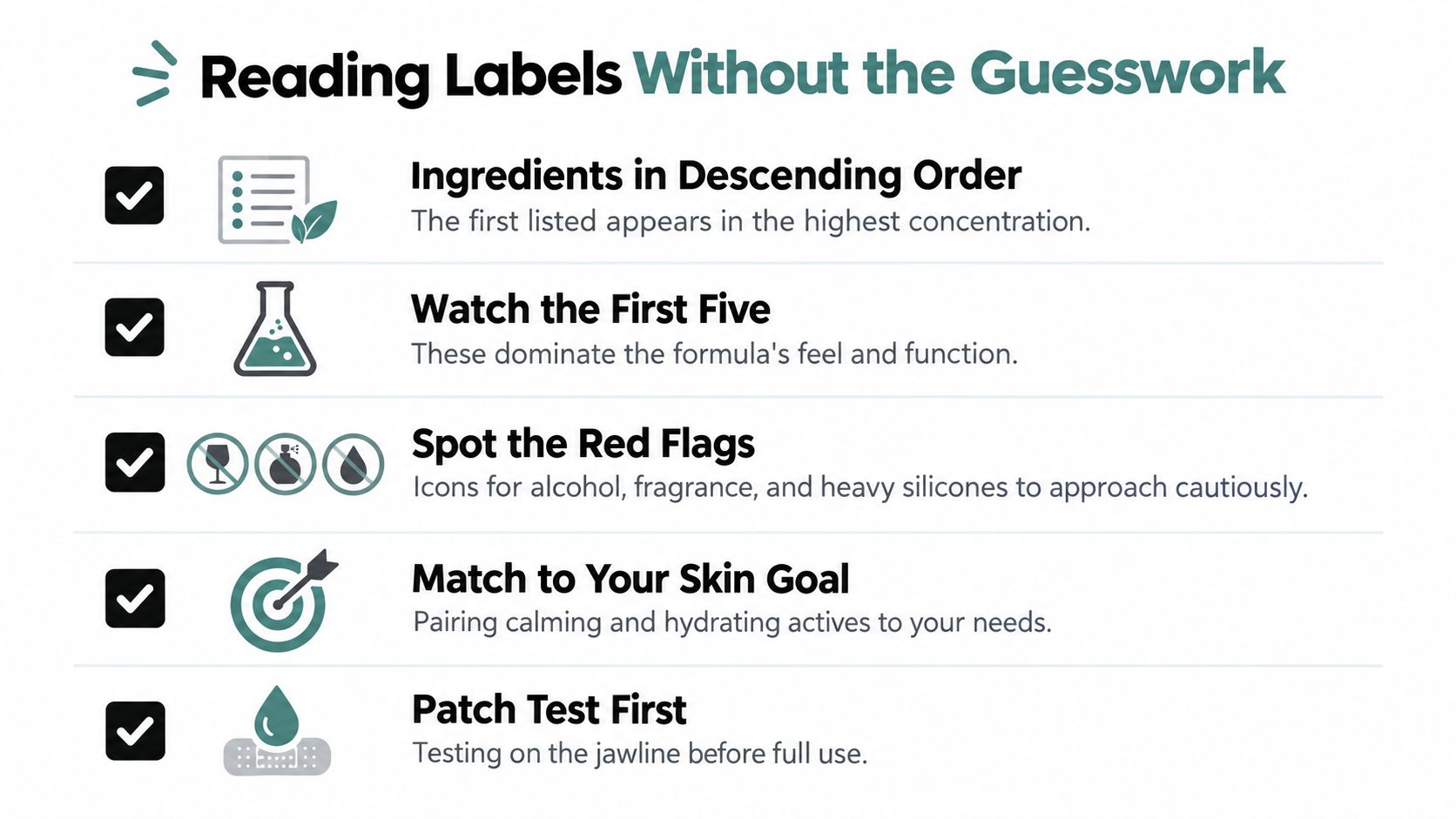
Marketing language can be helpful, but the ingredient list tells you more about how a product is built. Start by checking the first part of the INCI list. Ingredients generally appear in descending order of concentration, so the opening group often shapes the formula's main feel and function. This doesn't mean every ingredient near the end is unimportant, but it gives you a practical way to compare products.
For oily, reactive skin, scan for a lightweight base with water, aloe, glycerin, or similar humectants near the beginning. Then look for supportive ingredients such as niacinamide, sodium hyaluronate, panthenol, or ceramides. A concise formula isn't automatically better, but it can make troubleshooting easier because there are fewer variables.
Know which terms deserve caution
Some ingredients have a heavier or more occlusive feel. Coconut oil, olive oil, lanolin, cocoa butter, and isopropyl myristate are examples that may not suit every oily complexion. They aren't automatically wrong for everyone, but if a new moisturizer consistently leaves you congested or overly slick, review these richer ingredients first.
Reactive skin may also dislike fragrance, parfum, essential oils, menthol, peppermint, or denatured alcohols such as alcohol denat. Plant-derived doesn't always mean gentle. Current sensitive-skin moisturizer guidance specifically draws attention to fragrance-free formulas and the possibility that “natural fragrance” can be uncomfortable for reactive skin.
Keep this quick checklist on your phone:
- Green flags: Aloe, glycerin, sodium hyaluronate, niacinamide, panthenol, allantoin, ceramides, and a lightweight or fluid base.
- Yellow flags: Several rich oils, dense butters, or a formula that leaves a coating you can feel for hours.
- Red flags: Fragrance, parfum, essential oils, menthol, peppermint, and alcohol denat. if your skin often stings.
- Always test: Apply a small amount along the jawline before using the product across your face.
For a practical example of an ingredient-conscious approach, explore this guide to a fragrance-free moisturizer. The label should support the skin goal, not just repeat a comforting claim on the front of the package.
Building a Routine Around Fresh Aloe
Maya's morning routine used to begin with a foaming cleanser, a strong mattifying serum, and no moisturizer. By midday, her nose looked shiny and her cheeks felt uncomfortable under sunscreen. A simpler sequence gave her more useful feedback.
She begins with a gentle cleanser, rinses thoroughly, and pats rather than rubs. Next comes a hydrating toner or essence, followed by a lightweight serum if her skin needs one. She applies moisturizer while the skin is still slightly damp, then finishes with sunscreen. The order moves from thinnest to thickest, so each layer has a chance to settle instead of competing with the next one.
A morning that stays light
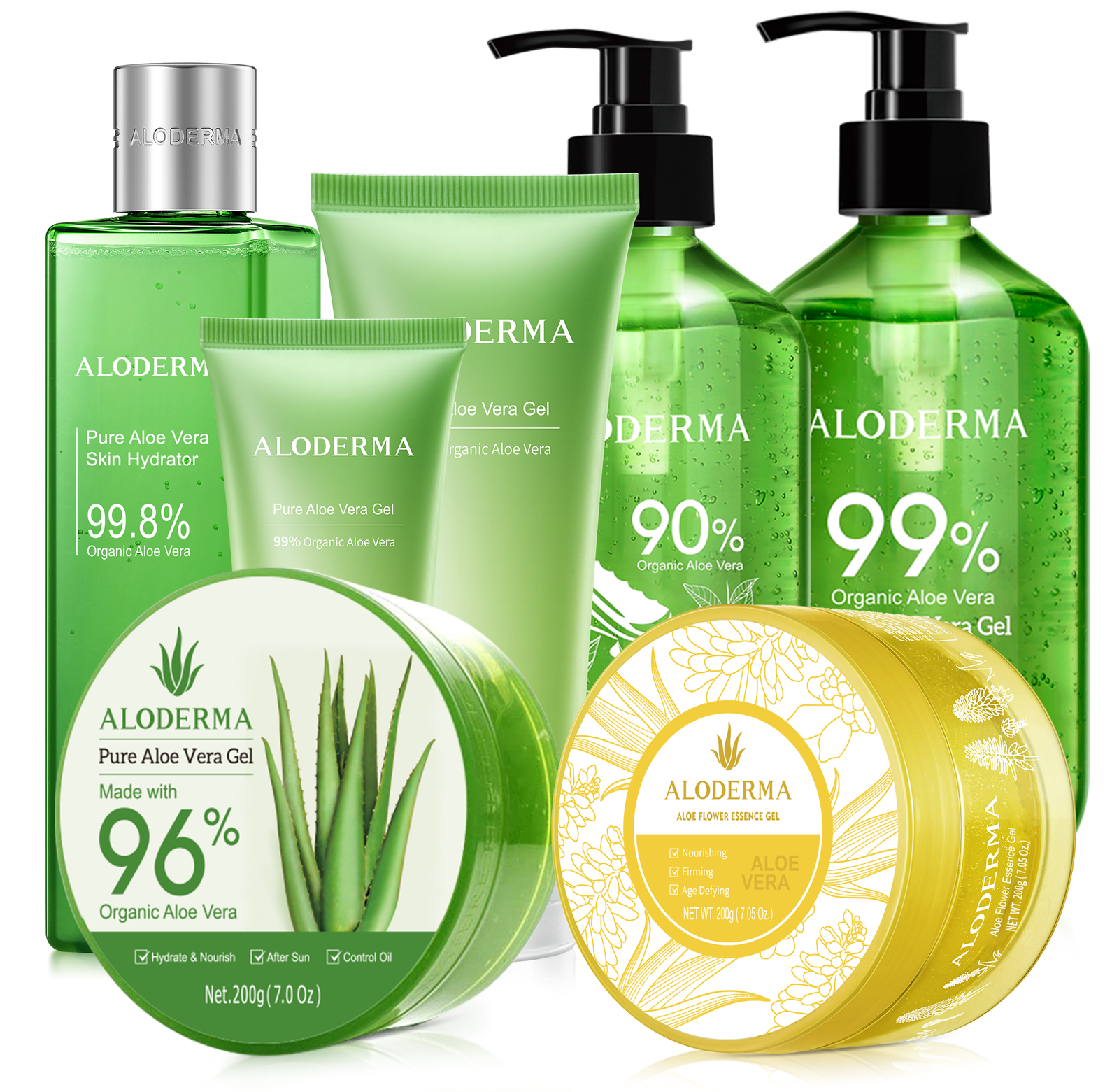
For daytime, a gel or fluid moisturizer makes sense when you want a clean surface under sunscreen. ALODERMA is a fully vertically integrated aloe vera company. It grows its own organic aloe vera, processes the aloe, and manufactures products onsite within 12 hours of harvest, so fresh aloe is used as the primary ingredient in its products, as described in the brand's fresh aloe vera manufacturing information.
A product example can help make the idea concrete. Light Aloe Moisturizer lists aloe, glycerin, sodium hyaluronate, and aloe powder in a lightweight structure positioned for oily, combination, or sensitive-looking skin. For shoppers comparing formulas, that combination shows how aloe and humectants can provide hydration without relying on a dense cream.
If you use a face covering during commuting, exercise, or errands, comfort also depends on fit and fabric contact. A useful preparation step is to find your face cover size, then apply a thin moisturizer layer and let it settle before putting the covering on.
An evening that listens
At night, cleanse gently and skip unnecessary layers if your face feels tender. Apply toner or essence, then serum, then moisturizer. If your cheeks need more support, choose a richer nighttime option, such as a cream texture, while keeping the amount lighter over the nose and forehead.
You don't need to exfoliate harshly to feel productive. Give your routine time, avoid piling several new actives together, and keep a note of which product you used when your skin felt especially comfortable or uncomfortable. You can also read how fresh aloe vera supports moisturizer routines when comparing aloe-centered products for a simpler evening ritual.
Troubleshooting Pilling, Shine, and Breakouts
Pilling is usually a layering problem, not proof that your skin rejected every product. Too much product, rubbing instead of pressing, or incompatible textures can cause little rolls to form on the surface. Try using smaller amounts, waiting 60 seconds between steps, and pressing each layer into the skin. If the problem continues, switch to a fluid aloe-based moisturizer and simplify the layers beneath sunscreen.
Midday shine also deserves a closer look. Instead of adding more powder immediately, ask whether your skin feels tight underneath the shine. A featherweight hydrating layer under a mattifying mineral SPF may feel more balanced than repeated blotting alone. Give that adjustment two weeks before deciding whether it suits your routine, unless your skin becomes uncomfortable sooner.
Treat the pattern as information: your skin is giving you feedback, not grading your performance.
Unexpected breakouts after a new product call for a calm reset. Pause recently added actives, return to a simple aloe cleanser and moisturizer, and add back one product at a time. Leave five days between additions so you can identify which change may be responsible.
If you're comparing options beyond your current routine, this natural moisturizer for oily skin offers another example of how shoppers can assess an oil-control formula for a sensitive-feeling complexion. Focus on the full ingredient list and your own response, rather than the word “natural” alone.
Your Confident Path Forward
The decision becomes much easier when you reduce it to a few essentials. Choose a gel or fluid texture, prioritize aloe vera, niacinamide, hyaluronic acid, or glycerin, and be cautious with heavy oils and fragrance. Apply the moisturizer to slightly damp skin, then give it time to settle before sunscreen.
Oily skin absolutely needs moisture. A suitable lightweight formula can support comfort without leaving the pores feeling coated, while a simple routine makes it easier to notice what helps and what doesn't.
Three quick answers
Are natural ingredients such as aloe automatically safe?
No ingredient category guarantees compatibility. Aloe can fit a gentle routine when the product is properly preserved and the full formula avoids ingredients your skin doesn't tolerate. Patch test first.
Should mineral SPF go over moisturizer?
Yes. Apply your moisturizer first, allow it to settle, and place mineral sunscreen on top every morning.
Should morning and evening routines look different?
Usually, the main difference is sunscreen in the morning and the option of richer hydration at night. Keep both routines uncomplicated.
Give a new routine four weeks before judging the overall experience, unless it causes clear discomfort earlier. Trust gradual observations, listen to your skin's signals, and choose consistency over constant product changes.
ALODERMA offers fresh aloe gels, hydrators, moisturizers, toners, serums, and cleansers that can fit a lightweight routine for sensitive oily skin. Visit ALODERMA to compare aloe-centered formulas, review ingredient lists, and choose the texture that feels most comfortable for your daily ritual.