







You step off a cold sidewalk into a heated office, peel off your scarf, and your cheeks start stinging before you've even sat down. By lunch, your skin feels tight, looks red, and reacts to products that felt fine in October. That's not your skin suddenly failing you. It's responding predictably to a season that stacks cold wind, dry indoor air, and harsh cleansing habits on top of each other.
This guide to sensitive skin winter care separates two problems people constantly confuse: a weakened moisture barrier from the weather, and a reaction triggered by a product itself. Fix the first with habits. Find the second by simplifying and testing. Get that distinction right and winter gets much less dramatic.
Why Sensitive Skin Flares Up Every Winter
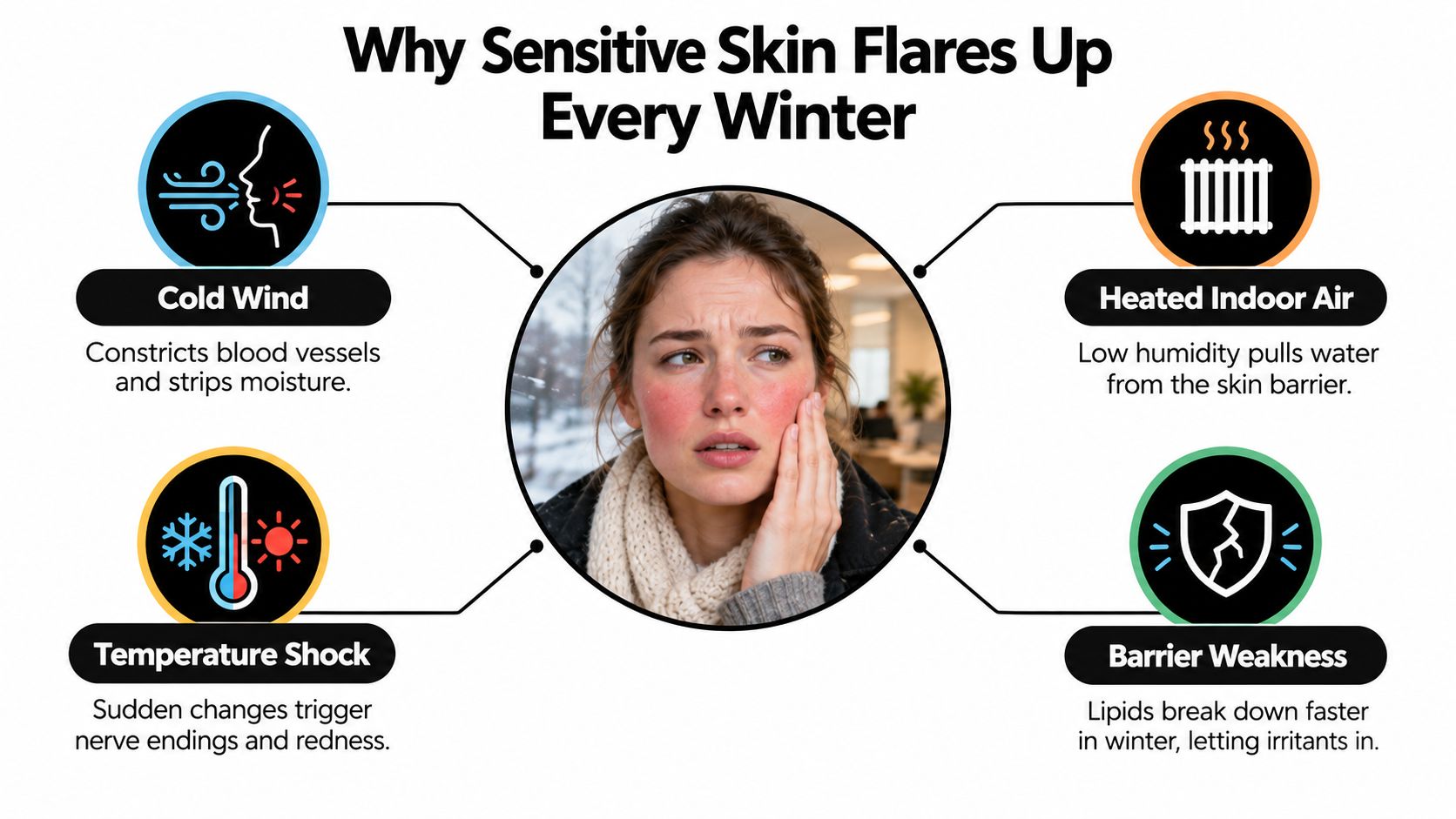
Mid-January is the classic test. You walk five blocks in biting wind, duck into a café where the heat is blasting, and your face lights up. Your nose runs, your cheeks burn, and the moisturizer you applied that morning seems to have vanished. That swing from cold and wet to hot and dry is exactly what sensitive skin handles worst.
Your outer skin layer works a bit like a brick wall. The cells are the bricks. Natural lipids between them act as mortar, holding water in and keeping rough weather and product irritants out. In winter, that mortar takes a beating. Cold air holds less moisture, indoor heating dries the air further, and wind increases evaporation from the surface. Gaps form, water escapes faster, and things that normally sit on top of skin can feel far more irritating.
What's Actually Happening Under the Surface
This isn't vague seasonal advice. A dermatology review on humidity, temperature, and barrier function found that low humidity and low temperatures generally decrease skin barrier function and increase susceptibility to mechanical stress, while skin exposed to relative humidity of 32% was more vulnerable to mechanical stress and fracture than skin exposed to 96% humidity. In plain terms, dry winter air makes your surface layer less flexible and easier to disrupt, even with normal rubbing from a towel or scarf.
That's why symptoms cluster together:
- Tightness after washing: Water has evaporated and surface lipids have been stripped, leaving skin feeling pulled.
- Stinging with familiar products: A compromised barrier lets ingredients reach nerve endings more easily than they would in summer.
- Redness on cheeks and around the nose: These areas take the most wind exposure and the sharpest temperature changes.
- Flaking that returns by afternoon: You're losing moisture faster than a lightweight summer product can replace it.
Tightness, stinging, and redness in winter are usually mechanical responses to your environment, not proof that your skin is broken or that you need ten new products.
Treat winter as stacked stressors, not one problem. Cold outside weakens the barrier. Heat inside pulls more water out. Long hot showers strip what's left. Once you see that chain, you stop chasing miracle serums and start removing the daily hits that keep reopening the gaps. That's the logic behind everything that follows, and it's far more reliable than buying a heavier version of a routine that's already irritating you.
The Building Blocks of a Barrier-First Winter Routine
Stop thinking in products first. Think in mechanics. Four habits protect sensitive skin in winter more than any single bottle, and none of them require a complicated shelf.
Four Habits That Do the Heavy Lifting
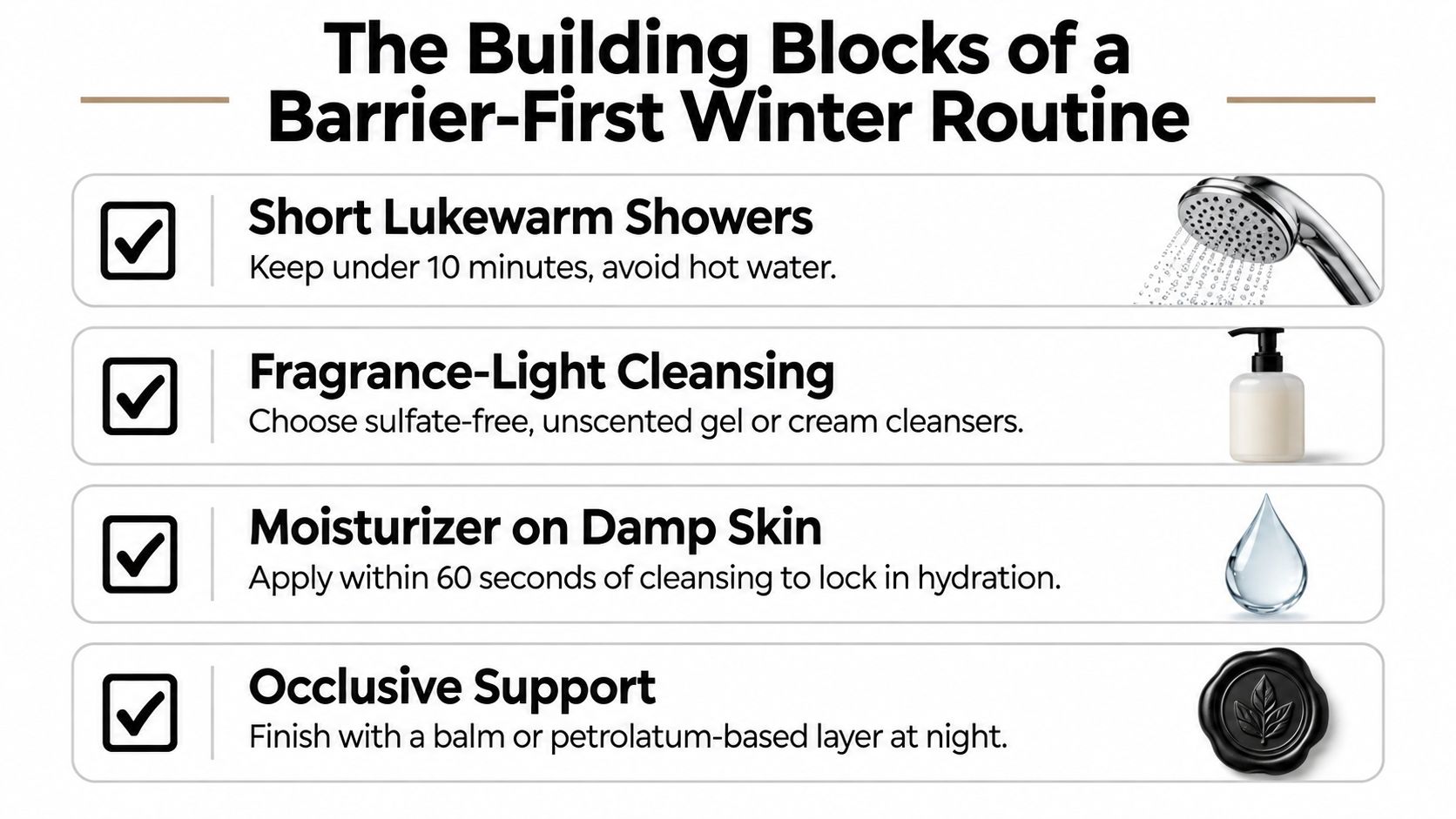
Keep showers short and lukewarm. The American Academy of Dermatology guidance on relieving dry skin advises limiting baths and showers to 5–10 minutes and using warm rather than hot water, because hot water can remove more of the skin's surface oils and worsen dryness. Put a timer where you can see it. If your skin looks pink when you step out, the water was too hot.
Cleanse without fragrance and friction. Use your hands, not a rough cloth. Choose a gentle gel or cream cleanser, massage briefly, and rinse. Squeaky skin isn't clean skin. It's stripped skin, and in winter you'll pay for it within the hour.
Moisturize on damp skin. Pat dry so you're not dripping, then apply product while skin still feels slightly moist. You're trapping water that's already there instead of trying to add it back after it has evaporated.
Add a protective top layer when air is very dry. On the coldest nights, a richer cream over your hydrating layer slows moisture loss while you sleep. Some readers also compare richer barrier creams such as Loyaltie tallow face cream as an occlusive-style option, so check the full ingredient panel and patch-test before deciding if that format suits you.
These steps connect directly to how you support and improve your skin barrier through daily habits rather than occasional rescue treatments. Consistency beats intensity every time.
Practical rule: If a habit increases water loss, heat exposure, or friction, it works against your barrier no matter how gentle the product label sounds.
Ingredient freshness matters in this context too. ALODERMA is fully vertically integrated, growing its own organic aloe vera, then processing the aloe and manufacturing onsite within 12 hours of harvest so the primary ingredient in its products is as bioactive as possible. That doesn't replace short showers or damp-skin application. It means the lightweight hydrating layer you use for daily comfort starts with a freshly processed primary ingredient, rather than aloe added as an afterthought. Build the habits first, then choose products that fit them.
Ingredients to Embrace and Ingredients to Avoid
Natural doesn't mean non-irritating. Clean doesn't mean tested on reactive skin. If you remember one thing about winter shopping, make it that. Essential oils are natural. Fragrance compounds occur in plants. Your barrier doesn't care about the marketing story. It reacts to what touches it.
Read the Panel, Not the Promise
The U.S. Food and Drug Administration overview of cosmetic allergens and labeling explains that retail cosmetics must carry an ingredient declaration, but terms such as "hypoallergenic," "fragrance-free," and "for sensitive skin" have no federal standard definition. Front-label claims won't screen a product for you. The ingredient list will, especially if you already know certain ingredients don't suit you.
Use this short vocabulary when you shop:
- Aloe vera: A lightweight hydrating base that layers well under cream, particularly when it's listed as the primary ingredient rather than near the end.
- Glycerin: A dependable humectant that helps draw and hold water in the outer layer.
- Ceramides: Lipids that support the mortar between skin cells and help reduce moisture loss.
- Squalane: A stable, non-greasy emollient that softens without a heavy scent.
- Panthenol: A conditioning ingredient commonly used to support comfort and hydration.
Now the drop list for winter, at least until your skin feels calm again:
- Undisclosed fragrance: Ingredients can hide under "fragrance" or "perfume," which makes personal screening harder.
- Strong essential oils: They can be pleasant in scent and still be a poor fit for reactive winter skin.
- Drying alcohols high on the list: They can leave skin feeling tighter in already dry air.
- Strong daily actives: High-strength exfoliants or potent treatments used every night often become too much when the barrier is under seasonal stress.
Our breakdown of ingredients to avoid in skincare goes deeper on label screening if you're rebuilding a routine from scratch.
Where Aloe Fits Honestly
An aloe-forward product isn't a cure for winter. It's a daily comfort layer: lightweight hydration you can apply often, follow with a bland cream, and stop easily if it doesn't suit you. With a vertically integrated source, aloe appears first because it's the main ingredient, grown organically, processed, and manufactured onsite within 12 hours of harvest to preserve its bioactive quality. Check each current ingredient list on Aloderma.com before you buy, introduce one product at a time, and don't let the word botanical talk you out of patch-testing. Simplicity and transparency beat a long "free from" banner every time.
Your Morning and Evening Routine Step by Step
A good winter routine is boring in the best way. Same order, same timing, very few decisions. Here's the version I'd give a friend whose cheeks sting every time she comes indoors.
The photo below shows the gentle, unhurried approach to aim for at the sink, with no scrubbing and no pile of competing products.
Morning Keep It Minimal
- Rinse or cleanse gently: Many sensitive-skin readers do well with lukewarm water alone in the morning. If you use cleanser, keep it brief.
- Add a hydrating layer: While skin is still slightly damp, apply an aloe-based toner or serum. ALODERMA's Aloe Vera Hydrating Toner and Aloe Vera Hydrating Serum are options to compare by ingredient panel.
- Moisturize: Follow with a cream that contains supportive ingredients such as ceramides, glycerin, or squalane.
- Use SPF in daylight: Apply sunscreen as your final morning step when you'll be outdoors, even on grey winter days.
Don't add a new exfoliant, a new serum, and a new cream in the same week. If something stings, you won't know which product caused it.
Evening Use the Damp Skin Window
The American Academy of Dermatology advice on cold weather and skin specifically advises moisturizing while skin remains damp and repeating application after handwashing or whenever dryness returns, and notes that creams and ointments are generally more effective and less irritating than lotions for very dry skin. Build your evening around that window.
Take your lukewarm shower, using ALODERMA Aloe Vera Nourishing Body Wash if you want an aloe-based cleansing step, then pat dry. Apply ALODERMA Aloe Vera Gel for lightweight hydration, then seal it with ALODERMA Aloe Vera Hydrating Cream or another bland, richer cream. Aloe alone can feel refreshing, but on a dry January night, most sensitive skin needs that second layer to slow evaporation. ALODERMA grows its own organic aloe and processes and manufactures onsite within 12 hours of harvest, positioning fresh aloe as the primary ingredient rather than a token addition.
The video below walks through gentle application technique, which matters more than people think when skin already feels raw.
Reapply hand cream after washing, not just at bedtime. Keep one tube by the sink, one in your bag, and one where you sit in the evening. Placement drives habits. A perfect routine you forget loses to a simple routine you repeat, especially when winter lasts for months.
Weekly Treatments and Environmental Support
Your daily routine handles cleansing and moisturizing. Your environment decides how hard that routine has to work. Fix the room and the weekly extras, and you'll need fewer emergency fixes.
Add Support Without Adding Chaos
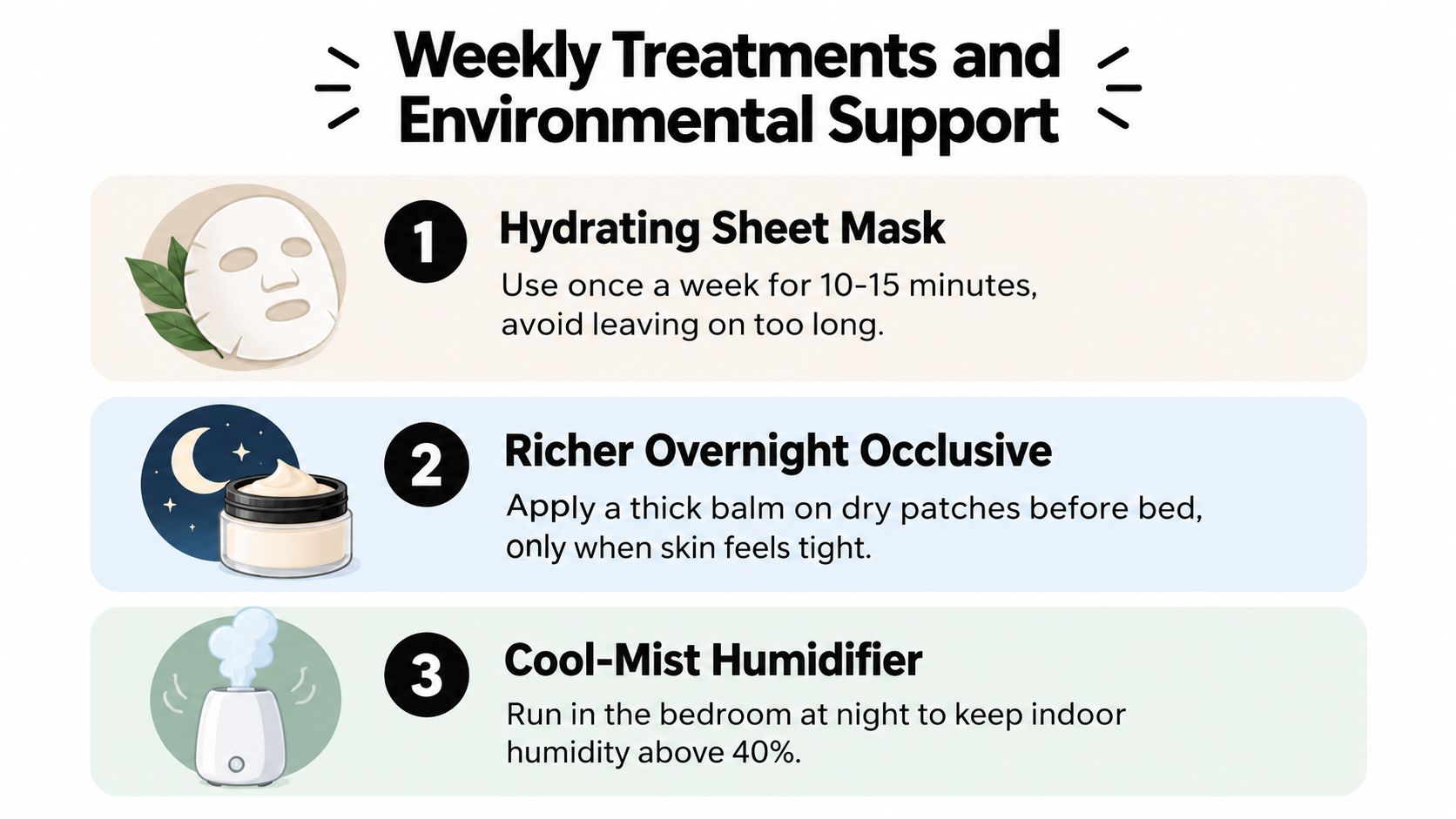
Put a humidifier where you sleep. Guidance summarized in the American Academy of Dermatology winter skin survival kit connects a cool-mist humidifier, particularly in a bedroom, with easing winter dryness, while Everyday Health recommends maintaining indoor relative humidity between 30% and 50%. Use a small hygrometer instead of guessing, clean the unit as directed, and don't blast mist directly onto bedding all night.
Use a hydrating mask once, not constantly. A weekly sheet mask or gel mask can be a comfortable hydration boost after a windy weekend. Remove it before it dries out, press in the remaining essence, and follow with cream. Daily masking with fragranced formulas is a common way people accidentally create the reaction they're trying to soothe.
Save the richest layer for the driest nights. When your cheeks or hands still feel tight after cream, add a thicker protective layer on those patches before bed. You don't need to coat your whole face every night. Target the areas that lose moisture fastest.
Changing room humidity and applying products to damp skin solve two different parts of the winter problem. Don't expect one product to do both jobs.
Small physical protections help too. Wear gloves before your hands get cold, not after they're already cracked-feeling and sore from wind. Keep a plain lip barrier product in your coat pocket and reapply before going outside. Avoid pressing a steaming mug against your cheeks to warm up, since repeated heat against reactive skin can leave it feeling worse once you come back inside. None of this is glamorous. All of it reduces the number of times your barrier gets pushed past comfortable in a normal week.
Troubleshooting When Winter Skin Reacts Anyway
You shortened your showers. You moisturized on damp skin. Then you wake up with burning cheeks and an itchy patch along your jaw. Don't respond by adding three soothing products at once. That's how a manageable setback turns into a mystery.
First Decide Which Problem You're Seeing
Dehydrated barrier usually feels tight, looks dull or flaky, and stings briefly when products go on. It often improves within days of gentler habits and consistent moisturizing. A product-triggered reaction is more likely when burning, itching, or a rash starts soon after you introduce something new, appears where that product was applied, and keeps worsening while you continue using it.
That distinction matters because the fixes conflict. Dehydration calls for more consistent moisture support. A product reaction calls for stopping the suspect product, even if it's marketed for sensitive skin. The Harvard Health overview of winter skin woes notes that fragrances and preservatives are among the cosmetic ingredients most often linked to skin reactions, and an analysis of products marketed for sensitive skin found glycols were common replacements, including caprylyl glycol in 61.5% of sampled products and propylene glycol and butylene glycol in 30.8% each. Removing one ingredient category doesn't guarantee comfort. Read the whole panel.
Run a Calm Reset
- Pause recently introduced products: Stop the newest items first, especially anything fragranced or strongly active.
- Simplify for several days: Use one bland cleanser and one fragrance-light moisturizer you already know you tolerate.
- Reintroduce one item at a time: Give each product space before adding another, so cause and effect stay visible.
- Patch-test properly: Follow a structured guide to patch-testing skincare on a small area before wider use, including with botanical products.
Get professional help promptly if a reaction is persistent, spreading, swollen, blistering, painful, or interfering with sleep. Don't keep experimenting through those signs, and don't assume a product is safe because it's natural, expensive, or worked for someone else. Sensitive winter skin rewards restraint. When in doubt, use less, change less, and let your barrier catch up.
Ready to simplify your sensitive skin winter care around fresh, transparent ingredients? Visit ALODERMA to compare aloe-forward cleansers, gels, serums, and creams by their full ingredient panels, made from organic aloe grown, processed, and manufactured onsite within 12 hours of harvest. Start with one product, patch-test it, and build your barrier-first routine from there.