







“Natural” doesn't automatically mean gentle, and adding more botanical products won't necessarily give you better skin. A crowded shelf can make it difficult to identify what helps, what irritates, and what only adds another layer. A well-designed organic skincare routine should feel calm and repeatable, with a small number of thoughtfully selected formulas that support comfort, hydration, and consistent use.
The organic personal care market has moved well beyond a niche category. One 2026 estimate values it at USD 158.03 billion, up from USD 148.75 billion in 2025, and projects USD 213.86 billion by 2031, with a 6.24% CAGR. Skincare represented 30.12% of organic personal care sales in 2025, making it the largest single routine category in that estimate (Mordor Intelligence's organic personal care market analysis). The opportunity is clear, but bigger demand also makes careful product selection more important.
Rethinking Natural Beauty and Product Overload
A longer botanical ingredient list can make a routine less useful, not more. Adding another serum, facial oil, mist, or essential-oil blend increases the number of variables your skin must handle. Without a clear purpose for each product, it becomes difficult to tell whether a new layer supports comfort or causes tightness, redness, or stinging.
Botanical extracts and essential oils have a place in skincare, but sensitive skin may react to them. In a study of 241 men and women using natural products containing botanicals such as aloe, marigold, chamomile, propolis, and arnica, 6% reported at least one skin reaction (Harvard Health's guidance on clean and natural cosmetics). The finding does not rule out botanical formulas. It shows why concentration, fragrance, ingredient quality, and a gradual introduction matter.
Clean labels need a closer look
A label can sound gentle while signaling a different experience. A cream marked “botanical blend” may list lavender and tea tree oil ahead of its humectants, which suggests fragrance is doing more work than hydration. “Organic,” “natural,” and “clean” describe ingredient choices or formulation standards, yet they do not reveal the product's concentration, scent strength, or likely feel on your skin.
Use a practical guide to how to read clean beauty labels, then inspect the full ingredient list rather than relying on the front label. Identify the product's main function first. Ask whether each extra extract has a defined role, and look for fragrance components that could make a daily formula harder to tolerate.
A useful rule: Choose products for a specific skin goal, not for an ingredient list that merely looks impressive.
A 2025 UK skincare survey found that 47% of buyers named effectiveness and proven results as their top purchase factor, while 14% prioritized natural or clean ingredients (YouGov's UK skincare trends survey). Natural sourcing matters to shoppers, but performance still shapes product choice. A thoughtful organic skincare routine therefore needs both ingredient standards and a clear job for every formula.
Fewer steps create better feedback
A small routine gives your skin, and your observations, a clearer baseline. Add a cleanser, toner, serum, oil, mask, and cream together, and you cannot identify the source of new tightness or discomfort. Begin with a gentle cleanser and moisturizer, then give your skin time to show whether another product has a reason to be there.
Keep the foundation around cleansing, hydrating, moisturizing, and protecting. Fresh aloe vera can anchor that structure with a lightweight, water-based feel, especially when the gel is processed within hours of harvest to preserve fresh, bioactive qualities. ALODERMA's guide to building an organic skincare routine also presents a straightforward approach centered on hydration and practical daily use.
Reserve richer oils and complex extracts for a specific need. Introduce one change at a time, and let skin comfort determine whether the next layer belongs in the routine.
Mastering the Daily Application Sequence
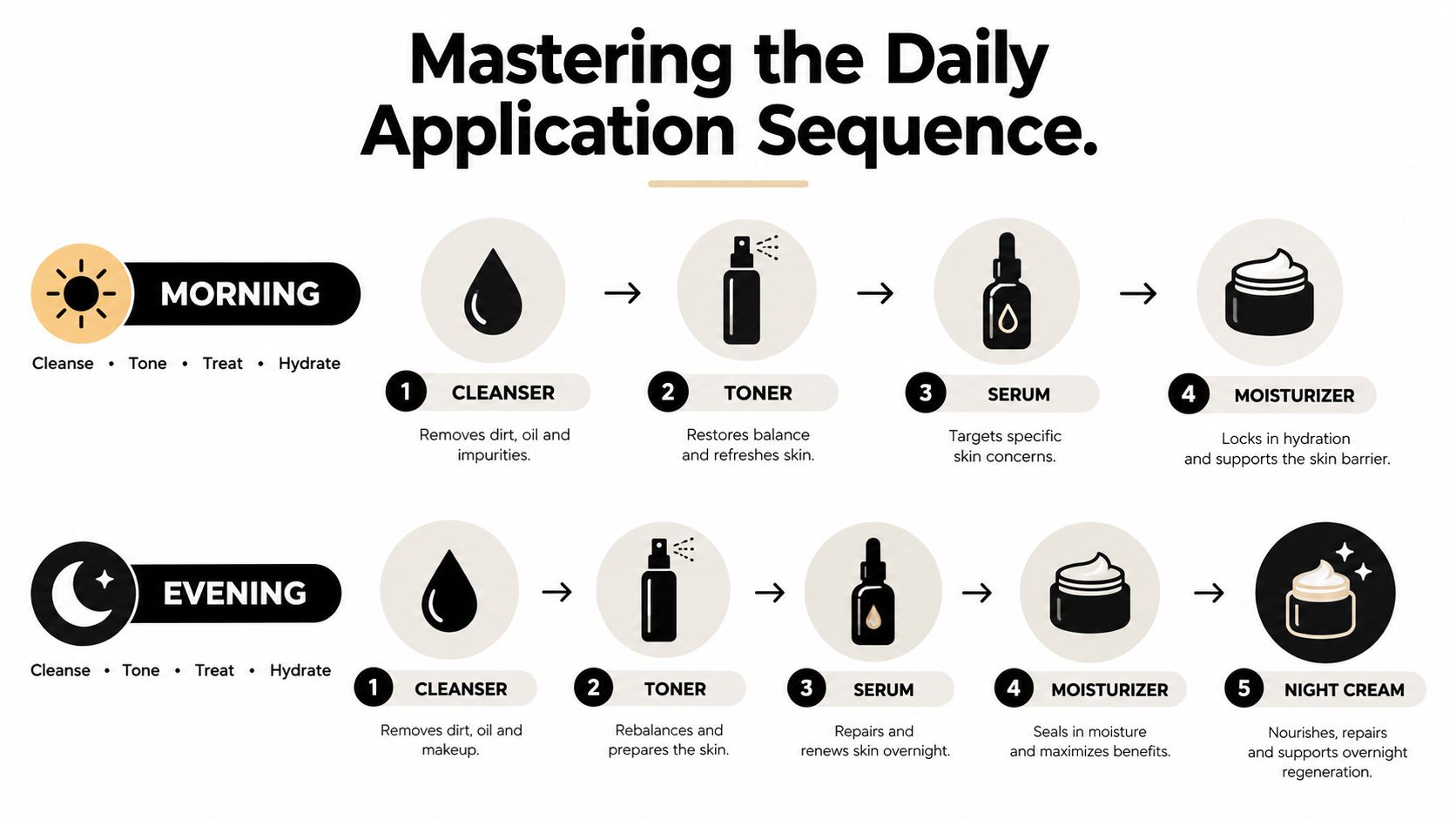
A longer routine does not automatically produce better skin. Product order affects how each formula spreads, settles, and supports the next one. Use lightest texture first, heaviest texture last: water-based layers go beneath creams, while oils and balms belong at the end and only when they improve comfort.
A clear morning sequence
The basic order is cleanse, treat, moisturize, and protect. Keeping the morning routine to a few purposeful layers makes it easier to notice whether your skin feels calm, dry, or overloaded. Yonka's dermatology-informed routine guidance follows this same practical sequence.
- Cleanse gently. Use a nonmedicated cleanser and lukewarm water. If your skin feels comfortable after waking, avoid turning cleansing into a scrubbing session.
- Treat or hydrate. Apply a lightweight toner, fresh aloe-based hydrator, or targeted serum. A thin layer spreads more evenly and gives the following product a stable surface.
- Moisturize and protect. Apply moisturizer, then finish with broad-spectrum sunscreen during the day. A plant-focused routine still needs dependable sun protection.
Water-based hydration belongs beneath a richer cream. The cream forms a more protective outer layer and helps limit moisture loss at the surface. If a thick product goes on first, lighter formulas may pill, sit unevenly, or become difficult to spread.
Fresh aloe can fit the hydrating step without forcing several botanical extracts into the same routine. Let the formula's texture and your skin's response decide whether another layer has a clear role.
A restorative evening sequence
At night, remove sunscreen, makeup, and daily residue with a gentle cleanser. Follow with a toner or hydrating layer if you use one, then apply a targeted treatment only when it serves a clear purpose. Finish with moisturizer.
Dry-feeling skin may appreciate a small amount of oil or balm as the final layer, but it is optional. Oily or blemish-prone skin may feel better with cleanser followed by a lightweight moisturizer, without an additional occlusive layer.
Use clean hands and modest amounts. Give each layer a moment to settle, but do not massage until every trace disappears. Even, comfortable coverage matters more than a lengthy ritual.
For a practical guide to what order skincare products should be applied, follow the texture rule, then change the sequence only for a clear skin-related reason.
Choosing Fresh Aloe Over Reconstituted Powders
Aloe vera can appear in a formula as fresh juice, concentrated juice, powder, or a reconstituted ingredient. Those forms aren't interchangeable from a sourcing perspective. If aloe is the primary hydrator in your routine, its journey from harvest to finished product deserves attention.
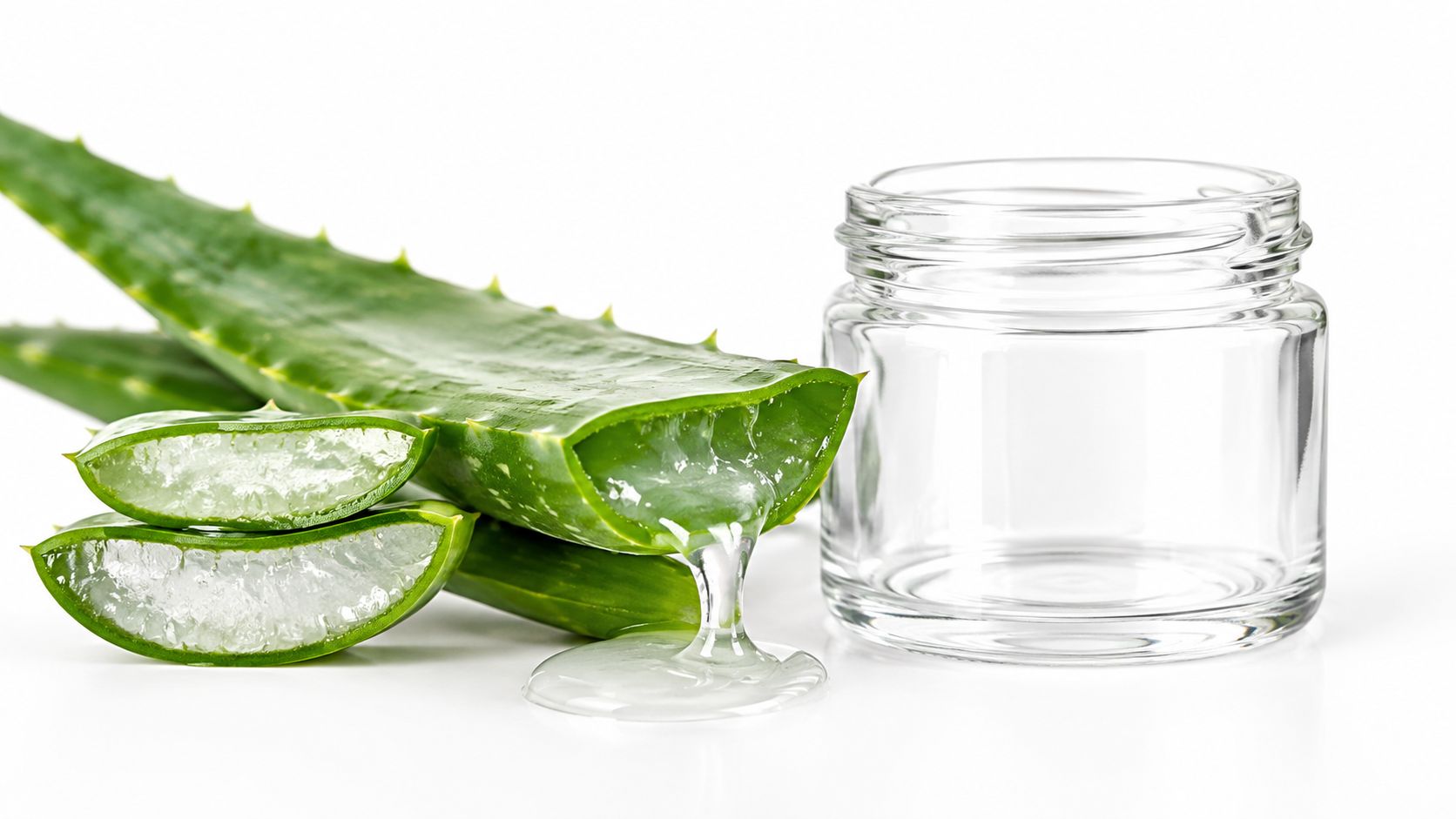
A powder can be useful for manufacturing and storage, but it has undergone additional processing before it reaches the finished formula. Added water and reconstitution can also make the front-label story sound more substantial than the actual amount of fresh aloe present. That's why ingredient lists and supply-chain details are more informative than a large aloe image on the package.
Farm-to-bottle control
ALODERMA is a fully vertically integrated aloe vera company. It grows its own organic aloe vera, processes the aloe vera, and manufactures onsite within 12 hours of harvest. The company says this timing helps ensure that the primary ingredient in its products remains as bioactive and effective as possible, and that its formulas contain at least 65% fresh organic aloe vera juice, with no added water or aloe powders (ALODERMA's fresh aloe skincare explanation).
That model gives a reader a concrete quality-control point to investigate. Instead of relying only on the word “natural,” you can ask where the aloe was grown, how quickly it was processed, whether it comes from powder, and whether water was added to rebuild the ingredient.
Read the label for the product's complete ingredient story. A formula may combine fresh aloe with humectants, emollients, cleansing agents, or preservation components. Those supporting ingredients aren't automatically a problem. They explain how the product cleans, spreads, stays stable, and feels on the skin.
Why the cleanser example matters
The ALODERMA Aloe Hydrating Cleanser lists fresh, organic aloe vera straight from the farm. Its cleansing system includes Potassium Cocoyl Glycinate, Lauryl Hydroxysultaine, Sodium Lauryl Glucose Carboxylate, Lauryl Glucoside, and Saccharide Isomerate. The page also states that the formula doesn't use SD alcohol, aloe powders, parabens, phthalates, or sodium lauryl sulfate.
A cleanser only stays on the skin briefly, so its job is straightforward. It should remove daily residue without leaving your face feeling squeaky, tight, or stripped. Fresh aloe can provide a lightweight base while the cleansing agents handle the washing function.
For readers comparing aloe formats, the distinction between dried aloe and natural aloe gel offers a useful starting point. A transparent supply chain won't guarantee that every formula suits every person, but it gives you better information for choosing.
Adapting Your Regimen for Specific Skin Needs
A personalized routine does not require a crowded shelf. Skin usually benefits more from steady, low-irritation care than from stacking trendy botanical extracts. Keep the basic order consistent, then adjust cleanser texture, moisturizer quantity, or optional-step frequency according to comfort.
| Skin Type | Cleansing Focus | Hydration Strategy |
|---|---|---|
| Sensitive | Use a gentle cleanser with lukewarm water and minimal rubbing. | Keep layers few and choose a light aloe hydrator or cream without unnecessary fragrance. |
| Oily | Cleanse thoroughly but avoid a harsh, drying finish. | Use a thin layer of lightweight moisturizer and skip heavy oils unless needed. |
| Blemish-prone | Choose a non-stripping cleanser and introduce targeted products cautiously. | Prefer light hydration and add only one new active at a time. |
Sensitive skin
Sensitive skin often responds poorly to routine complexity, especially when several fragranced or strongly aromatic products arrive at once. Essential oils such as tea tree and lavender can trigger contact dermatitis in some people, as the botanical-reaction study in the first section showed. Keep the core routine short, avoid fragrance where possible, and test each new formula before applying it across your face.
For reactive skin, use a pea-sized amount of a gentle aloe-based cleanser. Work it into damp hands first rather than massaging it directly onto the face, then rinse with lukewarm water within 30 seconds to limit contact time. Pat dry instead of rubbing, and judge the formula by how comfortable your skin feels afterward.
Oily skin
Oily skin still needs water and a comfortable barrier. Over-cleansing can leave the surface tight, which often encourages repeated washing and heavier compensating products. Use a brief cleanse, follow with a lightweight hydrating layer, and apply only as much moisturizer as your skin absorbs comfortably.
Facial oils are optional, not a default requirement. The word “natural” does not confirm that an oil will suit your pores or personal tolerance, so introduce one cautiously and stop if congestion or irritation appears.
Blemish-prone skin
Keep blemish-prone skin on a predictable schedule: cleanse, apply a targeted product only when needed, moisturize, and protect the skin during the day. Adding several botanical actives together makes irritation harder to trace and leaves you unsure which product to remove.
Aloe-centered hydration can suit this approach because it generally feels lighter than a dense balm or butter. Fresh, bioactive aloe processed soon after harvest also supports the minimalist focus of this routine, but freshness alone does not make every formula suitable. Patch-test each product and watch for stinging, persistent redness, or increased congestion.
For deeper moisture, the ALODERMA Aloe Hydrating Cream lists Organic Aloe Barbadensis Leaf Juice, with Shea Butter, Black Oat Seed Extract, and Hyaluronic Acid. Apply a thin layer at night when your skin needs more comfort. Reduce the amount if the finish feels too rich.
Navigating Transition Periods and Common Pitfalls
Replacing every product at once makes skin changes difficult to interpret. A calmer transition works like changing one ingredient in a recipe: keep the familiar steps, replace one item, and give your skin time to show whether the change suits it. This approach also keeps the routine centered on a few well-tolerated products, rather than a pile of trendy botanical extracts.

Introduce products with control
Add only one new product every 7–14 days, and patch-test sensitive skin behind the ear or along the jawline before applying it across your face. Yonka's guidance on building a simple routine supports this measured approach. The delay may feel slow, especially with a fresh aloe product, but it preserves your ability to identify what helps and what irritates.
Use this sequence:
- Patch test first. Apply a small amount behind the ear or along the jawline.
- Change one variable. Do not introduce a new toner and moisturizer on the same day.
- Track comfort. Note stinging, tightness, dryness, redness, or an unusual texture.
- Keep the rest steady. A stable routine makes the new formula easier to assess.
Avoid the common traps
Daily exfoliation can turn a promising routine into an uncomfortable one. Keep exfoliation to 1–3 times per week rather than using it every day, particularly while your skin is adjusting.
Watch for these practical warning signs:
- Layering multiple botanical extracts: If a floral toner, essential-oil serum, herbal mask, and botanical balm all enter the routine together, irritation becomes difficult to trace. Add one formula at a time.
- Using hot water: If your face feels flushed, dry, or tight after rinsing, the water may be aggravating your skin. Choose lukewarm water instead.
- Chasing immediate smoothness: If your face feels tight or squeaky within a minute of rinsing, the cleanser is stripping comfort rather than just removing residue.
- Confusing a reaction with progress: Stinging that persists, increasing redness, or roughness signals a problem, not proof that the product is working.
If dryness or irritation follows a product change, pause the newest addition and return to gentle cleansing and moisturizing. If the concern continues, seek advice from a qualified healthcare professional. A minimalist routine should make observation easier and keep skin comfortable, not encourage you to push through discomfort.
Embracing a Sustainable and Effective Daily Habit
A good routine fits into an ordinary day. In the morning, you cleanse gently, apply a light hydrating layer if needed, moisturize, and use broad-spectrum sunscreen. At night, you cleanse again, apply one targeted step only when it serves a clear purpose, and finish with a comfortable cream.
That rhythm can feel almost too simple if you've been trained to measure skincare by the number of bottles on your counter. Yet simplicity gives you consistency. You know what you're applying, you can notice changes, and you're less likely to abandon the routine because it takes too long or leaves your skin uncomfortable.
Transparency belongs in the ritual
Look for evidence behind a product's organic positioning. ALODERMA says its portfolio is built on ECOCERT-certified USDA and EU Organic aloe vera, that its products are at least 95% naturally sourced, and that it's removing artificial fragrance from its formulas (ALODERMA's product and ingredient information).
Those details don't replace personal testing. They help you understand the sourcing and formulation choices before you buy. A farm-to-skin product family can also make routine planning easier because cleansing and moisturizing products are designed within a related ingredient philosophy, rather than forcing you to combine several unrelated systems.
A routine that earns its place
Think of an organic skincare routine as a daily agreement with your skin. You use enough to cleanse, hydrate, moisturize, and protect, but you don't keep adding products just because they're popular. Fresh aloe, carefully handled from harvest through manufacturing, can form a lightweight foundation for that approach.
The best routine is the one you can follow without dread. It leaves your skin feeling clean but not stripped, moisturized but not coated, and supported by products whose ingredients and sourcing you understand.
ALODERMA offers fresh organic aloe-based cleansers, hydrators, creams, gels, toners, serums, and masks for building a simple routine around lightweight daily hydration. Visit ALODERMA to explore the farm-to-skin range and choose the products that fit your cleansing and moisturizing steps.